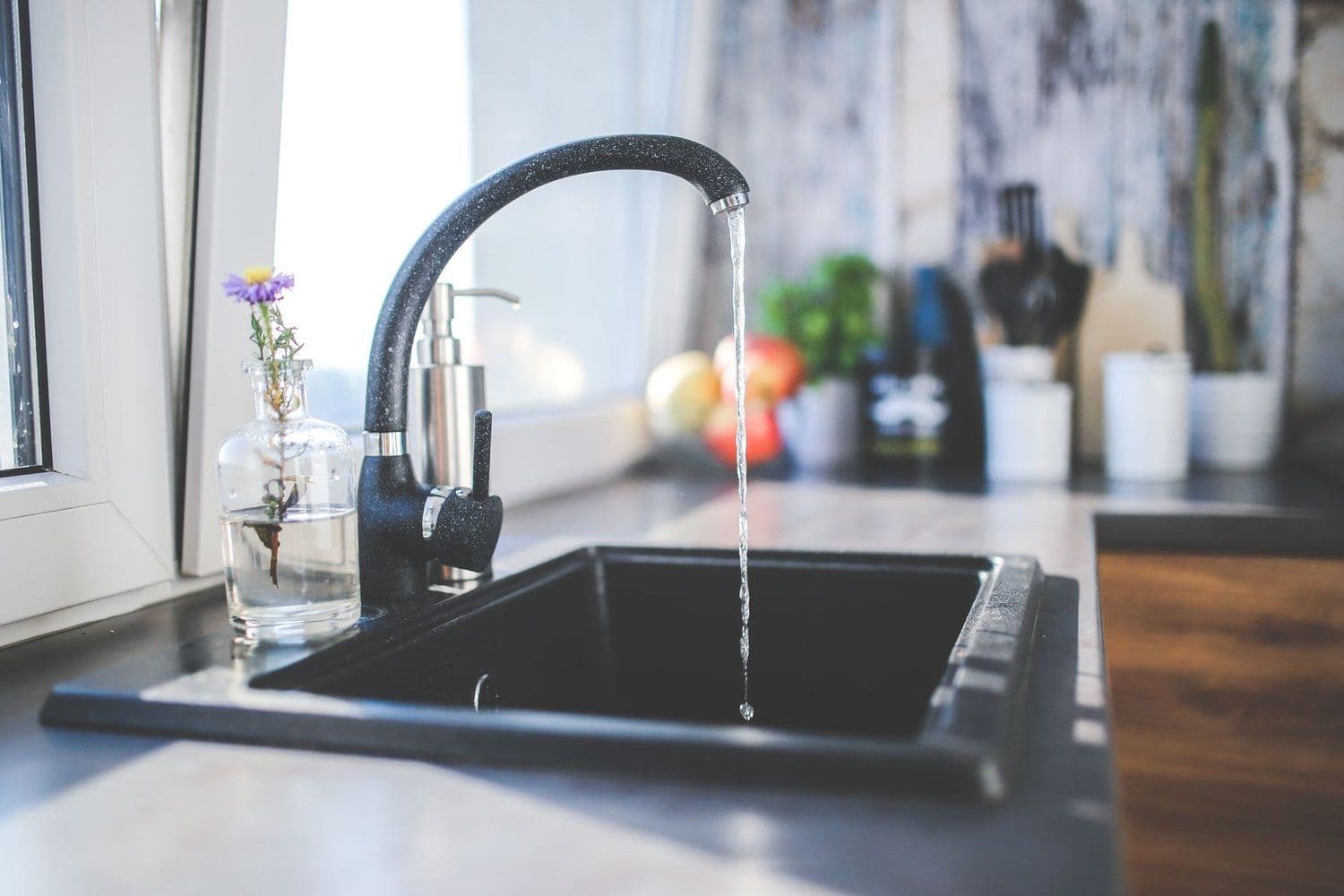
If you have lived in Menifee for a while, you have probably seen the signs: white spots on drinking glasses, a crust around the kitchen faucet, cloudy residue inside the kettle. Those are the visible traces of hard water. The less visible ones are building up inside your ice maker, your dishwasher, and your washing machine, and hard water is one of the most common causes of Menifee appliance failures that get diagnosed as something else.
Hard water rarely announces itself as the cause. It shows up as an ice maker that stops producing, dishes that come out dull, or a washer that fills slowly. Those symptoms are easy to misdiagnose as a failed part, which is how homeowners end up paying for replacements that do not solve the problem.
This guide explains what is in Menifee's water, the specific damage it does to each appliance, and the practical ways to slow it down, from simple habits that cost almost nothing to whole-house treatment.
Understanding Menifee water quality
Menifee sits within the Eastern Municipal Water District service area, and EMWD water runs at about 130 to 170 parts per million (ppm) hardness. If you have seen hardness quoted in grains per gallon, for example on water softener packaging, that works out to roughly 7.6 to 9.9 grains. By any common measure, that is hard water.
Hardness is a measure of dissolved minerals, mainly calcium and magnesium. They are harmless to drink, but they do not stay dissolved when water is heated or left to evaporate. Instead they come out of solution as scale, the chalky white deposit you see on a showerhead. Inside an appliance, scale builds up in exactly the places that matter most: narrow water passages, valve screens, spray nozzles, and heating elements.
How much damage you see depends partly on where you live. Sun City and central Menifee homes on older municipal supply infrastructure tend to see the effects most, while Audie Murphy Ranch and Heritage Lake homes on newer supply have slightly softer water on average. The difference is one of degree. Every part of Menifee has water hard enough to justify some preventive care.
Scale also builds slowly, which is why it catches people out. An appliance can run without a hint of trouble for two or three years while deposits accumulate, then begin to fail in ways that look like a sudden breakdown. That is the reason water quality checks are a standard part of every relevant diagnostic: scale has to be ruled in or out before any part gets ordered.
Ice maker damage pattern
Ice maker failures are the single most common refrigerator complaint in Menifee, and the vast majority of them trace back to hard water. The damage follows the path the water takes, and so does a good diagnosis.
The water line. The supply line feeding the ice maker is narrow, and scale gradually restricts it. Early on, the result is small or malformed cubes because the tray is not filling completely during each cycle. Eventually the line can block entirely and production stops. Cleaning a scaled water line costs $95 to $150 and often solves the problem completely.
The inlet valve. The water inlet valve opens and closes every time the ice maker fills. Mineral deposits wear its seals and corrode its solenoid until it either opens only partially or fails outright. Replacement runs $150 to $220. A leaking valve usually shows up as drips at the back of the refrigerator, while water inside the freezer compartment points instead to a cracked fill tube.
The ice maker module. The module controls the fill, freeze, and eject cycle. Hard water damage eventually reaches the module too, and replacement runs $180 to $320.
The order matters. Replacing the module when the real problem is a blocked line is one of the most common misdiagnoses corrected on second-opinion calls. The homeowner pays for a new module, the ice maker still does not work, and the original cause is still there. Checking the line first, then the valve, then the module avoids that.
Two ice symptoms are not appliance faults at all. Cloudy ice is normal and comes from dissolved gases in the water. White specks in ice are mineral deposits from the hard water itself. Neither means anything is broken, and both respond to better filtration rather than repair.
One simple habit helps here. Replace the refrigerator water filter every six months. It will not stop scale on its own, but it slows the build-up and keeps the ice tasting fresh. If your ice maker has already failed, ice maker repair in Menifee starts with the water line rather than the most expensive part.
Dishwasher scale buildup
A dishwasher that stops cleaning properly is one of the most commonly misdiagnosed appliance faults in Menifee. Homeowners assume the pump has failed or a motor has died. Far more often, the cause is scale inside the spray arms.
Spray arms clean dishes by forcing water through rows of small holes. Hard water minerals settle inside those holes and gradually narrow them. Over two to three years without descaling, the spray output drops noticeably, and cleaning quality slips even though the dishwasher sounds and runs exactly as it always has.
You can check this yourself in a minute. Remove the spray arms and hold them up to a light. If most of the small holes are visibly restricted or blocked, scale is the problem. Professional cleaning with a citric acid soak takes about 30 minutes and costs $95 with the diagnostic waived. Replacing the spray arm assembly, which is sometimes what a quick diagnosis recommends, costs $180 to $350 and leaves the water problem untouched.
Scale causes other dishwasher trouble too. It contributes to drain line restriction over the years, which can lead to standing water in the tub. On dishwashers with a heating element, scale-coated elements work harder, and element replacement runs $150 to $280.
Three habits make a real difference:
- Use rinse aid consistently. It reduces mineral deposits inside the dishwasher and on your dishes.
- Run an empty cycle with a citric acid dishwasher cleaner every three months.
- If you have a whole-house water softener, check that it is actually working.
On every dishwasher repair call, a spray arm inspection and scale check are included, so the cheap fix is never missed in favour of an expensive one.
Washer inlet valve corrosion
Every washing machine has a water inlet valve, the electrically controlled valve that lets hot and cold water in at the right moments. It sits directly in the path of incoming water, so it takes the brunt of whatever minerals that water carries.
Over years, hard water corrodes the valve solenoid and builds deposits inside the valve's inlet screens. The first sign is usually a washer that fills slowly or seems to take longer than it used to. Later the valve may stick, fail to open, or fail to close fully, which can leave water trickling into the drum when the machine is off. Replacement runs $150 to $220, on vintage top-loaders and modern front-loaders alike.
Front-load washers face additional hard water damage further inside. Scale can accumulate in the drum bearings, accelerating their wear, and mineral corrosion can attack the drum spider that supports the drum. Both are far more expensive problems than a valve.
Three preventive measures extend washer life in Menifee:
- Run one hot water cycle a month with an appliance descaler, sold at grocery stores as washing machine cleaner.
- Clean the inlet valve screens once a year. On many models this is a simple homeowner check where the hoses connect.
- If you have a whole-house water softener, make sure it is functioning correctly.
If your washer is already filling slowly, leaking, or showing a fill-related error code, washer repair can confirm whether the valve or something else is at fault.
Water treatment approaches for Menifee homes
Preventive habits slow hard water damage, but they do not remove the minerals. For that, there are three main approaches, each suited to a different goal and budget.
Whole-house water softener. A softener treats all the water entering the home, typically reducing hardness from EMWD levels down to 20 to 40 ppm. That protects every appliance at once, along with faucets, showerheads, and the water heater. Installation costs $1,500 to $3,500. A softener needs ongoing attention, mainly keeping it supplied with salt and making sure it regenerates properly. A softener that has quietly stopped working offers no protection at all, which is why checking it is on every preventive list in this guide.
Under-sink reverse osmosis filter dedicated to the refrigerator line. Reverse osmosis pushes water through a fine membrane that removes most dissolved minerals. A dedicated system protects only the refrigerator's water supply, meaning the ice maker and water dispenser, but it does that very well at a much lower cost. Installation typically runs $500 to $900, with filter cartridges replaced every six to twelve months. For households whose main hard water problem is a failing ice maker, this is often the most sensible place to start.
Refrigerator water filter replacement every six months. This is the minimum, and it is not a substitute for either of the above. A standard refrigerator filter is designed mainly for taste and sediment, not hardness, but keeping it fresh still slows scale accumulation.
How do you decide? Consider which appliances are giving you trouble and how long you plan to stay in the home. If the ice maker is the recurring problem, a dedicated reverse osmosis filter targets it directly. If the dishwasher, washer, and ice maker are all showing scale damage, a whole-house softener addresses the cause everywhere. In Sun City homes on older supply infrastructure, the cost of either option is typically recovered in extended ice maker and refrigerator water dispenser life within three to five years.
Installation of either system is plumbing work. What an appliance diagnostic contributes is evidence: whether the failure in front of you is actually hard water damage, which appliances are affected, and how far the scale has progressed. Water treatment recommendations are included wherever they are relevant, so you can make the decision with a clear picture rather than a sales pitch.
If one of your appliances is already showing hard water symptoms, call Jim Patterson on (951) 585-5320 or use the contact page to book a diagnostic. Same-day service is available for calls before 11 am, the $89 diagnostic is waived with a repair, and every repair carries a 90-day parts and labour warranty.