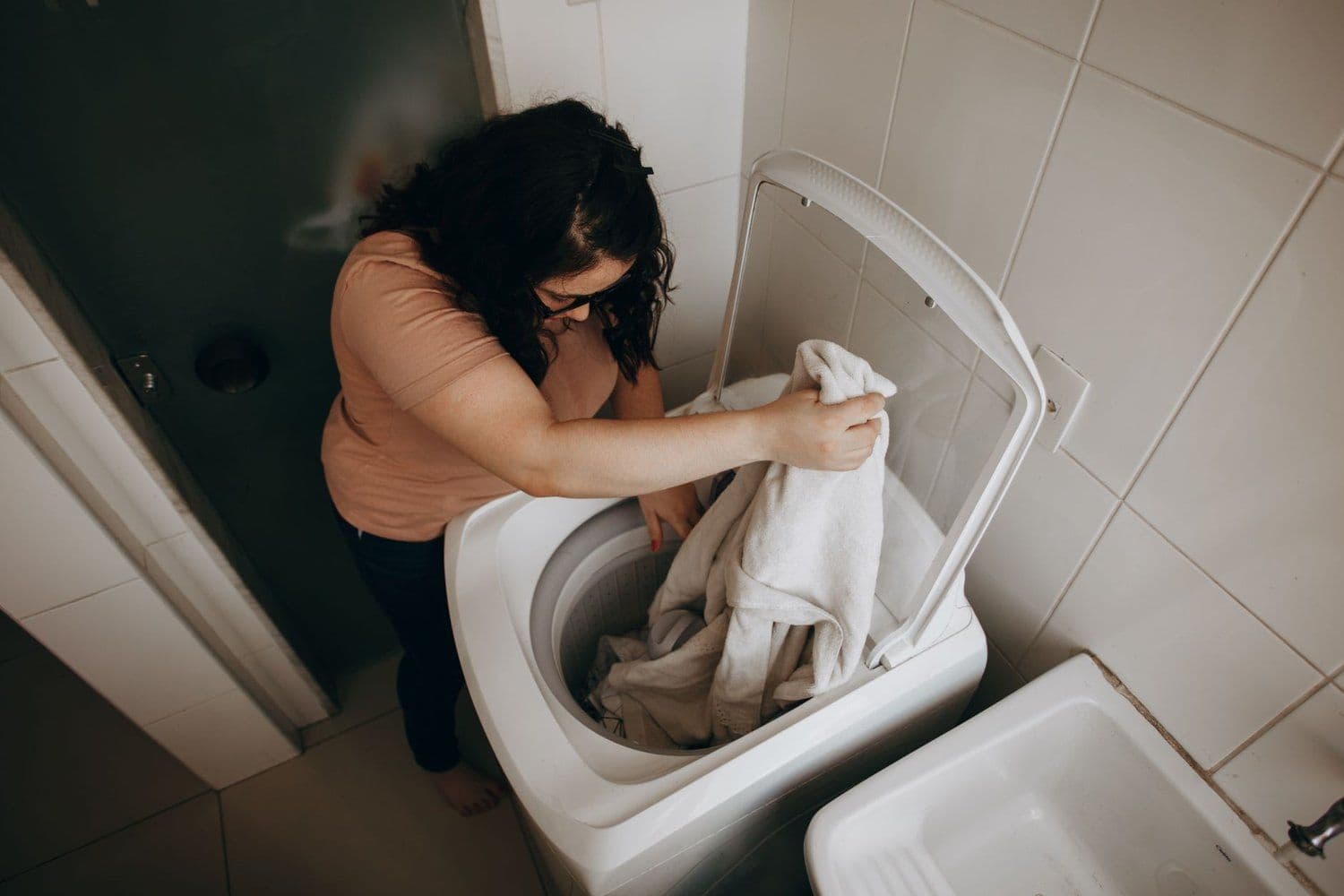
Ask a Sun City household how long their Maytag washer has been running and the answer is often measured in decades. Maytag Dependable Care washers and dryers from the 1970s through the 1990s were engineered for exceptional longevity, and many of the machines installed during Sun City's original construction period are still in use today, washing loads every week more than 30 years after they were delivered.
Machines built that well still have parts that wear, and on an older Maytag top-loader the transmission is the part that most often decides whether the washer has years left in it or is near the end. Transmission problems range from a small oil leak that can be serviced to an internal failure that makes the machine uneconomical to keep. Telling the two apart is the most important part of the job.
This guide explains what made the Dependable Care machines so durable, how transmission trouble shows itself, the difference between servicing a transmission and replacing it, why pre-2006 Maytag work calls for specialist knowledge, and how much life you can reasonably expect after the work is done.
The Maytag Dependable Care engineering legacy
The pre-2006 Maytag washers, from the era before Whirlpool acquired the company, were built around heavy, mechanical components chosen for durability rather than low cost. A rotary mechanical timer runs the cycle. A sturdy motor drives the machine through a belt. The transmission, a gear case sitting beneath the tub, converts the motor's rotation into agitation during the wash and is lubricated by an oil bath sealed inside its housing. Water level is set by a simple pressure switch.
There is very little electronics to fail, and nearly every component can be reached, removed, and replaced on its own. That design philosophy is why these machines tolerate decades of use. When something wears, it usually wears gradually, and the failure is limited to one part instead of spreading through an integrated control system.
Many Sun City households also put relatively light demands on their washers. A machine designed for a family's heavy weekly washing, now running a few loads a week for one or two people, ages more slowly than its designers ever planned for.
The result is a population of Maytag washers that are 25, 30, and 40 years old and still sound. That is also why it makes sense to look carefully before giving up on one. A transmission fault on one of these machines is not automatically the end. It depends on what has actually failed and what condition the rest of the washer is in.
Transmission failure symptoms
Transmission problems on a vintage Maytag top-loader tend to show up in a handful of recognisable ways. Some point clearly to the transmission; others can also come from cheaper parts, which is why diagnosis comes first.
Oil under the washer. A dark, oily patch on the floor beneath the machine, or oil residue on the base, is the classic sign of a transmission seal leak. The gear case is filled with oil, and as seals age they can begin to weep.
Oil spots on clothing. If a leak develops at the upper seal, oil can find its way into the tub and leave dark spots on laundry. If you see this, stop using the washer until it has been checked. The problem will not fix itself, and every load risks more stained clothing.
The agitator does not move, or moves weakly. If the washer fills and the motor runs but the agitator barely moves, or moves in one direction only, the transmission's internal gearing may be worn. A slipping or broken belt can cause the same symptom, so this needs checking before anything else is assumed.
Grinding, knocking, or clunking during agitation. Worn gears inside the transmission often make a heavy mechanical noise that changes with the agitation stroke. This is usually a sign of internal wear rather than a simple leak.
Problems with the spin. A tub that spins slowly, struggles to reach speed, or leaves clothes soaking wet can point to the transmission or the spin components that work alongside it, but it can also be a belt or a drain problem.
A burning smell or a humming motor. If the transmission is binding, the motor may hum without turning the machine properly, and the belt may slip and smell of hot rubber.
Not every one of these symptoms means a transmission problem. A worn belt, which typically costs $120 to $180 to replace on a vintage Maytag, can mimic several of them. A diagnostic separates a transmission fault from a cheaper fix before you commit to anything.
Transmission service vs replacement
Once the transmission has been confirmed as the source of the trouble, the choice is between servicing it and replacing it. The two are quite different.
What transmission service involves
Transmission service, sometimes called a rebuild, deals with the specific fault while keeping the original gear case. Depending on what the diagnostic finds, that can mean replacing leaking seals, renewing worn components, restoring the oil, and checking the parts that work alongside the transmission, such as the belt and pulleys. On a vintage Maytag top-load washer, transmission service typically runs $180 to $350 depending on the parts needed.
Service makes most sense when the fault is caught early, such as a seal leak noticed while the gears are still in good condition, and when the rest of the washer is sound. In that situation it is usually a sensible repair on a machine that was built to last.
When replacement enters the picture
If the gearing inside the transmission has worn badly or failed, service may not be enough, and the whole transmission would need to be replaced. That is a larger job, and on a pre-2006 Maytag the cost depends heavily on which replacement part can be sourced for your specific model. It is quoted after the diagnostic rather than estimated in advance.
How the decision is made
Several factors decide whether repair is the right call:
- The age and condition of the rest of the machine. A transmission failure on a washer 20 years old or more often comes ahead of other component failures. If the timer, pump, or tub are also showing wear, putting money into the transmission alone may not be wise.
- Whether parts are available. Some transmission parts for specific vintage models are no longer obtainable, and when an essential part is gone, the washer is not repairable.
- The cost against a new washer. Current Maytag washers typically run $500 to $1,500 to replace. A repair that approaches that figure on an aging machine is hard to justify.
- Your own preference. Some households would rather keep a machine they know and trust. Others would rather replace it. Both are reasonable, and you will get straight guidance either way.
If the diagnostic shows the washer is not economically repairable and you decide not to proceed, Sun City residents receive a 50 percent diagnostic discount, paying $44.50 instead of $89.
Why pre-2006 Maytag transmission service is specialist work
Whirlpool acquired Maytag in 2006, and the washers built since then follow different engineering priorities from the older Dependable Care designs. The pre-2006 Maytag top-loader is its own design, not a variant of the Whirlpool direct-drive washer that most technicians learned on. Its drive system, transmission, and the way the machine comes apart are all specific to Maytag, and a technician who has only worked on newer washers may not know how to approach it.
Parts sourcing is just as specific. Current Maytag parts come through the Whirlpool authorised distributor network, typically within 24 to 48 hours. Parts for vintage Maytag washers are often a different matter and come through specialist suppliers, typically in 3 to 7 business days. Knowing which suppliers carry legacy Maytag stock, and which updated parts will fit an older housing, is part of the job. Occasionally, a repair on a 20+ year old Maytag washer requires a hybrid solution, pairing a current part with original components. That is normal on machines of this age.
It is also why many generalist services decline vintage Maytag work altogether. This service takes it on routinely. Jim Patterson has 22 years of appliance service experience, and Maytag was among the brands he learned in his first years in the trade. The diagnostic confirms both the fault and the availability of parts before any repair is quoted.
Expected life after transmission service
On a vintage Maytag that is otherwise in good condition, common repairs such as transmission service, belts, and motor couplings typically extend the machine's life another 3 to 7 years. That is an honest range, not a promise. A washer with a sound tub, motor, pump, and timer is at the upper end of it. One showing wear in several places is at the lower end.
A few habits help a serviced Maytag reach the upper end:
- Avoid overloading. Packing the tub tightly puts extra strain on the transmission and belt.
- Keep the machine level. An unlevel washer rocks during spin and adds wear to the drive components.
- Deal with Menifee's hard water. EMWD water at 130 to 170 ppm hardness corrodes inlet valves over time. Running a monthly hot cycle with a washing machine descaler and cleaning the inlet valve screens once a year both help.
- Call early. A small oil leak or a new noise is far cheaper to address now than after it has caused further damage.
Every repair carries a 90-day parts and labour warranty, and if the same fault returns within 90 days, the return visit is at no charge. Jim performs the diagnostic, the repair, and any follow-up, so the person who serviced your transmission is the person who comes back if you need him.
For more on older Maytag machines, see our Maytag appliance repair page and our general guide to washing machine repair. To book, call (951) 585-5320, Monday to Saturday, 8 am to 5 pm. Same-day service is available for calls received before 11 am, and you can also reach us through the contact page.