You open the dishwasher after a full cycle, and the bottom rack looks spotless while the top rack still has dried food stuck on half the plates. This specific pattern, clean bottom and dirty top, is one of the most recognizable dishwasher complaints out there, and it almost always points to one part: the upper spray arm.
Once you understand how water actually reaches your top rack, tracking down the exact cause becomes a lot more straightforward.
Introduction: Clean Bottom, Dirty Top Is a Very Specific Clue
When only one rack stays dirty, that’s useful diagnostic information. It tells you the dishwasher is working, just not delivering water to the right place. This is one of the most common appliance repair calls we get in Menifee, and the good news is that most causes are fixable without a professional visit.
Quick Answer Summary
A dishwasher that cleans the bottom rack but leaves the top rack dirty almost always comes down to the upper spray arm not receiving enough water pressure. The most common cause is clogged spray arm holes, usually from food debris or hard water mineral buildup.
Other possible causes include a spray arm that won’t spin freely, a clogged main filter, a failing circulation pump, or loading mistakes that physically block water flow.
Why This Pattern Points Almost Always to the Upper Spray Arm
The bottom rack and top rack are cleaned by two separate spray arms, and the bottom arm typically gets priority access to water pressure. If something restricts flow anywhere in the system, the upper arm is usually the first to lose performance, which is exactly why this specific pattern shows up so consistently.
How Water Actually Reaches Your Top Rack
Before troubleshooting, it helps to understand the actual path water takes to get from your dishwasher’s pump to the dishes sitting on your top rack.
The Diverter’s Role in Routing Water Upward
Many dishwashers use a diverter, a small motorized valve that alternates water flow between the lower and upper spray arms throughout the cycle. If the diverter sticks in the lower position, the top rack may receive little to no water at all.
Why the Upper Spray Arm Depends on Full Water Pressure
The upper spray arm sits higher in the tub and relies on consistent pressure just to reach that height effectively. Any reduction in pressure along the way, from a clog, a restriction, or low incoming water pressure, affects the top arm more noticeably than the bottom one.
Why the Bottom Rack Gets First Priority on Water Flow
Design-wise, most dishwashers route water to the lower spray arm first, since it’s closer to the pump and water source. Whatever pressure remains after the bottom rack is served gets passed up to the top rack, which is why the top arm is more sensitive to any restriction in the system.
The Most Common Cause: Clogged Spray Arm Holes
If your top rack isn’t cleaning well, the spray arm holes are the first thing worth checking, since they’re responsible for the majority of these complaints.
Why Food Debris and Hard Water Clog the Arm Over Time
Food particles that slip past the filter, along with mineral deposits from hard water, gradually build up inside the small holes along the spray arm. Over time, this buildup narrows or fully blocks individual holes, reducing how effectively water reaches your dishes.
This same mineral buildup shows up across more than one appliance in a hard water home. Our guide on how Menifee’s hard water affects your dishwasher and washing machine covers the broader pattern in more detail.
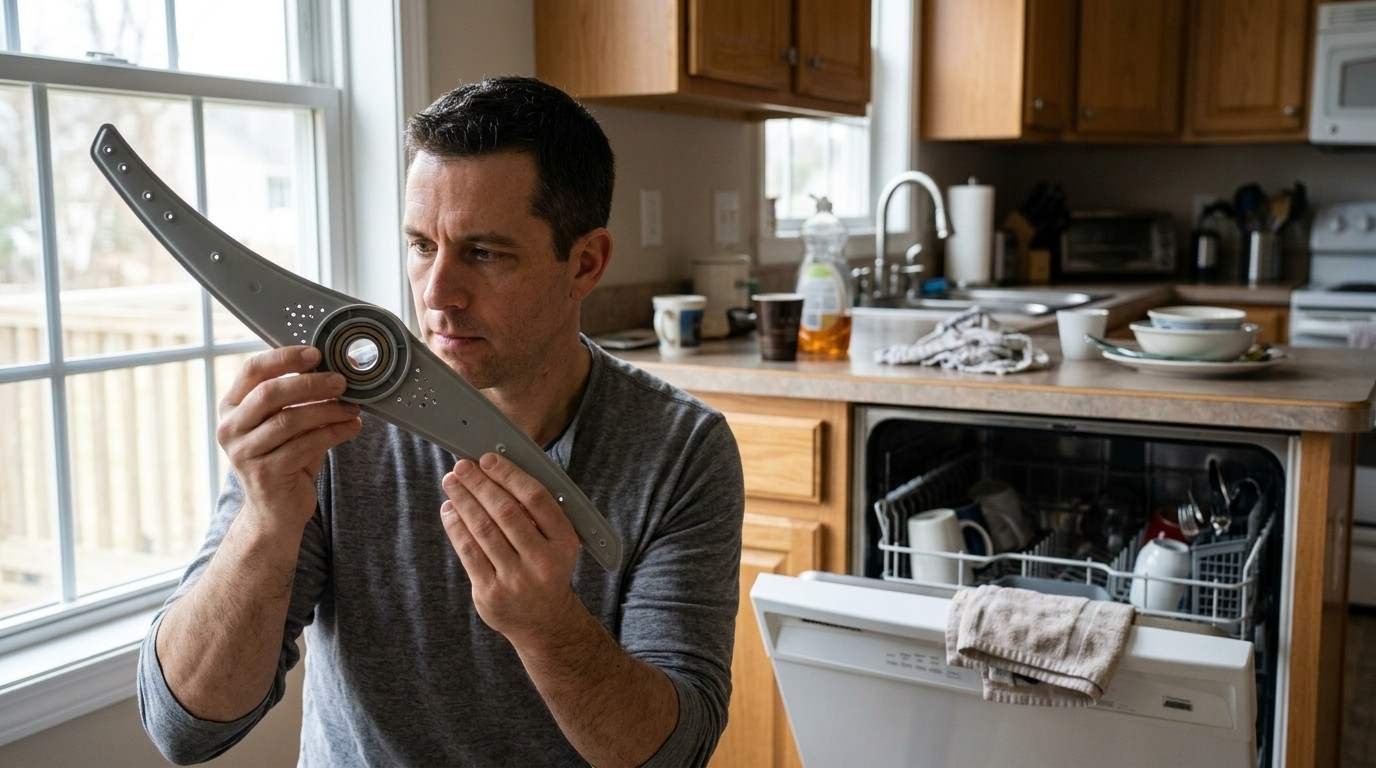
The Light Test to Check for Clogged Holes
Remove the upper spray arm and hold it up to a bright light. Each hole along the arm should let light through clearly. Any hole that looks dim, partially blocked, or completely dark is a clogged one.
Why a Few Clogged Holes Still Let the Arm Spin Normally
A partially clogged spray arm usually keeps spinning just fine, since the clog affects water output rather than the arm’s rotation. This is why the arm can look and sound completely normal while still failing to clean dishes properly, which often leads homeowners to rule out the spray arm too early.
Other Reasons the Top Rack Isn’t Getting Clean
Clogged holes explain most cases, but a handful of other issues can produce the exact same symptom.
A Spray Arm That Won’t Spin Freely
If the arm is clogged at its central hub or obstructed by a tall item underneath it, it may not spin at all, which prevents water from reaching dishes evenly across the rack.
A Cracked or Loose Spray Arm
A cracked arm leaks water out through the crack instead of through its intended holes, while a loose or improperly seated arm may not stay connected to the water supply correctly during the cycle.
A Clogged Main Filter Restricting Flow to Both Arms
A dirty main filter restricts water flow to the entire system, not just the top rack, though the upper arm often shows the effects first since it’s more sensitive to reduced pressure.
If you’re also noticing standing water along with poor cleaning, our guide on why there’s water at the bottom of your dishwasher covers a closely related filter and drainage issue worth checking.
A Failing Circulation Pump
The circulation pump provides the pressure needed to push water through both spray arms. If it’s beginning to fail, you may notice reduced cleaning performance across the entire dishwasher, with the top rack affected most severely.
Low Household Water Pressure
Most dishwashers need a minimum of around 20 PSI of incoming water pressure to clean effectively. If your home’s water pressure runs low, especially during peak usage times, the upper spray arm may simply not get enough force to clean properly.
Loading Mistakes That Mimic a Spray Arm Problem
Sometimes the spray arm itself is working perfectly fine, and the real issue is how the dishwasher was loaded.
Tall Items Blocking the Lower Arm’s Rotation
A tall pot or pan in the bottom rack can physically stop the lower spray arm from completing a full rotation, which indirectly affects how much water and pressure make it up to the top rack.
Overloading the Top Rack Itself
Packing too many dishes into the top rack blocks water spray between items, preventing water from reaching every surface evenly, even when the spray arm itself is working correctly.
Nesting Bowls, Cups, or Utensils Together
Items that nest or stack together create a solid barrier that deflects water away rather than allowing it to reach the surfaces that actually need cleaning.
Step-by-Step: Diagnosing Your Specific Cause
A structured diagnostic process helps you figure out exactly which of these causes applies to your dishwasher before you start troubleshooting randomly.
Step 1: Run the Spin Test on Both Arms
With the dishwasher empty, give each spray arm a gentle spin by hand. Both should turn freely and smoothly. Resistance or a complete lack of movement points toward an obstruction or a hub clog.
Step 2: Hold the Arm Up to Light and Check Every Hole
Remove the upper arm and check each hole individually using the light test described earlier. This step alone identifies the most common cause in most households.
Step 3: Remove and Inspect the Main Filter
Pull out the main filter and check for trapped food debris or a visible buildup layer. A dirty filter restricts flow to the entire system, so this step is worth doing even if the spray arm itself looks clean.
Step 4: Check for Loading Obstructions
Reload the dishwasher the way you normally would and look for tall items or nested dishes that might be blocking water flow before you run another cycle.
Step 5: Test With a Smaller, Properly Loaded Cycle
Run a smaller load with dishes spaced out properly to see whether the top rack cleans better under ideal conditions. If it does, loading habits were likely contributing to the problem.
How to Clean a Clogged Spray Arm
If your diagnosis points to clogged holes, cleaning the arm is a simple, low-cost fix most homeowners can handle themselves.
What You’ll Need
Grab a bowl large enough to submerge the arm, white vinegar or a dishwasher-safe descaling solution, a toothpick or a thin piece of wire, and an old toothbrush.
Soaking the Arm in Vinegar or a Descaling Solution
Submerge the spray arm in white vinegar or a descaling solution for 20 to 30 minutes. This loosens mineral buildup and softens any stuck-on debris, making the holes much easier to clear afterward.
Clearing Individual Holes With a Toothpick or Thin Wire
After soaking, gently push a toothpick or thin wire through each hole to clear any remaining buildup, then rinse the arm thoroughly under running water.
Reattaching the Arm and Testing Spin
Reattach the arm securely, give it another spin test by hand to confirm it moves freely, and run a test cycle to see whether top rack cleaning has improved.
When Cleaning Doesn’t Fix It: Repair or Replace the Part
If a thorough cleaning doesn’t solve the problem, that’s a sign you’re dealing with something beyond a simple clog.
Signs the Spray Arm Itself Needs Replacing
A cracked arm, a stripped mounting point, or holes so worn that water sprays unevenly even after cleaning are all signs the arm itself has reached the end of its useful life.
Signs the Problem Is the Circulation Pump, Not the Arm
If both spray arms spin freely, the filter is clean, and the top rack is still underperforming, weak output across the whole system often points toward the circulation pump rather than the arm itself.
This mirrors a similar diagnostic challenge we cover in water not draining from a washer, where telling a simple clog apart from an actual pump failure makes all the difference in what the repair involves.
Why a Pump Issue Needs a Professional Diagnosis
Diagnosing a failing pump accurately often requires testing electrical components and water pressure directly, which makes this one repair worth handing off to a professional rather than guessing at a fix.
Dishwasher Spray Arm Repair Costs in 2026
Knowing what these repairs typically cost helps you decide how to move forward once you’ve identified the likely cause.
Cost of a Replacement Spray Arm
A replacement spray arm is one of the most affordable parts in this entire repair category, generally costing well under $50 for the part alone, making it one of the more approachable DIY fixes available.
Cost to Replace a Circulation Pump
Circulation pump replacement costs considerably more, since it’s a more involved part to access and typically requires a professional to install correctly.
DIY vs. Professional Labor Cost Comparison
A full DIY spray arm fix, including cleaning or replacement, generally costs between $0 and $140 depending on whether you need a new part, while bringing in a professional adds labor costs on top of the part itself.
Our guide on appliance repair costs in Menifee versus buying new can help you weigh repair costs against replacement if your dishwasher has other issues too.
Preventing Future Spray Arm Clogs
A few consistent habits go a long way toward keeping your spray arms clear long after you’ve fixed the current issue.
Scrape Plates Instead of Rinsing Them Spotless
Scraping large food particles off plates, rather than pre-rinsing them completely clean, actually helps most modern detergents work as intended while still preventing debris from reaching the spray arm.
Clean the Filter on a Regular Schedule
A monthly filter cleaning routine prevents the kind of debris buildup that eventually works its way into the spray arm holes.
Run a Monthly Descaling Cycle
Running a dishwasher cleaner, vinegar, or citric acid treatment once a month helps dissolve mineral buildup before it accumulates enough to clog spray arm holes.
This same kind of small, consistent upkeep applies across your whole home. Our seasonal HVAC checklist for preparing your Menifee home for summer heat follows the same approach for the rest of your home’s systems.
Load Dishes With Water Flow in Mind
Spacing dishes out, keeping tall items in the bottom rack’s outer edges, and avoiding nested bowls all help water reach every surface without any mechanical changes needed.
Why Menifee Homeowners Deal With This More Often
Local water conditions make spray arm clogs a more frequent issue for homeowners in this specific area.
Hard Water’s Role in Spray Arm Clogs
Menifee’s hard water leaves mineral deposits that build up inside spray arm holes faster than in areas with naturally softer water, which is part of why this issue shows up so often across local households.
How Local Water Pressure Variations Add to the Problem
Water pressure can vary by neighborhood and by time of day, and homes already dealing with lower incoming pressure are more likely to notice top rack cleaning issues sooner than homes with consistently strong pressure.
A dishwasher that cleans the bottom rack but leaves the top rack dirty is almost always fixable, and in most cases, it comes down to a quick cleaning rather than an expensive repair. Start with the light test and work through the diagnostic steps before assuming you need a new part.
If you’ve worked through all of this and the top rack still isn’t cleaning properly, that’s a sign to bring in a professional. Our team at Appliance Repair Menifee can pinpoint the exact cause quickly, and you can reach out to us directly to schedule a visit.