Most homeowners think of their dryer vent as a minor maintenance chore, something to get around to eventually. In reality, it’s one of the most overlooked fire risks in an average home.
The lint sitting inside that vent right now is highly flammable, and it’s been building up quietly with every single load of laundry you’ve run. Understanding how that risk develops, and why a simple lint screen wipe isn’t enough to stop it, could genuinely protect your home.
Introduction: The Fire Risk Hiding Behind Your Dryer
A dryer vent fire doesn’t announce itself. It builds slowly behind the scenes until conditions are finally right for ignition, often without any obvious warning beforehand.
Quick Answer Summary
Dryer vent fires happen because lint accumulates faster than most people realize, restricting airflow and allowing heat to build up to dangerous levels. According to the U.S. Fire Administration, clothes dryers cause an estimated 2,900 home fires every year, resulting in roughly 5 deaths, 100 injuries, and $35 million in property damage annually.
Failure to clean the vent is the single leading cause, responsible for about 34% of these fires. Professional cleaning reaches the parts of the system that DIY methods routinely miss.
Why Most Homeowners Never See This Coming
Dryers keep running and clothes eventually dry, even with a partially blocked vent, so there’s rarely an obvious signal that anything is wrong until the risk has already become serious. This is actually one of the most common appliance repair calls we get in Menifee, and it’s often discovered only after drying times have quietly doubled.
How a Dryer Vent Fire Actually Starts
Understanding the actual mechanics behind these fires makes it much clearer why professional cleaning matters more than a quick lint screen wipe.
Lint as a Highly Flammable Material
Lint is made of tiny, dry fibers that ignite easily when exposed to enough heat. A dryer generates exactly that kind of heat during every cycle, which is why lint buildup inside the vent system is far more dangerous than it looks.
How Heat Builds Up Inside a Restricted Vent
When lint restricts airflow, hot air has nowhere to escape efficiently. That trapped heat continues to rise with each cycle, creating the exact conditions lint needs to ignite. Ignoring early warning signs like this is a pattern that shows up across several appliances, not just dryers.
It’s the same reasoning behind why we tell homeowners not to ignore a washing machine that shakes or walks during the spin cycle, since small warning signs left unaddressed tend to escalate into much bigger safety issues.
Why the Fire Often Starts Inside the Wall, Not the Dryer
Because the vent duct often runs through a wall cavity, a fire can begin smoldering inside that hidden space well before smoke becomes visible in your living area. By the time you notice something is wrong, the fire may already be significant.
Dryer Fire Statistics Every Homeowner Should Know
The numbers behind dryer fires make the risk much easier to take seriously, especially since most of these incidents are entirely preventable.
How Many Home Fires Involve Dryers Each Year
The U.S. Fire Administration and NFPA report that clothes dryers are involved in approximately 2,900 residential fires per year across the country.
The Leading Cause: Failure to Clean the Vent
Failure to clean the vent accounts for roughly 34% of all dryer fires, making it the single largest contributing factor by a clear margin.
Property Damage, Injuries, and Deaths Linked to Dryer Fires
These fires result in an estimated 5 deaths, 100 injuries, and around $35 million in property damage annually, according to national fire data.
Based on that same data, with roughly 2,900 fires occurring each year, the average property damage per incident works out to approximately $12,000, a cost that’s almost always avoidable with regular vent maintenance.
When Dryer Fires Are Most Likely to Happen
Dryer fires tend to occur more often in the fall and winter months, when heavier fabrics like sweaters and bedding are washed and dried more frequently, and they’re most common in the afternoon and evening hours when laundry is typically running.
Warning Signs Your Dryer Vent Is a Fire Risk Right Now
A few warning signs can tell you your vent needs attention before the situation becomes dangerous.
Clothes Take Longer to Dry Than They Used To
Gradually increasing drying times over weeks or months is one of the earliest and most reliable signs of a restricted vent. Our guide on dryer taking two cycles to dry breaks down this exact symptom in more detail.
The Dryer or Laundry Room Feels Unusually Hot
If the laundry room feels noticeably warmer or more humid than usual while the dryer runs, heat isn’t escaping through the vent as efficiently as it should.
A Burning or Hot Dust Smell During Operation
A hot, dusty smell during a cycle is a direct warning sign that heat is building up around trapped lint rather than venting safely outside.
Visible Lint Around the Dryer or Vent Opening
Loose lint collecting around the base of the dryer or near the exterior vent opening usually means there’s significantly more built up inside the duct itself.
No Professional Cleaning in the Past Year
If it’s been more than a year since a professional cleaning, or you’re not sure it’s ever happened, that alone is reason enough to schedule one soon.
Why DIY Cleaning Doesn’t Always Catch the Real Risk
Cleaning the lint screen is a good habit, but it only addresses part of the problem. The rest of the system needs a closer look.
What a Basic Lint Screen Cleaning Actually Misses
The lint screen only catches a portion of the lint each load produces. The remainder travels further into the vent system, where a quick wipe of the screen never reaches it.
Blind Spots Inside Long or Hidden Vent Runs
Vent ducts that run through walls, ceilings, or up to a roofline have sections that are physically impossible to inspect or clean without specialized tools and equipment.
Why Homeowners Underestimate How Much Lint Builds Up
Because the dryer keeps running normally, most homeowners assume the vent is fine simply because nothing has gone visibly wrong yet, even as buildup continues accumulating unseen.
What Professional Dryer Vent Cleaning Actually Involves
Professional cleaning goes well beyond what a homeowner can do with a vacuum and a brush from a hardware store.
Full Inspection From the Dryer to the Exterior Vent
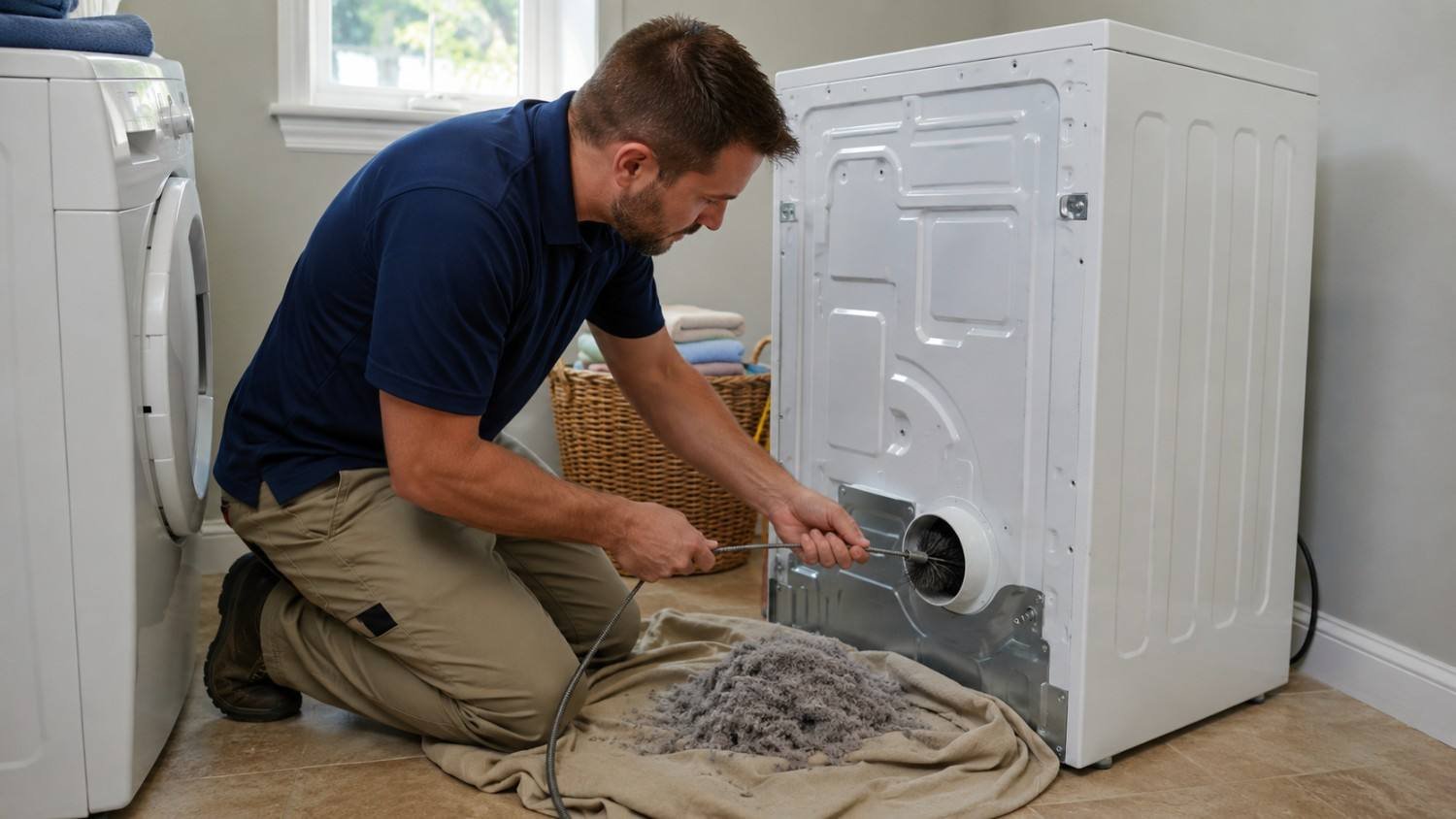
A professional service inspects the entire path, from the dryer connection point all the way to the exterior vent opening, rather than just the sections that are easy to reach.
Specialized Tools That Reach What a Vacuum Can’t
Professional-grade brushes and vacuum systems are designed to reach deep into long or twisting vent runs, clearing buildup that a household vacuum simply can’t access.
Before-and-After Airflow Testing
Many professional services test airflow both before and after cleaning, giving you a clear, measurable confirmation that the blockage has actually been resolved.
This same idea of verifying a fix rather than just assuming it worked applies broadly across home systems, which is part of why knowing who to call for emergency AC repair in Menifee matters just as much as knowing who to call for dryer vent safety.
The Real Cost of Skipping Professional Cleaning
Skipping professional cleaning doesn’t just raise fire risk. It quietly costs you money in several other ways too.
Average Property Damage From a Dryer Fire
As covered earlier, national fire data puts average property damage at roughly $12,000 per incident, a cost that dwarfs the price of routine professional cleaning many times over.
Insurance Considerations After a Preventable Fire
Depending on your policy, an insurer may ask about maintenance history after a fire claim, and demonstrating regular professional cleaning can matter during that process.
Higher Energy Bills From Restricted Airflow
A restricted vent forces your dryer to run longer and work harder to finish each load, which steadily increases your energy bill over time.
Shortened Dryer Lifespan From Constant Overheating
Repeated overheating from restricted airflow puts extra strain on the heating element and other internal components, shortening your dryer’s overall lifespan. If your dryer is already older and showing other issues, our guide on appliance repair costs in Menifee versus buying new can help you weigh repair against replacement.
Professional Dryer Vent Cleaning Cost in 2026
Understanding the typical price range helps you see just how small this investment is compared to the risks it prevents.
What a Typical Cleaning Service Costs
Professional dryer vent cleaning is one of the more affordable home maintenance services available, especially when you consider what it protects against.
Factors That Affect the Price (Vent Length, Access, Roof Runs)
Cost can vary based on how long the vent run is, how difficult it is to access, and whether the vent terminates through a roof rather than an exterior wall.
Why This Cost Is Small Compared to Fire or Repair Damage
When you compare the cost of an annual cleaning to the roughly $12,000 average property damage from a dryer fire, or even to the cost of a major dryer repair caused by overheating, the math clearly favors staying ahead of the problem.
How Often You Actually Need Professional Cleaning
Knowing the right cleaning frequency for your specific household helps you stay ahead of buildup instead of reacting to it.
The General Once-a-Year Guideline
Most fire safety organizations recommend professional dryer vent cleaning at least once a year for the average household. Building this into a seasonal routine makes it easier to stay consistent, similar to how our HVAC checklist for preparing your Menifee home for summer heat helps homeowners stay ahead of seasonal maintenance across their whole home.
When You Need It More Often Than Once a Year
Larger households, homes with pets that shed, and homes with longer or more complex vent runs often need cleaning more frequently than the standard yearly guideline.
Signs It’s Overdue Regardless of the Calendar
If you’re noticing any of the warning signs covered earlier, longer drying times, unusual heat, or a burning smell, it’s time for a cleaning regardless of when the last one happened.
Why This Matters More for Menifee Homeowners
Local housing characteristics and climate conditions make this an especially relevant issue for homeowners in this area.
Newer, Larger Homes With Longer Vent Runs
Many homes in Menifee are larger and more recently built, which often means longer vent runs between the dryer and the exterior of the home. Longer runs naturally collect more lint and need more frequent professional attention.
Dry Climate Conditions That Add to Lint and Dust Buildup
Menifee’s dry, dusty climate adds airborne debris to the lint already produced by regular laundry use. Similar dust conditions are also why we recommend homeowners protect their outdoor HVAC unit during Menifee’s dusty season, since the same environmental factors affect more than one system in your home.
A dryer vent fire is one of the most preventable house fires there is, and yet it remains one of the least talked about home safety risks.
Regular professional cleaning addresses the parts of the system a lint screen alone simply can’t reach, and it costs far less than dealing with fire damage, a major repair, or a higher energy bill month after month.
If you’ve noticed longer drying times or it’s been a while since your last cleaning, our team at Appliance Repair Menifee can take care of it, and you can reach out to us directly to schedule a visit.