You expect your air conditioner to struggle during a Menifee heatwave. What you may not realize is that your refrigerator is fighting the same battle all summer long. In Southern California, especially in inland cities like Menifee, your fridge runs more, runs hotter, and faces more stress than it does in cooler months.
If you understand why your refrigerator works harder in Menifee summers, you can make a few smart changes that protect the compressor, lower your energy use, and prevent avoidable repair bills. As an appliance repair company that also handles HVAC repair, Appliance Repair Menifee sees this pattern in homes and small commercial spaces every summer.
How Summer Heat Affects Refrigerator Workload
A refrigerator is a heat mover. It pulls heat out of the food and air inside the cabinet and dumps that heat into the room through the condenser coil. The hotter the room, the harder that job becomes.
In Menifee summers:
- Indoor temperatures rise when the AC struggles or when doors and windows stay open.
- Garages and enclosed kitchens become heat traps.
- The temperature difference between inside the fridge and the room gets larger.
Refrigeration manufacturers explain that refrigerators in hot environments work harder and run longer because the surrounding air cannot absorb heat as easily. Community energy monitoring also shows fridge energy use rising in the hotter months, especially during heat spikes.
This is why you may notice your fridge cycling almost nonstop on hot days, even if you have not changed any settings.
What Parts Feel the Strain First
Several components carry that extra load, and each has a failure pattern that we see frequently in Menifee.
Compressor
The compressor keeps refrigerant moving. In summer, it:
- Runs longer on each cooling cycle.
- Starts more often if doors open frequently.
- Operates against higher pressure because the condenser is trying to dump heat into hot, possibly stagnant kitchen air.
Refrigeration experts note that high ambient temperature increases compressor workload and can raise discharge temperatures, which shortens compressor life when airflow and coil cleanliness are poor.
Condenser coils
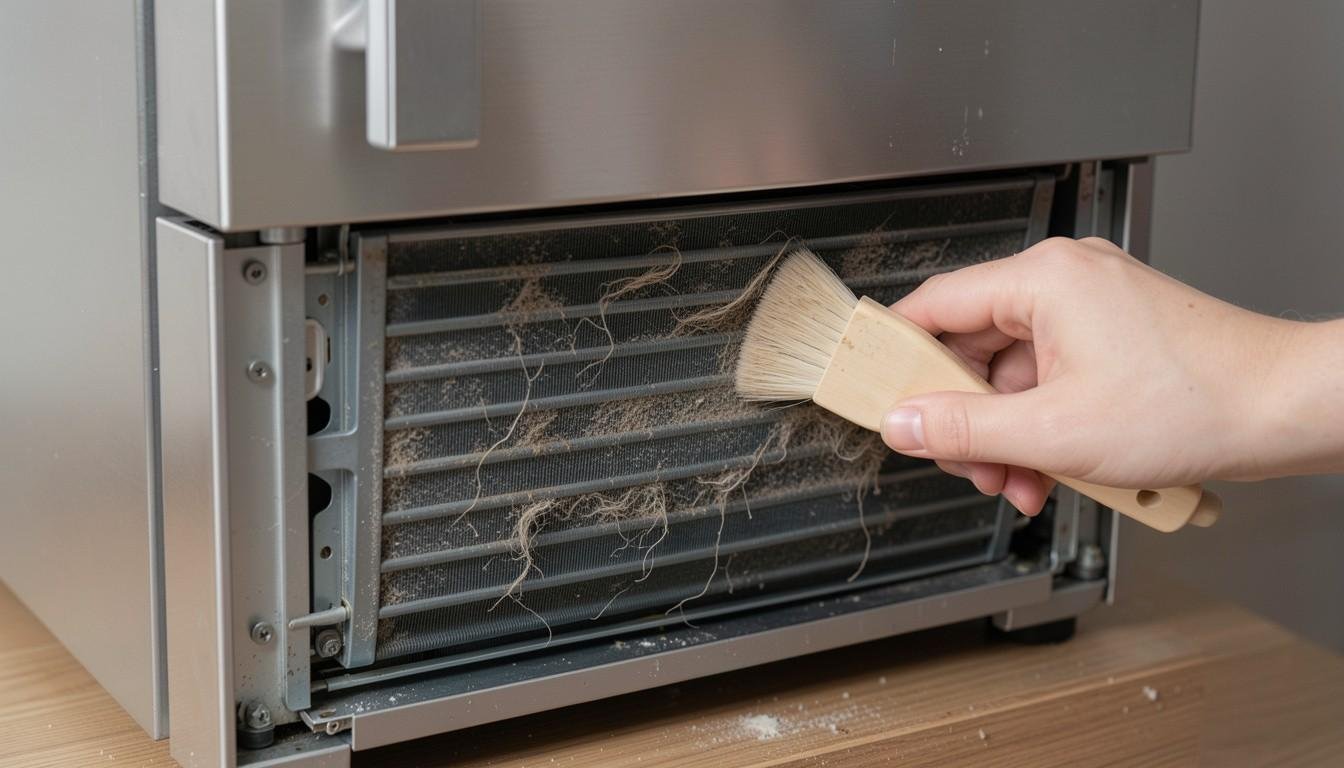
Condenser coils are the warm coils on the back or underneath the fridge. Dust, pet hair, and kitchen grease cling to these coils. A dusty coil acts like a blanket around the refrigerant line.
Appliance guides warn that dirty condenser coils:
- Reduce heat transfer.
- Force the compressor to run longer.
- Make the cabinet sides and front frame feel hot.
In a Menifee summer kitchen, the air around the fridge is already hot, so dirty coils push the system from “working hard” to “overheating.”
Fans and motors
Your fridge uses:
- A condenser fan to pull room air over the hot coil.
- An evaporator fan to move cold air through the freezer and refrigerator section.
Longer cycles mean these motors spin more hours per day. Dust and heat together increase motor temperature and can cause noisy bearings or outright fan failure.
How Menifee Heat Affects Your Electric Bill
Your refrigerator is always on, so small changes add up quickly. Studies of California electricity demand show that as temperatures rise, residential power use climbs, driven by cooling systems and heat‑sensitive appliances.
Your fridge contributes to that increase in three ways:
- It spends more minutes per hour running in a hot kitchen.
- It needs more time to recover after door openings.
- If coils are dirty and airflow is poor, it loses even more efficiency.
If you are trying to cut your summer electric bill, you should think about your fridge and your HVAC together.
Signs Your Refrigerator Is Overworking
You do not need gauges or meters to spot stress. Your fridge will usually tell you something is wrong.
Common signs include:
- Hot cabinet sides or frame. The sides or front edge feel hotter than usual. This often means the condenser is running very hot.
- Constant running. You hear the compressor humming nearly all the time, with only short breaks.
- Weak cooling. Milk and leftovers feel less cold, or food spoils faster, even though the thermostat setting has not changed.
- Uneven temperatures. The freezer may stay frozen while the refrigerator section warms up, which can indicate airflow or coil issues.
- New noises. Louder humming, buzzing, or rattling may come from stressed fans or a compressor working under higher pressure.
If you are seeing several of these symptoms at once, your fridge deserves attention before it fails. To see how refrigerator problems fit into your broader appliance pattern, you can look at Top 5 Most Common Appliance Repair Calls We Get in Menifee.
Why Dirty Coils and Poor Ventilation Make It Worse
Heat is part of the problem. Dust and tight spaces make it worse.
In Menifee, dust from outside and pet hair inside the home settle on coil surfaces. Many fridges sit in tight alcoves or against walls with almost no clearance. Manufacturers and repair specialists consistently warn that:
- A dirty condenser coil makes refrigerators run longer and use more energy.
- Restricted airflow around the unit raises coil and compressor temperature.
- Excess heat can shorten component life and increase failure risk.
In other words, your fridge might be “designed for hot climates,” but Menifee heat, dust, and poor airflow can still push it beyond its comfort zone.
What You Can Do to Protect Your Fridge in Summer
You can cut your fridge’s summer workload with a few practical steps. These apply to both residential and light commercial units.
Clean the condenser coils
Coil cleaning is one of the highest impact tasks you can do yourself.
- Unplug the refrigerator.
- Remove the lower front grille or rear access panel, depending on your model.
- Use a coil brush and vacuum to gently remove dust, hair, and lint from the coils and surrounding area.
- Avoid bending the coil fins.
Appliance guides confirm that clean coils improve heat transfer, lower compressor temperature, and reduce run times, especially in hot weather.
Improve airflow around the fridge
Your fridge needs space to breathe.
- Leave a few inches of clearance between the back of the fridge and the wall.
- Do not pack boxes or pantry items tightly around the sides.
- Keep the top of the fridge clear if the design relies on warm air rising from the coil area.
- Make sure the front toe grille is not blocked, since many units pull air in at the bottom.
If your fridge is part of a built‑in cabinet wall, ask yourself where the hot air goes. If it cannot escape, it will cook your compressor in a Menifee heatwave.
Manage loading and door use
Good habits matter more in summer.
- Do not block air vents inside the fridge or freezer with food items.
- Leave some space around items so cold air can circulate.
- Let hot leftovers cool to room temperature before placing them inside.
- Group your fridge trips during heatwaves to reduce frequent door openings.
These habits lower the heat load inside the cabinet and help the unit recover faster after you open the door.
Protect and test door seals
Door seals (gaskets) keep cold air inside.
- Inspect them for cracks, tears, or hardened spots.
- Close a dollar bill in the door and pull it out gently. If it slides out too easily, the seal may be weak in that area.
- Clean seals with mild soap and water to remove sticky residue that can prevent a tight seal.
A leaking seal makes the fridge run longer, which you feel more acutely in hot weather.
Why Garage Fridges Fail Sooner in Menifee
Garage refrigerators are common in Menifee, but they live hard lives.
Most fridges are designed to operate in an ambient temperature range that many garages exceed during summer afternoons. Refrigeration manufacturers and commercial equipment guides point out that high ambient temperatures can cause:
- Longer compressor run times.
- Difficulty maintaining safe temperatures.
- Overheating and shortened compressor life.
In a Menifee garage, your fridge might also sit near a water heater or boiler, which adds even more ambient heat.
To keep a garage fridge alive longer:
- Place it out of direct sunlight.
- Keep clear airflow behind and around it.
- Monitor temperatures inside with a simple thermometer, not just the dial on the fridge.
- Consider a unit rated for garage or high‑ambient use if you are replacing.
If you see frequent failures or repeated warm‑fridge events in the garage, it may be worth revisiting the whole repair versus replace question. For that, you can use the framework in The Cost of Appliance Repair in Menifee vs Buying New.
When to Call for Refrigerator Repair
DIY maintenance is powerful, but you should not ignore clear warning signs.
Call a refrigerator repair technician if:
- Food spoils quickly even after you clean coils and improve airflow.
- The compressor runs constantly or cycles on and off rapidly.
- The freezer stays cold but the refrigerator section does not.
- You hear loud clicking or buzzing near the compressor.
- You see water pooling underneath or notice ice buildup in unusual places.
These signs can indicate issues such as a failing start relay, bad fan motor, defrost failure, control problems, or a sealed‑system issue. Early diagnosis often costs less than waiting until the machine stops completely.
If your home also has AC performance issues during heatwaves, it is worth checking your HVAC health at the same time. You can use Why AC Units in Riverside County Fail Faster Without Maintenance and Commercial HVAC Maintenance: Essential for Menifee Small Businesses if you manage or own a small commercial property.
Repair vs Replacement in a Menifee Summer
Summer is often when weak refrigerators reveal themselves. Choosing between repair and replacement involves:
- The appliance’s age.
- The type of failure (minor part vs sealed system).
- The cost of repair versus installed cost of a new unit.
- Potential energy savings and reliability with a newer model.
Typical patterns:
- Fan replacements, thermostat repairs, and door gasket replacements often justify repair on mid‑life units.
- Sealed‑system or compressor failures on older fridges, especially during peak summer strain, often push you in the direction of replacement.
Instead of guessing, you can apply the structure in The Cost of Appliance Repair in Menifee vs Buying New and plug your refrigerator quotes into that framework.
How Your HVAC and Refrigerator Work Together
Your refrigerator does not operate in isolation. Its workload is tied directly to how hot your home or business gets in summer.
If your AC is under‑maintained, your indoor temperature drifts up, and your fridge must dump heat into warmer air. By contrast, if your HVAC is efficient and stable:
- Your kitchen stays cooler.
- Your fridge compressor runs fewer hours.
- Both systems experience less wear.
For better AC performance, you can:
- Follow Preparing Your Menifee Home for the Summer Heat: An HVAC Checklist.
- Use the tips in How to Protect Your Outdoor HVAC Unit During Menifee’s Dusty Season so dust does not choke your condenser coil.
- Explore Energy Rebates in Menifee: Upgrading to High‑Efficiency HVAC Systems if your system is very old or inefficient.
A cooler house is not just a comfort goal. It is part of caring for every cold appliance you own.
How Appliance Repair Menifee Helps
As Appliance Repair Menifee, we understand both sides of your summer load: appliances and HVAC. We see how Menifee heat, dust, and usage patterns combine to stress equipment.
We help you by:
- Cleaning and inspecting refrigerator coils, fans, and door seals before they cause breakdowns.
- Diagnosing summer performance issues and explaining clear options: repair, maintain, or replace.
- Coordinating with HVAC maintenance so your whole cooling strategy, including your fridge, works together.
- Supporting small commercial properties with both kitchen appliance repair and HVAC maintenance plans.
If you want to schedule a refrigerator checkup, you can use the contact Appliance Repair Menifee page to request service and mention that you are seeing summer performance issues. If you prefer to start by reviewing all available services for residential and commercial customers, visit the Appliance Repair Menifee homepage.