You probably never think about your refrigerator’s condenser coils. They hide behind a grille or panel, collect dust, and quietly decide how long your fridge lasts and how much you pay on your power bill. In Southern California, where kitchens and garages run warm for much of the year, dirty condenser coils are one of the fastest ways to “kill” a refrigerator.
In 2025 and 2026, multiple coil studies and case reports showed that even a thin layer of dirt on condensing coils can cause big efficiency losses and higher compressor stress. Some reports cite that a small amount of dirt on refrigeration coils can reduce efficiency by about 21 percent and increase energy use by roughly 35 percent. That is before you factor in hot Menifee summers and dust.
In this guide, you will see what condenser coils do, how dirt damages them, how that damage turns into real money, and exactly how to clean them safely. You will also see when DIY is enough and when you should call a local appliance repair company like Appliance Repair Menifee for help.
If you want to see how coil condition and summer heat play together, it also helps to read Why Your Refrigerator Works Harder in Menifee Summers.
What Condenser Coils Do and Why They Matter
Your refrigerator works by moving heat. The evaporator coil inside the fridge absorbs heat from the food and air. The condenser coil releases that heat into the room.
The condenser coil is the hot coil on the back or bottom of the fridge. The compressor pushes high‑pressure refrigerant through the condenser. As air flows across the coil, the refrigerant cools and condenses, releasing heat to the room.
This process runs almost all day, every day. When the condenser coil is clean and has good airflow:
- The compressor runs at normal pressure and temperature.
- The fridge reaches and holds the set temperature.
- Energy use stays close to what the manufacturer intended.
When the coil is dirty, the whole balance shifts.
How Dirt on Condenser Coils Wrecks Efficiency
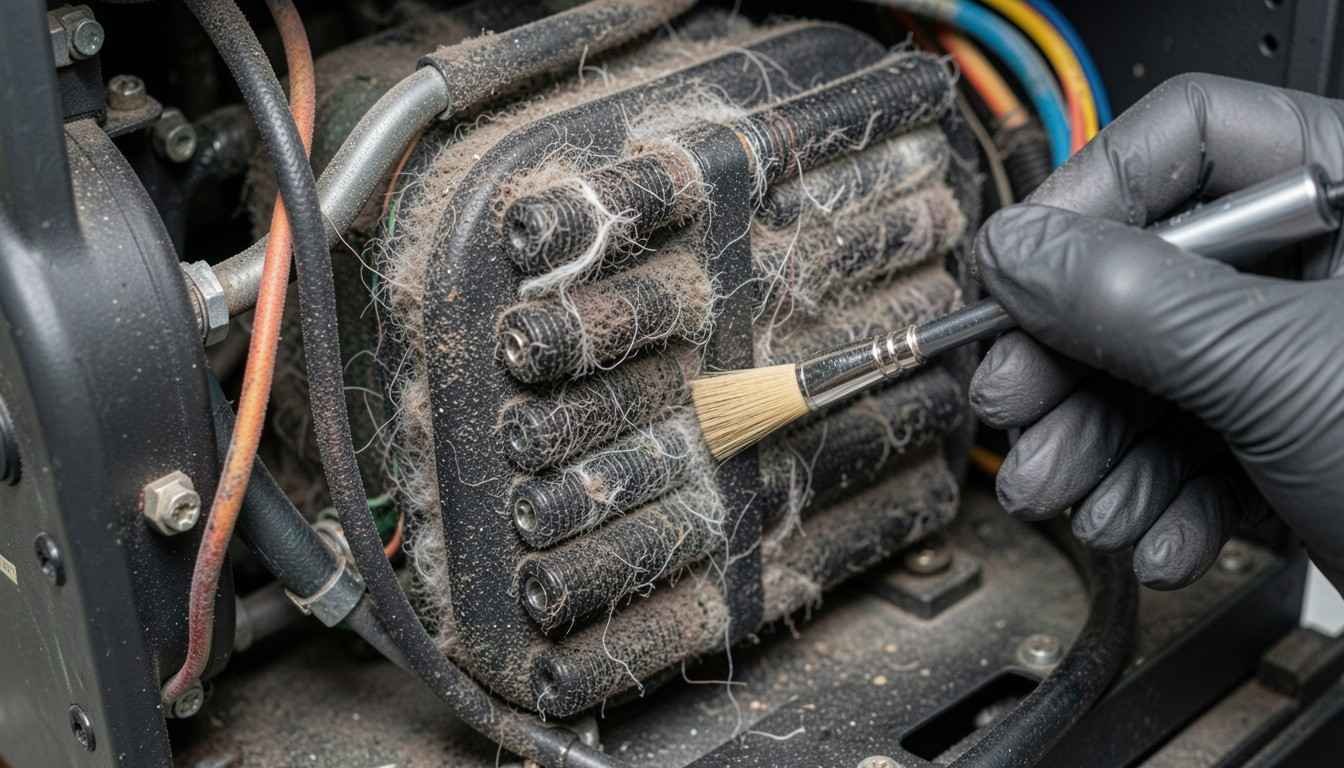
Dust, pet hair, and kitchen grease stick to the condenser coil. Over time, they build a mat of debris on the fins. That mat acts like insulation.
Coil and energy studies explain that:
- Even a thin layer of dirt on refrigeration coils can reduce heat transfer significantly. One case report cites that an EPA study found 0.042 inches of dirt on condensing coils caused a 21 percent drop in efficiency and increased refrigeration energy use by 35 percent.
- Commercial coil tests show that heavy fouling can nearly double energy draw for some systems, especially in hot environments.
When heat transfer drops:
- The compressor must run longer and harder to move the same amount of heat.
- The system’s energy use rises.
- The fridge spends more time in “running” mode and less time resting.
On your bill, that looks like a refrigerator that silently burns more electricity year after year.
How Dirty Coils Kill Compressors and Shorten Fridge Life
Efficiency loss is one problem. Compressor stress is the bigger one.
Dirty coils raise the condensing temperature. That increases the head pressure on the compressor. Coil and HVAC studies describe common effects:
- Higher head pressure means the compressor works harder on every stroke.
- Higher workload increases amp draw and winding temperature.
- Hotter compressor operation and more frequent cycling wear out internal components faster.
Over time, this creates a path that looks like this:
- Coils get dirty.
- Pressures and temperatures rise.
- Compressor runs longer and hotter.
- Insulation breaks down and mechanical parts wear.
- The compressor fails, sometimes in the middle of a heatwave.
Several coil case studies refer to dirty coils as a leading cause of “catastrophic compressor failure” in refrigeration equipment. Once the compressor fails, you often face a big repair bill or a replacement decision.
For more on that repair‑versus‑replacement math, you can apply the thinking in The Cost of Appliance Repair in Menifee vs Buying New.
Symptoms of Dirty Condenser Coils in Your Fridge
You do not need gauges to suspect dirty coils. Your fridge will give you hints.
Common symptoms include:
- The fridge runs almost constantly. You hear it humming more than before, with shorter breaks between cycles.
- Cooling feels weak. Food feels less cold than it used to, even at the same temperature setting.
- The sides or front frame feel hot. Warm cabinet walls or a very warm front edge often mean the condenser is running hot.
- Your electric bill creeps up. Energy‑saving guides note that dirty refrigerator coils can raise energy use by a noticeable amount, especially on older models.
If you see these signs and you live in a warm home, dirty coils are one of the first suspects.
For a wider view of how other appliance symptoms show up in Menifee homes, you can check Top 5 Most Common Appliance Repair Calls We Get in Menifee.
How Often You Should Clean Condenser Coils Now
In 2026, advice on cleaning frequency has become more specific.
Recent homeowner guides recommend:
- At least once a year for most homes.
- Every 6 months for homes with pets, smokers, or heavy kitchen use.
- More often if you see visible dust mats on the coil or live in a dusty area.
Southern Living’s 2026 guidance notes that failing to clean refrigerator coils regularly can reduce efficiency and lead to compressor burnout over time, especially in warmer households.
In Southern California, especially Menifee and similar cities, dust and pet hair are common. If you keep a fridge in the garage, that unit needs even more attention because garages run hotter and collect more dust.
Step‑by‑Step: How to Safely Clean Refrigerator Condenser Coils
You can clean most residential refrigerator coils yourself if you work carefully. This is a high‑value DIY task.
Step 1: Unplug and access the coils
- Unplug the fridge to remove power.
- Pull the fridge out gently if coils are on the back.
- If your coils are underneath, remove the lower front grille or rear access panel.
Use a flashlight to see the coil area clearly. You will probably see dust, pet hair, and lint.
Step 2: Use the right tools
Good tools include:
- A long, narrow coil cleaning brush.
- A vacuum with a crevice tool or brush attachment.
- A flashlight for visibility.
Refrigerator maintenance articles and coil‑cleaning guides recommend this simple kit for safe, regular cleaning.
Step 3: Brush and vacuum carefully
- Gently brush loose dust off the coil fins, working from top to bottom.
- Use the vacuum to collect debris as you loosen it.
- Avoid pushing the brush so hard that you bend the thin aluminum fins.
If fins bend slightly, you can gently straighten them with a fin comb, but avoid aggressive attempts that might puncture tubes.
Step 4: Clean the surrounding area
- Vacuum dust from the floor, back wall, and any nearby fan blades.
- Make sure the condenser fan can spin freely and is not blocked by debris.
Step 5: Restore power and position
- Replace panels or grilles.
- Move the fridge back into position with proper clearance.
- Plug it in and listen for normal operation.
Give the fridge several hours to settle. You may notice quieter operation and more reasonable run times, especially if the coils were heavily fouled.
How Dirty Coils Drain Your Wallet
Dirty coils cost money in two ways: higher energy use and higher repair or replacement cost.
Energy use
Coil research and energy guides show:
- Even modest coil fouling can increase refrigeration energy use by 20–35 percent.
- In heavy commercial fouling cases, dirty coils can nearly double energy consumption until cleaned.
In a home, a 20–35 percent increase on one major appliance may not shock you in a single month, but it adds up over years.
Repair and replacement
In 2026, Angi’s refrigerator repair cost guide reports:
- Many repairs fall in the $150–$400 range.
- The average refrigerator repair cost sits around $275, with a range that can stretch up to about $1,000 for major work.
Compressor replacement is near the top of that range:
- Guides list compressor repair or replacement in the hundreds of dollars, often around $300–$800 or more, depending on model and labor.
Cleaning coils regularly is inexpensive compared to the cost of a failed compressor or an early replacement.
If you want a deeper cost strategy that covers other appliances too, you can apply the logic in The Cost of Appliance Repair in Menifee vs Buying New.
Climate, Dust, and Installation in Southern California
Southern California adds extra stress to condenser coils.
- Hot indoor air. Hot kitchens and garage areas make it harder for the fridge to dump heat, so even mildly dirty coils push systems into high‑stress territory.
- Dust and pet hair. Inland dust and pets increase coil fouling speed. Some coil guides list “dusty environments” and “pets” as key reasons to shorten cleaning intervals.
- Tight installations. Built‑in refrigerators and fridges in tight alcoves trap hot air and reduce natural convection, making coil condition even more critical.
Your HVAC system plays a part too. If your AC cannot keep your home reasonably cool in summer, your fridge must work harder. Coordinated maintenance on both systems makes sense, which is where resources like Preparing Your Menifee Home for the Summer Heat: An HVAC Checklist and How to Protect Your Outdoor HVAC Unit During Menifee’s Dusty Season come in.
When Condenser Coils Are Not the Only Problem
Coil cleaning is powerful, but it does not fix every cooling issue.
If your fridge is running but not cooling, and coil cleaning does not help, you may be facing:
- A failed evaporator fan.
- A defrost system failure that leaves heavy ice on the evaporator.
- A faulty thermostat or control board.
- A low refrigerant charge or weak compressor.
Troubleshooting resources note that these issues can appear similar from the outside. That is why it is useful to think of coil cleaning as a first step and not the entire solution.
For a detailed breakdown of that specific symptom, you can read Why Is My Refrigerator Running But Not Cooling?.
How an Appliance & HVAC Repair Company Helps You Stay Ahead
You can clean coils yourself, but partnering with a local appliance and HVAC repair company can save you from bigger surprises.
A company like Appliance Repair Menifee can:
- Perform deep coil cleaning on heavily fouled systems.
- Check compressor amperage, refrigerant pressures (where appropriate), and temperature differences to see how stressed your system is.
- Identify related problems such as weak fans, poor door seals, or control issues.
- Coordinate refrigerator care with HVAC maintenance so your whole cooling ecosystem runs better.
If you own or manage a small commercial property, you can also integrate coil care into a broader plan using
Commercial HVAC Maintenance: Essential for Menifee Small Businesses.
When you are ready to schedule professional service, you can request a visit from the team through contact Appliance Repair Menifee and mention that you want a refrigerator inspection with specific attention to condenser coil condition.