You’re standing in the appliance aisle, staring at two washers that do the same job in completely different ways. One opens from the top, one opens from the front, and the salesperson keeps talking about efficiency and capacity.
What nobody tells you is which one will cost less when it breaks down, or how often you’ll actually be calling a repair technician. That’s the question that matters most once the warranty runs out, and it’s exactly what this guide answers.
The Repair Question Nobody Asks Before Buying
Most buying guides focus on price, capacity, and energy ratings. Repair frequency and cost rarely make the list, even though they affect your wallet for the entire life of the machine.
Quick Answer Summary
Top-load washers are generally simpler to repair and cost less when something breaks, mainly because of their basic design and easier access to internal parts. Front-load washers can match or come close to top-load reliability in some brands, but their sealed design makes certain repairs more time-consuming and expensive. The right answer depends on the specific repair, the brand, and how well you maintain the machine.
Why This Decision Matters More in Menifee’s Water and Climate Conditions
Menifee’s hard water speeds up mineral buildup inside both washer types, and dry, dusty conditions add extra strain on machines that run often. If you already deal with detergent residue or scale buildup, our guide on how Menifee’s hard water affects your dishwasher and washing machine explains what that buildup does to internal components over time.
How Front-Load and Top-Load Washers Actually Work
Understanding the basic mechanics behind each washer type makes it easier to see why one tends to need more hands-on repair work than the other.
Front-Load Design: Drum, Gasket, and Bearing System
Front-load washers spin the drum horizontally and rely on a rubber door gasket to keep water sealed inside during the cycle. That gasket, along with the drum bearings that support constant rotation, forms the core of most front-load repair calls.
Top-Load Design: Agitator vs. Impeller Models
Top-load washers either use a center agitator that twists clothes through the water or a low-profile impeller that pulses water around the drum. Both designs sit inside a simpler open-top structure with fewer sealed components.
Why Design Differences Directly Affect Repair Complexity
A sealed front-load system protects against leaks during the cycle, but it also means a technician often has to remove more panels to reach the same part a top-load design exposes right away. Fewer barriers usually mean faster repairs and lower labor costs.
2026 Reliability Data: What Real Service Calls Show
Reliability claims get repeated so often that people assume they’re outdated stereotypes. Current service data tells a more balanced story, and washer issues remain one of the top reasons homeowners call a repair company in the first place.
In fact, washer troubleshooting shows up consistently among the most common appliance repair calls we get in Menifee, regardless of washer type.
Are Front-Loaders Really Less Reliable? What the Numbers Say
Recent service call data from a major appliance retailer tracking over 33,000 repair visits found nearly identical first-year service rates between top-load and front-load washers, close to 4.4 percent for top-load and 4.6 percent for front-load.
That’s a much smaller gap than most people assume, and it shows the old idea that front-loaders always break down more often no longer holds up across the board.
Most Common Top-Load Repairs and Failure Points
Top-load washers most often need repairs related to the transmission, drive belt, or lid switch. These parts are usually easier to access, which keeps both diagnostic time and labor costs lower.
Most Common Front-Load Repairs and Failure Points
Front-load washers see more repairs tied to the door gasket, drain pump, and bearing assembly. Bearing failures in particular require disassembling the drum, which adds both time and cost compared to a typical top-load repair.
Why Some Brands Are Harder to Get Serviced Than Others
Reliability numbers vary a lot by brand, and so does how easily a technician can get replacement parts. Some manufacturers keep parts well stocked and support independent repair companies, while others make sourcing parts slow or expensive, which drives up your total repair cost regardless of washer type.
Repair Cost Comparison: Front-Load vs. Top-Load
Numbers help put the reliability data into perspective, especially when you’re deciding whether a repair is worth the cost.
Average Repair Costs by Washer Type
Top-load washer repairs typically run on the lower end of the general washer repair range, often between $50 and $300, while front-load repairs tend to land between $100 and $400 depending on the part involved.
Most Expensive Repairs: Bearings, Control Boards, and Door Seals
Bearing replacement, control board failure, and door seal replacement rank among the priciest repairs for either washer type, but they show up more frequently on front-load machines because of the sealed drum design.
Least Expensive Repairs: Belts, Hoses, and Switches
Belts, hoses, and lid or door switches are inexpensive to replace on both washer types, and these repairs make up a large share of routine service calls.
How Parts Availability Affects Your Final Bill
A repair that should take an hour can stretch into a multi-day wait if the part has to be special ordered. This is one more reason brand matters as much as washer type when you’re estimating true repair cost.
Which Washer Type Is Easier to Diagnose and Fix?
Cost is only part of the picture. How long a repair takes, and whether you can handle it yourself, matters just as much for your daily routine.
Access and Disassembly: What Technicians Deal With
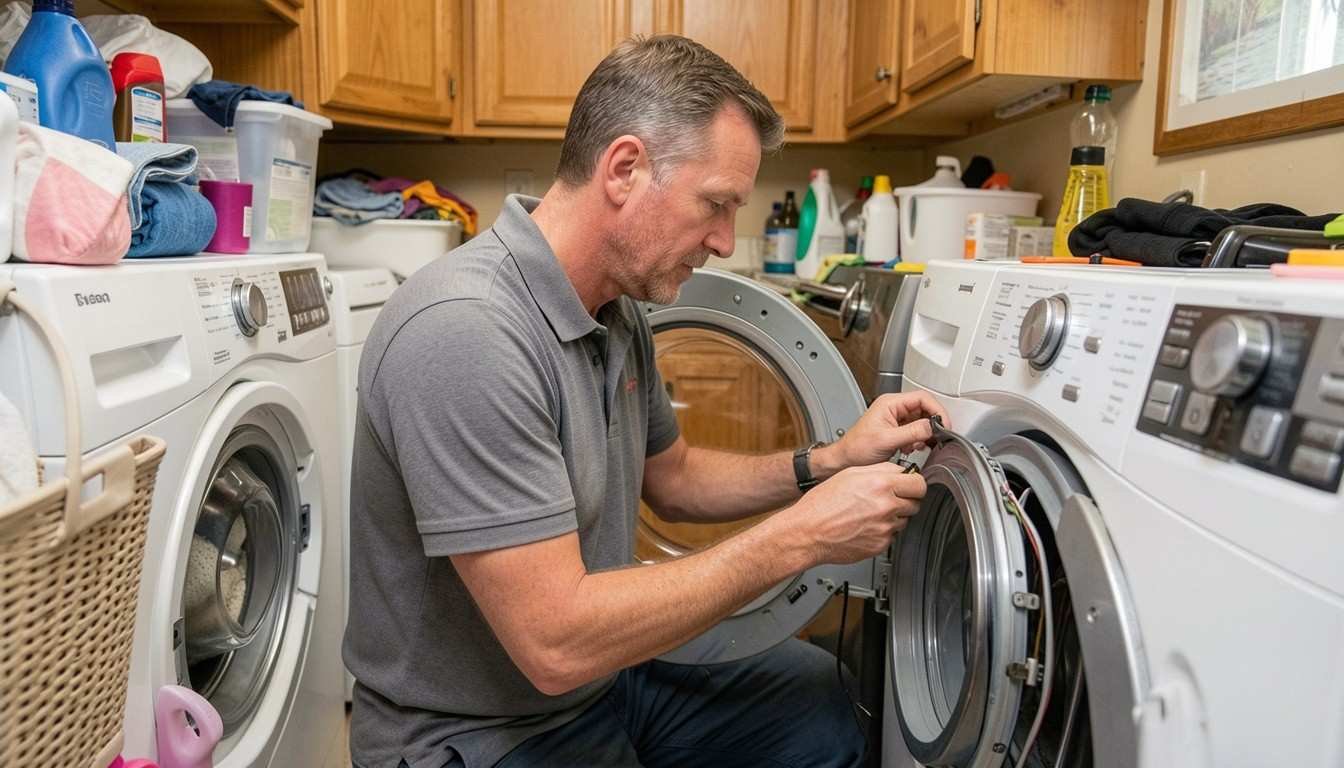
Front-load washers often require removing the front panel or top cover to reach internal components, while top-load washers usually open up from the top or back with fewer steps involved.
Why Top-Loaders Are Often Faster to Repair
Because top-load washers expose the motor, pump, and belt system with minimal disassembly, technicians can usually diagnose and fix common issues in a single visit without ordering specialty tools.
Why Front-Loaders Take Longer for Certain Repairs
Gasket and bearing repairs on front-load washers require more careful disassembly to avoid damaging the drum or seal, which extends both labor time and the overall repair window.
DIY-Friendly Fixes vs. Repairs That Need a Professional
Simple fixes like cleaning a lint trap, clearing a drain filter, or replacing a hose are manageable for most homeowners on either washer type. Anything involving the drum, bearings, or control board should go to a professional, since a mistake there can turn a moderate repair into a full replacement.
Mold, Moisture, and Maintenance Differences
Repair frequency isn’t only about mechanical parts. Moisture-related issues bring their own set of repair calls, and they hit one washer type far more than the other.
Why Front-Loaders Are More Prone to Gasket and Odor Issues
The tight door seal that keeps water inside during the cycle also traps moisture afterward, creating conditions where mold and mildew grow easily. We covered the full breakdown of this issue, along with prevention steps, in our guide on why your washing machine smells like mildew and how to fix it.
Why Top-Loaders Have Fewer Moisture-Related Repairs
Without a sealed door, top-load washers get more natural airflow after each cycle, which lowers the odds of trapped moisture turning into a mold problem that eventually affects the machine’s performance.
Moisture-Prevention Habits That Cut Down Repair Visits
Leaving the door or lid open between loads, wiping down the gasket, and running an empty hot cycle once a month all reduce the odds of a moisture-related service call, regardless of which washer type you own.
Lifespan and Long-Term Value
Repair cost only tells part of the story. How long the machine lasts overall changes the math on whether repairs make sense in the first place.
Average Lifespan: Front-Load vs. Top-Load
Top-load washers tend to last around 10 to 14 years, while front-load washers typically last closer to 10 years, largely due to the added wear on the door seal and bearing system from constant use.
How Usage Frequency Affects Wear and Repair Needs
A household running one or two loads a day puts far less strain on a washer than a larger family or a rental property running multiple loads daily. Heavier use shortens the interval between repairs no matter which washer type you choose.
Total Cost of Ownership: Repairs, Water, and Energy Combined
Front-load washers generally use less water and energy per load, which can offset a higher repair bill over several years. Top-load washers cost less to fix individually, but that advantage can shrink if the machine needs more frequent service.
Repair vs. Replace: When Each Washer Type Is Worth Fixing
At some point, every washer reaches a stage where repair no longer makes financial sense. Knowing where that line sits saves you from throwing money at a machine that’s already on its way out.
The 50% Rule Applied to Front-Load and Top-Load Washers
A widely used guideline in the appliance industry says that if a repair costs more than half the price of a new washer, replacement is usually the smarter move. This rule applies to both washer types, though front-load repairs hit that threshold faster due to higher parts and labor costs.
Signs Your Washer Is Nearing the End of Its Life
Frequent repeat repairs, rising utility bills, unusual noises during the spin cycle, and difficulty sourcing parts are all signs your washer is approaching the end of its useful life.
When Replacement Makes More Sense Than Another Repair
If your washer already needed a major repair in the past year and now has a second issue, replacement usually costs less over time than continuing to patch the same aging machine. Our guide on appliance repair costs in Menifee versus buying new walks through how to run that comparison for your specific situation.
Which Washer Should You Buy If Repairability Matters Most?
If lower repair risk is your top priority, the decision comes down to your household’s specific needs rather than a single universal answer.
Best Choice for Homeowners Who Want Lower Repair Risk
If you want the simplest repairs and the fewest moisture-related issues, a top-load washer is generally the safer bet, especially for households that don’t want to manage regular gasket maintenance.
Best Choice for Households With Hard Water or Heavy Laundry Loads
Households in hard water areas or those running heavy daily loads may still benefit from a front-load washer’s cleaning performance, as long as they commit to the maintenance steps that keep mold and mineral buildup under control.
Commercial and Multi-Unit Considerations for Business Owners
If you’re managing laundry equipment across multiple units or a commercial property, repair decisions carry a different weight than they do in a single-family home.
Why Repair Downtime Costs More in Commercial Settings
A washer that’s down for two extra days waiting on a bearing or gasket part doesn’t just inconvenience one household. In a laundromat or rental property, it means lost revenue and frustrated tenants until the machine is back online.
Front-Load vs. Top-Load for Laundromats and Rental Properties
Laundromats often lean toward front-load machines for their water efficiency and higher capacity per cycle, while rental properties sometimes favor top-load washers for their lower repair cost and simpler upkeep between tenants.
Setting Up a Maintenance Schedule to Reduce Emergency Repairs
Scheduled maintenance catches small issues, like a worn belt or early gasket wear, before they turn into an emergency call that takes a machine out of service. The same principle applies to other equipment on your property too, since neglected upkeep is a big reason AC units in Riverside County fail faster without regular maintenance..
Choosing between front-load and top-load comes down to what you value more: lower repair costs and simpler fixes, or better cleaning performance and water savings with a bit more upkeep. Either way, the machine you already own is probably worth a second look before you replace it.
If something’s acting up or you’re weighing a repair against a new purchase, our team at Appliance Repair Menifee can walk you through the real cost of fixing it versus starting fresh, or you can get in touch with us directly to schedule a diagnostic visit.