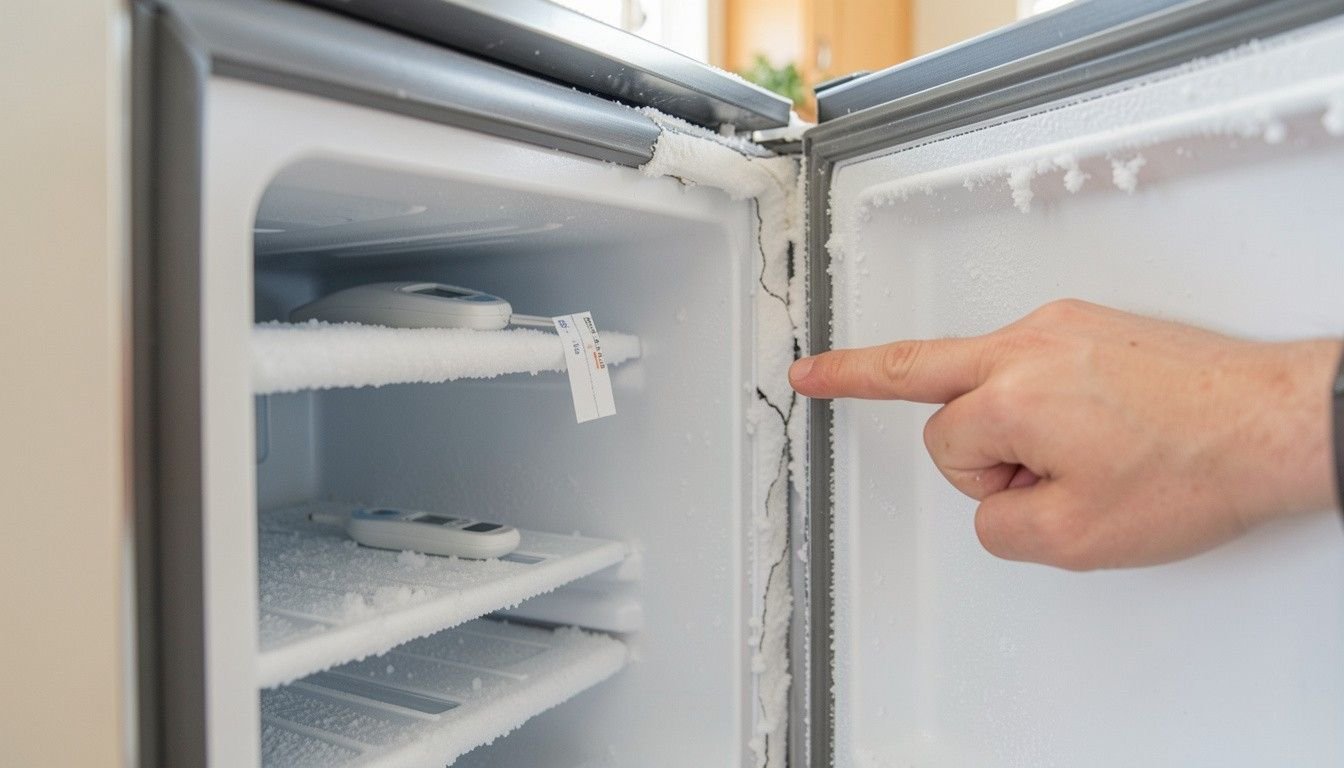
Frost buildup in your freezer usually means warm air is getting in, cold air is escaping, or the defrost system is not doing its job. In many Menifee homes, the door seal is the first thing you should check because a weak gasket can let in enough humidity to create frost fast.
You should not ignore repeated frost. It can reduce storage space, hurt cooling, raise energy use, and put extra stress on the compressor. As an appliance and HVAC repair company, Appliance Repair Menifee sees this issue often in Southern California homes where heat, dust, and frequent fridge use make freezer problems show up faster.
If your fridge is also buzzing, warm, or leaking, you may have a second issue. You can compare symptoms with What That Loud Buzzing Noise Coming from Your Fridge Means and The Truth About Refrigerator Leaks: Is It the Water Line or Defrost Drain?.
Why Frost Buildup Happens in the Freezer
A freezer creates frost because it runs below freezing. The problem starts when warm, moist air gets inside. That air drops moisture on cold surfaces, and the moisture freezes.
Recent 2026 repair guides still point to the same root causes: bad door sealing, blocked airflow, and defrost failures. In a healthy freezer, frost stays light and controlled. In a problem freezer, frost spreads across walls, shelves, fan covers, and food packages.
You will see faster frost buildup if:
- You open the freezer often.
- You leave the door open too long.
- The room is hot or humid.
- The gasket is dirty, cracked, warped, or loose.
- The freezer is packed so tightly that air cannot move.
In Southern California, hot kitchen air and garage installs make those conditions more common.
Is It a Seal Problem or Something Else?
The seal is often the first suspect, but it is not the only one.
A bad gasket lets warm air leak in around the door. That extra moisture freezes and builds frost around the edge of the door, frame, or gasket itself.
But frost can also come from:
- A freezer that sits unlevel and does not close correctly.
- A door blocked by overpacked shelves or trays.
- A defrost system that leaves ice on the evaporator coil.
- A fan issue that stops air from moving properly.
A good repair check starts with the seal, but it should not stop there. If you fix the gasket and frost keeps returning, another part is creating the problem.
Signs Your Door Seal Is Failing
A failing seal usually leaves a few obvious clues.
Frost around the door edge
If you see frost only around the rim of the freezer door, the gasket may not be sealing tightly.
Door does not stay closed
If the door pops open slightly or does not pull in firmly, the gasket, hinge, or alignment may be off.
Warm air symptoms
A weak seal often creates:
- Condensation on the door frame.
- Soft food near the top or front.
- Higher compressor run time.
- Frost that returns after you clean it.
Physical gasket damage
Look for:
- Cracks.
- Hard spots.
- Warped edges.
- Loose sections.
- Dirt buildup that keeps the door from sealing.
If the gasket feels stiff like old plastic, it may not flex well enough to seal. That is common in older fridges and garage units.
For broader refrigerator performance issues that often appear with seal problems, you can also read Why Is My Refrigerator Running But Not Cooling?.
Other Causes of Frost Buildup
If the seal looks fine, move down the list.
Overpacked freezer
A freezer that is stuffed too full can block the door from closing fully. It can also stop air from circulating, which leads to uneven temperatures and frost patches.
Unlevel refrigerator
If the appliance leans forward or sits unevenly, the door may not close tight. That slight gap can pull in humid air.
Frequent door openings
Every time you open the door, warm air rushes in. The longer the door stays open, the more frost you create. This is a big issue in busy households and small commercial settings.
Defrost system problems
The freezer should melt built-up frost on a schedule. If the heater, timer, sensor, or control board fails, ice stays on the evaporator coil and spreads.
If you hear buzzing or clicking during this problem, the issue may be bigger
Frost buildup in your freezer usually means warm air is getting in, cold air is escaping, or the defrost system is not doing its job. In many Menifee homes, the door seal is the first thing you should check because a weak gasket can let in enough humidity to create frost fast.
You should not ignore repeated frost. It can reduce storage space, hurt cooling, raise energy use, and put extra stress on the compressor. As an appliance and HVAC repair company, Appliance Repair Menifee sees this issue often in Southern California homes where heat, dust, and frequent fridge use make freezer problems show up faster.
If your fridge is also buzzing, warm, or leaking, you may have a second issue. You can compare symptoms with What That Loud Buzzing Noise Coming from Your Fridge Means and The Truth About Refrigerator Leaks: Is It the Water Line or Defrost Drain?.
Why Frost Buildup Happens in the Freezer
A freezer creates frost because it runs below freezing. The problem starts when warm, moist air gets inside. That air drops moisture on cold surfaces, and the moisture freezes.
Recent 2026 repair guides still point to the same root causes: bad door sealing, blocked airflow, and defrost failures. In a healthy freezer, frost stays light and controlled. In a problem freezer, frost spreads across walls, shelves, fan covers, and food packages.
You will see faster frost buildup if:
- You open the freezer often.
- You leave the door open too long.
- The room is hot or humid.
- The gasket is dirty, cracked, warped, or loose.
- The freezer is packed so tightly that air cannot move.
In Southern California, hot kitchen air and garage installs make those conditions more common.
Is It a Seal Problem or Something Else?
The seal is often the first suspect, but it is not the only one.
A bad gasket lets warm air leak in around the door. That extra moisture freezes and builds frost around the edge of the door, frame, or gasket itself.
But frost can also come from:
- A freezer that sits unlevel and does not close correctly.
- A door blocked by overpacked shelves or trays.
- A defrost system that leaves ice on the evaporator coil.
- A fan issue that stops air from moving properly.
A good repair check starts with the seal, but it should not stop there. If you fix the gasket and frost keeps returning, another part is creating the problem.
Signs Your Door Seal Is Failing
A failing seal usually leaves a few obvious clues.
Frost around the door edge
If you see frost only around the rim of the freezer door, the gasket may not be sealing tightly.
Door does not stay closed
If the door pops open slightly or does not pull in firmly, the gasket, hinge, or alignment may be off.
Warm air symptoms
A weak seal often creates:
- Condensation on the door frame.
- Soft food near the top or front.
- Higher compressor run time.
- Frost that returns after you clean it.
Physical gasket damage
Look for:
- Cracks.
- Hard spots.
- Warped edges.
- Loose sections.
- Dirt buildup that keeps the door from sealing.
If the gasket feels stiff like old plastic, it may not flex well enough to seal. That is common in older fridges and garage units.
For broader refrigerator performance issues that often appear with seal problems, you can also read Why Is My Refrigerator Running But Not Cooling?.
Other Causes of Frost Buildup
If the seal looks fine, move down the list.
Overpacked freezer
A freezer that is stuffed too full can block the door from closing fully. It can also stop air from circulating, which leads to uneven temperatures and frost patches.
Unlevel refrigerator
If the appliance leans forward or sits unevenly, the door may not close tight. That slight gap can pull in humid air.
Frequent door openings
Every time you open the door, warm air rushes in. The longer the door stays open, the more frost you create. This is a big issue in busy households and small commercial settings.
Defrost system problems
The freezer should melt built-up frost on a schedule. If the heater, timer, sensor, or control board fails, ice stays on the evaporator coil and spreads.
If you hear buzzing or clicking during this problem, the issue may be bigger than the seal.
What You Can Safely Check Yourself
You can narrow the cause with a few simple checks.
Inspect the gasket
Look closely at the whole seal.
- Check all four sides.
- Look for tears, flattening, and gaps.
- Wipe away dirt and food film.
- Check for cold spots where air leaks out.
Do the paper test
Close the freezer door on a piece of paper or a dollar bill.
- If it slides out easily, the seal may be weak.
- Test several spots around the door.
- Pay close attention to corners, since gaps often start there.
Check alignment
Stand back and look at the appliance.
- Does it sit level?
- Does the door swing shut on its own?
- Does the door rub the frame?
- Does one side sit higher than the other?
Check frost location
The location of the frost tells you a lot.
- Frost around the edge points to a seal or alignment issue.
- Frost on the back wall may point to airflow or defrost trouble.
- Heavy ice on the evaporator area often points to a defrost fault.
How to Clean and Test the Seal
Cleaning the seal is cheap, fast, and worth doing before you replace parts.
Safe cleaning steps
- Use warm water and mild soap.
- Wipe the entire gasket surface.
- Remove crumbs, grease, and sticky residue.
- Dry the seal fully before closing the door.
Dirt on the gasket can stop it from sealing well even if the rubber is still in decent shape.
Test the seal again
After cleaning, repeat the paper test.
- If the door grips better, you may have solved the problem.
- If the seal still feels weak in several spots, the gasket may be worn out.
Shape a slightly warped gasket
In some cases, gentle warm air can help a gasket relax.
- Use a hair dryer on low heat.
- Move it slowly across the warped area.
- Press the seal back into shape with your hand.
Do not overheat the rubber. You want to soften it, not damage it.
Cleaning helps when the seal is dirty or slightly stiff. It does not help much when the gasket is cracked, flattened, or torn.
When the Seal Needs Replacement
You should replace the gasket if it shows permanent damage.
Common replacement signs:
- Cracks that run through the rubber.
- Areas that stay flat and never rebound.
- Loose corners.
- Hard, brittle texture.
- Sections that pull away from the door frame.
A worn gasket lets warm air in all day. That means more frost, more runtime, and more energy use. It also creates a cycle where the freezer struggles to hold temperature, which puts stress on the whole system.
If the seal cost is low compared with the age of the appliance, replacement is often the smart move. That is especially true if the fridge is otherwise in good shape.
For cost context across appliance repairs, you can use The Cost of Appliance Repair in Menifee vs Buying New.
Repair Costs and What to Expect in 2026
Repair costs vary based on the cause.
Angi’s 2026 refrigerator repair data shows that many repairs land in the general range of $150 to $400, while more serious repairs can cost more. Seal replacement is often on the lower end compared with defrost board or compressor work.
Typical cost patterns:
- Gasket replacement: usually moderate and often worth doing.
- Defrost system repair: more expensive than a seal fix.
- Control board or sensor repair: can push the cost higher.
- Compressor or sealed-system work: much more expensive and may trigger a replacement decision.
You should also factor in hidden costs:
- Food loss.
- Extra power use.
- Damage to the freezer wall or door frame.
- Water leaks from thawing ice.
A small seal repair now can prevent a larger bill later.
What Works vs What Doesn’t
Some fixes solve the problem fast. Others waste your time.
What works
- Cleaning the gasket.
- Replacing a cracked seal.
- Leveling the refrigerator.
- Removing food that blocks the door.
- Clearing frost and checking airflow.
- Fixing a faulty defrost system if needed.
What doesn’t
- Scraping ice with a sharp tool.
- Forcing the door shut.
- Ignoring frost that keeps returning.
- Running the freezer with a torn gasket for weeks.
- Treating repeated frost as “normal.”
If frost keeps coming back after you clean and check the door, the freezer needs a proper diagnosis. A recurring issue usually means the root cause still exists.
Why Southern California Homes See More Frost Issues
Menifee and other inland Southern California cities create conditions that make frost problems show up faster.
- Kitchens stay hotter in summer.
- Garage fridges face extreme ambient heat.
- Homes open and close doors more during busy family schedules.
- Dust and appliance wear can affect seals and airflow.
If your HVAC system is weak, your kitchen and utility spaces can stay warmer too. That extra heat increases moisture and puts more stress on the freezer. For that reason, Preparing Your Menifee Home for the Summer Heat: An HVAC Checklist and Why AC Units in Riverside County Fail Faster Without Maintenance make sense as companion reads.
If your fridge also makes noise, runs warm, or leaks water, the problem may go beyond a seal. You can compare the symptoms in What That Loud Buzzing Noise Coming from Your Fridge Means and The Truth About Refrigerator Leaks: Is It the Water Line or Defrost Drain?.
When to Call an Appliance Repair Pro
You should call a technician if:
- Frost returns after you clean the gasket.
- The door still does not seal after alignment checks.
- The freezer cools poorly along with the frost.
- You hear buzzing, clicking, or fan noise.
- You see water after the frost begins to melt.
- The freezer builds heavy ice around the back wall or fan cover.
A technician can test the gasket, hinges, defrost components, fan, and temperature control system. That matters because frost can come from more than one fault at the same time.
If you are in Southern California and want a local team that understands both appliance repair and HVAC repair, Appliance Repair Menifee can inspect the unit and tell you whether the fix is a seal, a defrost issue, or a larger refrigeration problem. You can also use contact Appliance Repair Menifee to request help before the frost damage spreads.