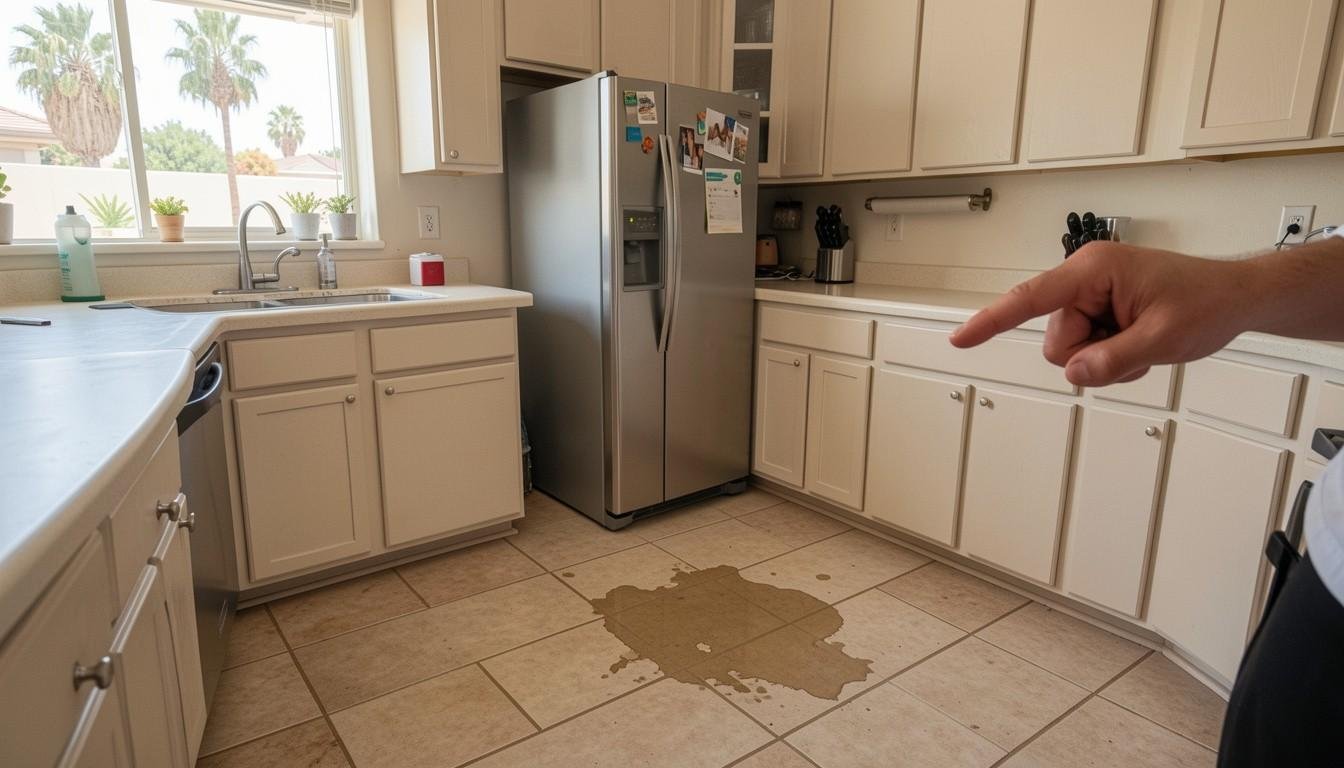
You notice a puddle under the fridge, and your first thought is simple: something is leaking. The real question is harder. Is the leak coming from the water line, or is the defrost drain clogged? In Menifee and across Southern California, that answer matters because the wrong fix wastes time and can make the damage worse.
A refrigerator can leak for several reasons, but the two most common are a water supply line problem and a defrost drain problem. One usually creates water near the back or under the fridge. The other usually creates water inside the cabinet or under the crisper drawers. Once you know the pattern, you can move faster and avoid bigger damage to flooring, cabinets, and food.
As an appliance and HVAC repair company, Appliance Repair Menifee sees these leaks often in warm homes, garage installs, and kitchens that already run hot. This guide gives you a clear way to spot the source, test it safely, and decide when you need professional help.
If your fridge is also running warm or struggling to cool, it is worth reading Why Is My Refrigerator Running But Not Cooling? because leaks and cooling problems often show up together.
Why Refrigerator Leaks Happen in the First Place
Your refrigerator handles water in more than one way. It may use a water line for the ice maker or dispenser. It also produces condensation and frost inside the freezer. During the defrost cycle, that frost melts and should flow through a drain hole into a drain pan.
That means water can come from several places:
- The supply line to the ice maker or dispenser.
- The inlet valve or filter housing.
- The defrost drain in the freezer.
- The drain pan under the cabinet.
- Door seals that allow warm air in and create excess condensation.
When everything works, the water leaves the system quietly. When one part fails, water shows up where it should not. Recent repair guides in 2026 continue to point to those same fault points as the most common causes of fridge leaks.
Water Line Leak vs Defrost Drain Leak
The easiest way to narrow it down is by where the water appears.
Water line leak
A water line leak usually comes from the supply tube, connector, inlet valve, or filter area. You often see water:
- Behind the refrigerator.
- Under the back edge of the cabinet.
- Near the ice maker line.
- Around the water dispenser side of the fridge.
Water line leaks often show up even when the freezer is not frosty. If the leak happens near the back, this is one of your first suspects.
Defrost drain leak
A defrost drain leak usually comes from inside the freezer or under the fresh food compartment. You often see water:
- Under the crisper drawers.
- On the bottom shelf of the refrigerator section.
- Inside the freezer after heavy frost melts.
- Dripping from inside the cabinet rather than from behind the unit.
If ice or debris blocks the drain tube, the water has nowhere to go. It backs up and leaks inside the fridge. Repair guides in 2026 still point to clogged defrost drains as one of the most common leak causes.
Signs the Water Line Is the Problem
A water line leak often leaves a different trail than a defrost issue.
Look for these clues:
- Water pools behind or under the fridge.
- The leak appears near the back wall or lower rear area.
- The ice maker seems noisy, slow, or inconsistent.
- The leak happens even when the freezer section looks normal.
- You see wetness around a visible supply tube, shutoff valve, or connector.
In homes with fridge dispensers, the water line has more connection points. More connection points mean more places for leaks to start. A loose fitting, cracked tube, or failed inlet valve can all send water under the unit.
If the water line is the source, the leak often gets worse when the water dispenser or ice maker runs. That is a major clue.
Signs the Defrost Drain Is the Problem
A defrost drain leak usually looks more like an indoor overflow than a plumbing leak.
Watch for these signs:
- Water pools inside the refrigerator, especially under the crisper drawers.
- You see ice buildup in the freezer first, then water appears later.
- Water leaks from inside the cabinet rather than from behind it.
- The freezer has a frozen drain hole or ice sheet near the back wall.
This happens because the defrost cycle melts frost from the evaporator coil. That meltwater should run through a drain hole and into a drain pan. If food particles, ice, or frozen gunk block the path, the water backs up and spills inside the fridge.
If your fridge has weak cooling at the same time, you may also have a frost buildup issue behind the back panel. That can affect airflow and create more water problems.
For more on how poor cooling and water issues can overlap, see Why Your Refrigerator Works Harder in Menifee Summers and Condenser Coils 101: Why Dirty Coils Kill Fridges.
Other Leak Sources You Should Not Miss
Not every leak comes from the main supply line or defrost drain. A few other parts can cause the same mess.
Drain pan problems
The drain pan sits under the fridge and catches water from the defrost cycle. If it cracks, shifts, or overflows, you may see water under the unit.
Door gasket failure
A worn door seal lets warm air into the fridge. That extra moisture creates condensation inside the cabinet and can mimic a leak.
Fridge not level
If the refrigerator tilts the wrong way, water may not flow correctly to the drain. Some models need a slight backward tilt so water moves to the pan.
Water filter housing or inlet valve
A cracked filter housing or weak inlet valve can drip slowly and create hidden damage. These leaks often show up near the back or bottom of the fridge.
What You Can Safely Check Yourself
You can do a few safe checks before you call for service.
Find the leak location
Use paper towels or a dry cloth to locate the exact spot where the water appears.
- Back of fridge: water line or inlet valve.
- Under front of fridge: drain pan or internal leak.
- Inside fridge under drawers: defrost drain.
- Freezer ice then water: frozen defrost drain.
Inspect the water line
If you can access the rear of the fridge safely:
- Look for loose fittings.
- Check for wetness around the valve or tubing.
- Watch for cracks in plastic lines.
- Confirm the shutoff valve is dry.
Check the defrost drain area
Open the freezer and inspect the rear lower area.
- Look for visible ice around the drain opening.
- Look for food debris or sludge around the drain hole.
- If you see a frozen drain, that points strongly to a defrost issue.
Make sure the fridge is level
Use a small level if you have one.
- Confirm the fridge sits evenly side to side.
- Check the slight backward tilt if the model requires it.
- Adjust the front feet if the fridge sits too flat or forward.
Check the door seals
Close the door on a thin piece of paper.
- If the paper slides out easily, the gasket may not seal well.
- Clean the gasket with warm soapy water.
- Look for tears, gaps, or hardened rubber.
How to Fix a Clogged Defrost Drain
If the leak points inside the cabinet, the defrost drain is a strong suspect.
A typical safe approach looks like this:
- Unplug the refrigerator.
- Empty the lower shelves if needed.
- Open the freezer and find the drain hole at the back lower section.
- Remove loose ice with a warm cloth.
- Flush the drain with warm water using a turkey baster or syringe.
- Repeat until the water flows freely into the pan below.
If the drain tube is frozen solid, you may need more time or a full thaw. Do not use a sharp tool. You can puncture the tube or damage the liner. If the drain keeps freezing again, the problem may involve the drain heater or a deeper airflow issue.
A clogged drain often comes back if the fridge has a frost buildup problem or a weak door seal. That is why a repeat leak should not be ignored.
How to Handle a Water Line Leak
A water line leak needs faster action because it involves active water supply.
Here is the safer path:
- Turn off the water supply to the refrigerator.
- Pull the fridge away from the wall carefully.
- Dry the area and locate the source.
- Check the visible tubing, fittings, and inlet valve.
- Replace any cracked line or leaking connector.
If the leak comes from the water filter housing or inlet valve, the part may need replacement. Tightening a fitting can help in some cases, but do not force plastic parts. Over-tightening can crack them and turn a small leak into a bigger one.
If the fridge uses a long water line run, the hidden line behind the wall or under the cabinet can also fail. In that case, a technician or plumber may need to inspect the full route.
For broader appliance cost context, you can compare the repair decision with the guidance in The Cost of Appliance Repair in Menifee vs Buying New.
What It Costs to Repair Refrigerator Leaks in 2026
The cost depends on the source.
Water line repair
Angi’s 2026 data for refrigerator water line installation shows costs often in the low hundreds, depending on tubing length, labor, and access. If the line is easy to reach, the cost stays lower. If it runs through a wall or cabinet, the cost rises.
Plumbing repair
If the leak spreads beyond the fridge and damages the floor or nearby plumbing, plumbing repair costs can rise quickly. Angi’s 2026 plumbing repair data shows that general plumbing work can range widely based on access and damage.
Appliance repair
Leak-related appliance repairs often fall within the standard refrigerator repair range of roughly $150 to $400, with the average around $275 for common fixes.
Replacement decisions
If the leak is tied to a bad inlet valve, cracked liner, or repeated defrost failure on an older fridge, you may be close to a replacement decision. That is where repair versus replacement math matters more than just the leak itself.
What Works vs What Doesn’t
Some fixes help right away. Others create more trouble.
What works
- Finding the exact leak location.
- Turning off the water supply fast when the line leaks.
- Flushing a clogged defrost drain with warm water.
- Replacing cracked tubing or worn fittings.
- Keeping the fridge level and the door seals tight.
What doesn’t
- Ignoring a small puddle and hoping it dries up.
- Overtightening plastic water fittings.
- Using sharp tools to break ice in the drain hole.
- Repeatedly wiping water without checking the source.
- Delaying repair until cabinets, floors, or drywall get damaged.
Repeated leaks usually mean the system has a deeper problem. If the drain freezes again or the water line leaks again, you need a proper diagnosis.
How Southern California Homes Change the Leak Picture
Southern California homes create a few extra leak conditions.
- Warm kitchens and garages raise condensation and stress seals.
- Dust and hard water can affect valves, ice makers, and filters.
- Long summer run times put more load on fridge components and can make a small leak show up faster.
If your home also struggles with heat, your refrigerator may run harder and create more condensation. It is a good idea to pair leak prevention with HVAC care. That is why Who to Call for Emergency AC Repair in Menifee, CA and Why AC Units in Riverside County Fail Faster Without Maintenance matter if you want your home to stay stable through summer.
If you want to reduce the chance of fridge performance issues at the same time, Why Is My Refrigerator Running But Not Cooling? is the next logical read.
When to Call an Appliance Repair Pro
You should call a technician if:
- The leak keeps coming back after you flush the drain or inspect the water line.
- Water appears inside the cabinet, behind the fridge, or under flooring.
- You see ice buildup that keeps returning.
- The fridge leaks and cools poorly at the same time.
- You suspect a valve, supply line, or hidden drain problem.
If you live in Menifee or nearby Southern California areas, Appliance Repair Menifee can help you identify whether the issue is the water line, the defrost drain, or something else. A fast diagnosis prevents floor damage, saves food, and keeps the repair from turning into a bigger job.
If you are ready to schedule help, go to contact Appliance Repair Menifee and describe where the water shows up. That one detail often saves time on the first visit.