A dryer that suddenly starts squeaking or thumping isn’t just annoying background noise. It’s your machine telling you exactly what’s wrong, if you know how to listen.
Different sounds point to different failing parts, and figuring out which one you’re dealing with can save you an unnecessary repair call or help you catch a problem before it turns into something bigger.
Introduction: Every Dryer Noise Is Telling You Something Specific
Dryers don’t make random noise. Every squeak, thump, or grind has a mechanical cause, and once you understand the pattern, diagnosing the problem gets a lot easier.
Quick Answer Summary
A squeaking or squealing dryer usually points to worn drum rollers, a failing idler pulley, or dried-out bearings. A rhythmic thumping typically means a flat spot on a roller, an unbalanced load, or a worn drive belt.
Grinding or rattling noises are more serious and often mean a failed bearing, a loose blower wheel, or debris caught inside the machine. The specific sound almost always tells you which part needs attention.
Why the Type of Sound Matters More Than the Volume
A quiet squeak from a dry bearing and a loud thump from a worn roller can both be equally important to address. What matters isn’t how loud the noise is, but what kind of sound it is and when during the cycle it happens, since that’s what actually points to the failing part.
How to Diagnose a Dryer Noise Before You Call for Repair
A few simple checks can help you narrow down the cause before you decide whether this is a DIY fix or a job for a professional.
The Manual Drum Spin Test (Power Off)
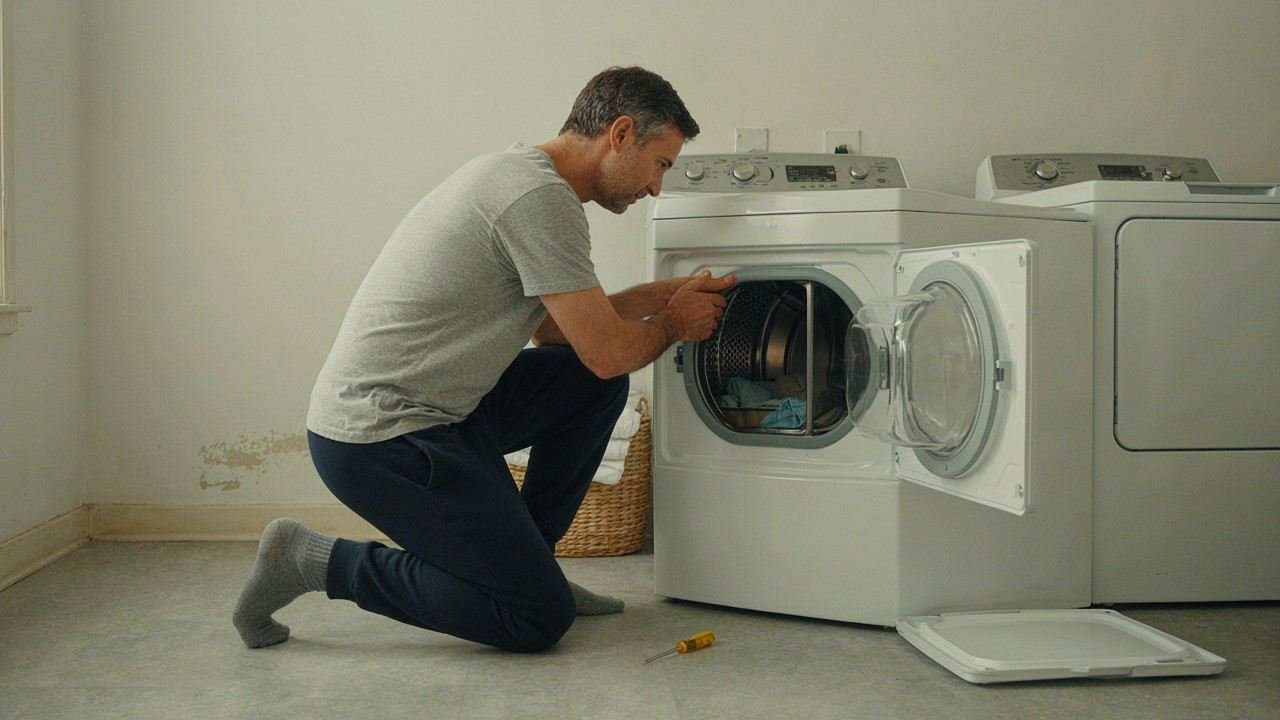
With the dryer unplugged, reach in and spin the drum by hand. If it squeaks or feels rough without power running, the problem is a mechanical part like a roller or bearing. If the noise only happens when the motor is running, it’s more likely the idler pulley or motor itself.
Listening for When the Sound Starts and Stops
Pay attention to whether the noise starts as soon as the drum begins turning or only appears partway through the cycle. A sound that’s present from the very first rotation usually points to a roller or bearing, while a noise that develops as the cycle continues can indicate a belt issue.
Checking If the Noise Changes With Load Size
Run the dryer with a small, evenly distributed load and see if the noise changes. If a thump disappears with a lighter, more balanced load, an unbalanced load may be the culprit rather than a worn part.
Squeaking or Squealing: What It Usually Means
High-pitched, continuous sounds almost always point to a specific set of mechanical parts responsible for supporting and moving the drum.
Worn or Dry Drum Support Rollers
The rollers that support the drum as it spins can dry out or wear down over time, creating friction that produces a steady squeak with every rotation.
A Failing Idler Pulley
The idler pulley keeps tension on the drive belt. Once its bearing wears out, it tends to produce a high-pitched, often continuous squeal rather than a rhythmic sound, and this is one of the more common noise sources in dryers over five years old.
Dried-Out Drum Bearings
Bearings need proper lubrication to function smoothly. Once they dry out or wear past their lifespan, they create a squeaking sound that gets more noticeable as the drum spins.
Why Squeaking Gets Worse Over Time Instead of Better
Squeaking is a sign of ongoing friction between parts that were designed to move smoothly against each other. That friction accelerates wear, which is why the sound typically becomes louder and more frequent rather than resolving on its own.
Thumping or Banging: What It Usually Means
A rhythmic thumping sound follows a different pattern than a squeak, and it usually points to a different set of causes.
A Flat Spot on a Roller From Sitting Unused
If a dryer sits idle for a while, the rubber support rollers can develop a flat spot where they rest against the drum. This often causes a periodic thump that resolves itself after the rubber warms and reshapes during a full cycle.
An Unbalanced or Bunched-Up Load
Bulky items like comforters, sheets, or curtains can roll into a ball inside the drum, throwing off the balance and creating a repeated thumping sound as the load spins.
A Worn or Slipping Drive Belt
A stretched or worn drive belt can cause the drum to slip slightly during rotation, producing a thumping or rumbling sound that’s different from the sharp squeal of a failing pulley. Our guide on dryer taking two cycles to dry covers a related issue worth checking if slow drying is happening alongside the noise.
A Loose or Cracked Drum Baffle
The baffle, or lifter, inside the drum helps tumble clothes evenly. If it comes loose or cracks, it can bang against the drum interior with every rotation, creating a distinct banging sound.
Grinding, Rattling, or Buzzing: When It’s More Serious
Some sounds signal a problem that’s already progressed further than a simple squeak or thump, and these deserve more immediate attention.
Grinding: A Failed Rear Drum Bearing or Seal
A grinding or scraping sound usually means the drum is no longer properly supported and metal parts have started rubbing directly against each other. This typically points to a failed rear bearing or seal.
Rattling: Coins, Buttons, or a Loose Blower Wheel
A rattling sound is often something simple, like a coin or button caught in the blower housing, but it can also mean the blower wheel itself has come loose and is hitting its housing during operation.
Buzzing or Humming With No Drum Movement
If the dryer powers on and hums but the drum doesn’t turn at all, that usually points to a broken drive belt or a seized motor, rather than a worn support part.
Why These Sounds Mean Stop the Dryer Immediately
Continuing to run a dryer with grinding metal or a stuck drum risks scoring the drum itself, which turns a relatively inexpensive parts repair into a much larger and more costly one.
Is the Noise Normal? Sounds You Don’t Need to Worry About
Not every unusual sound means something is broken. A few common noises are completely normal and don’t require any repair.
A Brief Thump When First Starting After Sitting Idle
A light thumping sound during the first few minutes after a dryer has sat unused for a while is usually just the rollers regaining their round shape as they warm up, and it typically fades on its own.
The Gas Valve Clicking on Gas Dryers
If you have a gas dryer, hearing a clicking sound multiple times throughout the cycle is normal. That’s the gas valve cycling on and off to maintain the correct temperature.
Light Tumbling Sounds From Zippers or Buttons
Occasional light clinking or tapping from zippers, buttons, or snaps hitting the drum during a cycle is completely normal and not a sign of a mechanical issue.
What Happens If You Keep Running a Noisy Dryer
Ignoring a dryer noise doesn’t make the underlying problem go away. In most cases, it makes the eventual repair more expensive and more involved.
How a Small Part Failure Turns Into Drum Damage
A single worn roller or bearing left unaddressed puts uneven pressure on the drum every time it spins, and over time this can score or damage the drum itself, which is a far more expensive repair than replacing the original worn part.
Why Ignoring Grinding Can Double Your Repair Cost
What starts as an affordable roller or bearing replacement can turn into a full drum or bulkhead repair if you keep running the dryer after grinding begins. Catching the issue early keeps the repair simple and affordable.
The Fire and Safety Risk Behind Certain Noises
Some dryer noises, especially those tied to a struggling motor or blower, can indicate restricted airflow or overheating components, both of which raise fire risk over time. Our guide on why professional dryer vent cleaning matters covers this fire risk in more depth if you’re noticing both unusual noise and slower drying.
DIY Fixes vs. When to Call a Professional
Some dryer noise issues are manageable at home. Others involve enough disassembly that they’re better left to a trained technician.
Sounds and Fixes You Can Safely Handle Yourself
Clearing a rattling coin from the blower housing, redistributing an unbalanced load, or simply running the dryer through a cycle to work out a temporary flat-spot thump are all safe, low-risk fixes.
Why Roller and Bearing Replacement Usually Needs a Technician
Replacing rollers, an idler pulley, or drum bearings typically requires partially disassembling the dryer cabinet to access the drum, which is a more involved repair best handled by a professional to avoid damaging other components in the process.
Warning Signs That Mean Stop Troubleshooting and Call Now
Grinding sounds, a burning smell, or a drum that won’t turn at all are all signs to stop attempting DIY fixes and call for a professional diagnosis right away.
Dryer Noise Repair Costs in 2026
Knowing what these repairs typically cost helps you decide how to move forward once you’ve identified the likely cause.
Cost to Replace Drum Rollers or an Idler Pulley
Roller and idler pulley replacement are among the more affordable dryer repairs, since the parts themselves are inexpensive and the labor is relatively straightforward for a technician familiar with the model.
Cost to Replace a Drive Belt
Drive belt replacement is also one of the more budget-friendly repairs on this list, and it’s often paired with roller replacement since both parts tend to wear out around the same time.
Cost to Replace Drum Bearings or a Bearing Ring
Bearing or bearing ring replacement tends to be a bit more involved than the other repairs on this list, since it typically requires more disassembly to access the rear of the drum.
When Repair Costs Signal It’s Time to Replace the Dryer
If your dryer already has other issues, or if the total repair estimate starts approaching half the cost of a new machine, replacement often makes more financial sense. Our guide on appliance repair costs in Menifee versus buying new can help you weigh that decision for your specific situation.
How to Prevent Dryer Noise Problems Before They Start
A few consistent habits can meaningfully extend the life of your dryer’s rollers, belt, and bearings.
Avoid Overloading or Washing Single Bulky Items
Overloading the dryer strains the belt and support rollers, and washing a single bulky item, like one comforter, tends to cause the exact kind of unbalanced tumbling that leads to thumping.
Run the Dryer Regularly to Prevent Flat Spots
If your dryer sits unused for extended periods, running it briefly every so often helps prevent the rollers from developing flat spots that cause thumping.
Check Pockets Before Every Load
Coins, buttons, and small items are common causes of rattling and can eventually damage the blower wheel if left unchecked. A quick pocket check before every load prevents this entirely.
Schedule Routine Maintenance Checks
Catching a worn roller or an early bearing issue during a routine check costs far less than waiting until the dryer starts grinding. This same preventive approach applies to more than just your dryer. Our seasonal HVAC checklist for preparing your Menifee home for summer heat follows the same idea for the rest of your home’s systems.
Why This Matters More for Menifee Homeowners
Local conditions play a real role in how quickly dryer components wear down in this area.
Dust and Debris That Accelerate Roller and Bearing Wear
Menifee’s dry, dusty climate means more airborne debris can work its way into a dryer’s internal components over time, which can accelerate wear on rollers and bearings faster than in less dusty climates.
Similar dust exposure is also why we recommend homeowners protect their outdoor HVAC unit during Menifee’s dusty season, since the same environmental factors affect more than one appliance in your home.
Why Local Repair Turnaround Matters for Noisy Dryers
Getting a noisy dryer looked at quickly matters, since a delayed repair appointment gives a small mechanical issue more time to turn into drum damage. Fast, local service makes it easier to catch these problems before they become expensive.
A squeaking or thumping dryer is never something to just live with. The sound itself is useful diagnostic information, and addressing it early almost always means a smaller, more affordable repair.
If you’ve run through the checks above and you’re still not sure what’s causing the noise, our team at Appliance Repair Menifee can pinpoint the issue quickly, and you can reach out to us directly to schedule a visit.