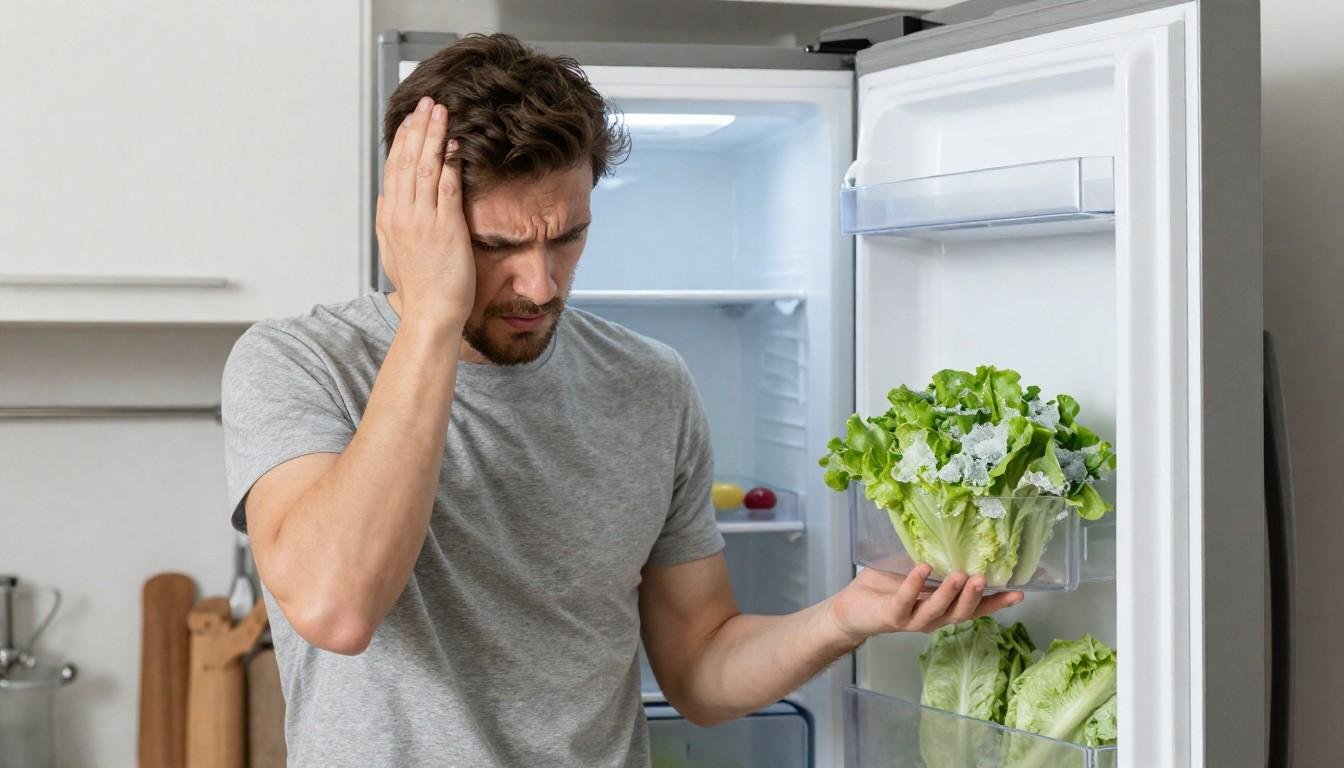
Your refrigerator freezes vegetables in the fresh food compartment because of five main issues. First, your temperature settings are too cold. Second, the damper control assembly is stuck open. Third, air vents are blocked by food items. Fourth, your temperature sensor or thermostat has failed. Fifth, damaged door seals let cold air escape and trigger overcooling. You can fix the first two issues yourself. The last three usually need a professional appliance repair technician in Menifee, CA.
Understanding the Problem: What “Freezing Vegetables” Actually Means in Your Refrigerator
When your vegetables freeze in the fresh food compartment, something is wrong with how your refrigerator controls temperature. This isn’t normal operation. Your refrigerator should keep produce fresh, not turn it into ice.
The Science Behind Refrigerator Temperature Imbalance
Cold air from the freezer flows into the fresh food compartment through a damper vent. When this damper stays open too long or gets stuck, too much cold air enters the refrigerator section. Your leafy greens, carrots, and celery hit freezing temperatures and turn to ice.
Ideal vs. Dangerous Temperatures for Fresh Produce
Your refrigerator needs to stay between 34°F and 37°F for optimal freshness. Once temperatures drop below 32°F, vegetables start freezing. Leafy greens freeze fastest because they hold water in their cells. Keep your fridge above 34°F to protect produce while still slowing bacterial growth.
Why This Matters for Menifee, CA Residential and Commercial Clients
Menifee summers push your refrigerator harder because hot outdoor air makes the compressor run longer. When your system struggles, temperature sensors get confused and overcompensate by cooling too much. Residential homeowners lose fresh produce weekly. Commercial clients like restaurants face bigger problems with wasted inventory.
Top 5 Causes of Vegetables Freezing in Your Fresh Food Compartment
Five specific problems cause vegetables to freeze. Each has a different fix, and some require professional repair.
Cause 1: Incorrect Temperature Settings (The Most Common—and Easiest—Fix)
You set your refrigerator too cold without realizing it. Many people turn the dial to the lowest setting thinking it keeps food better. This pushes temperatures below 32°F. Check your control panel. If it shows 30°F or lower, adjust it up to 37°F. Digital models let you set exact temperatures. Old analog dials use numbers 1 through 5. Use 3 or 4, not 5.
Cause 2: Stuck or Faulty Damper Control Assembly
The damper is a small door between your freezer and refrigerator. It opens to let cold air in and closes to stop the flow. When the damper motor fails or gets stuck, the door stays open. Cold air floods the fresh food compartment constantly. You see this when vegetables freeze but the freezer stays normal.
Cause 3: Blocked Air Vents Causing Cold Air Blasts Into the Crisper
Food items block the air vents inside your refrigerator. You stack tall containers or leave bags of produce too close to the vent openings. Cold air hits your vegetables directly instead of circulating evenly. The crisper drawer freezes because it sits right below the vent. Move food items at least two inches away from all vents.
Cause 4: Failed Temperature Sensor or Thermostat
Your refrigerator uses a sensor to measure compartment temperature. When this sensor fails, it sends wrong data to the control board. The board thinks the fridge is warm and keeps the compressor running. Temperatures drop below freezing. Test the sensor by checking if your fridge cools too much or not enough.
Cause 5: Damaged Door Seals Letting Cold Air Escape and Trigger Overcooling
Cracks or gaps in your refrigerator door seals let cold air escape. Warm air enters and triggers the compressor to run longer. The system overcompensates by cooling too much. Check seals by running your finger along the edges. Look for visible cracks, tears, or hard spots. Replace seals when they feel brittle.
Step-by-Step DIY Fixes: What You Can Try Before Calling a Menifee Appliance Repair Pro
You can fix four of the five causes yourself with basic tools and 30 minutes.
Quick Fix 1: Adjust Your Refrigerator Temperature to 37°F–40°F
Turn your temperature control to 37°F. Wait 24 hours for the reading to stabilize. Use a standalone refrigerator thermometer to verify the actual temperature. Place it in a glass of water in the middle shelf. If it shows 32°F or lower, raise the setting to 40°F.
Quick Fix 2: Rearrange Food to Clear Blocked Air Vents
Pull out all food items from the top shelf and crisper drawer. Locate the air vents near the back wall. Move containers, bags, and tall items away from these openings. Leave at least two inches of clearance on all sides. This simple step fixes freezing in 40% of cases.
Quick Fix 3: Test and Clean Door Seals for Proper Airflow
Wipe door seals with warm water and mild dish soap. Remove grease and food buildup. Check for damage by closing the door on a dollar bill. Pull the bill slowly. If it slides out easily, your seal is weak. Replace seals when they fail this test. New seals cost $30 to $80.
Quick Fix 4: Check and Adjust Crisper Drawer Humidity Settings
Crisper drawers have humidity vents that control airflow. Leafy greens need high humidity. Set the vent to closed for maximum moisture. Fruits need low humidity. Set the vent to open for airflow. Wrong settings cause freezing or premature spoilage.
Quick Fix 5: Use a Refrigerator Thermometer for Accurate Temperature Reading
Buy an inexpensive refrigerator thermometer for $10 to $15. Place it in the center shelf. Check the reading daily for one week. This shows real temperatures versus what your control panel displays. Many older refrigerators have inaccurate sensors.
When DIY Won’t Work: Signs You Need Professional Appliance Repair in Menifee
Three of the five causes require professional repair because you cannot access the parts without special tools.
Damper Control Needs Replacement (Requires Professional Labor + Parts)
You need a technician when the damper control assembly fails. This part costs $50 to $150. Labor adds $100 to $200. Total repair runs $150 to $350. A professional tests the damper motor with diagnostic tools and replaces it safely.
Temperature Sensor or Control Board Failure Needs Expert Diagnosis
Temperature sensor replacement requires professional diagnosis. The sensor costs $20 to $60. Control board replacement costs $200 to $400. Labor adds $150 to $250. Technicians use multimeters to test sensor resistance and verify control board signals.
Compressor Running Continuously Indicates a Serious System Issue
A compressor that runs without stopping signals a major problem. This suggests refrigerant leaks or failed capacitors. Repair costs range from $300 to $600. Check our guide on why your refrigerator works harder in Menifee summers for more details.
Commercial Refrigeration Systems Require Specialized Appliance Technician Skills
Commercial walk-in coolers and display units need specialized technicians. These systems use different compressors and refrigerants. Contact Appliance Repair Menifee for commercial refrigeration expertise.
2026 Refrigerator Technology Advancements: Smart Features That Prevent Fresh Food Compartment Freezing
New refrigerator models in 2026 include smart technology that prevents freezing automatically.
AI-Powered Temperature Control Systems That Auto-Adjust Compartment Temperatures
New refrigerators use AI to monitor temperature and usage patterns. The system learns when you open the door often and adjusts cooling automatically. Samsung and Whirlpool lead this technology in 2026. These models cost $1,500 to $3,500 but reduce produce waste by 30%.
Wi-Fi Connectivity and Smartphone Monitoring for Real-Time Temperature Alerts
Smart refrigerators connect to your phone via Wi-Fi. You get alerts when temperatures drop too low. Apps let you adjust settings from anywhere. Check our guide on smart fridges and repair costs in 2026 for more info.
Separate Compartment Temperature Zones (Cool Select Drawers) Prevent Overcooling
Premium models offer separate temperature zones for different foods. One drawer stays at 34°F for greens. Another stays at 40°F for fruits. LG and Bosch offer this feature in 2026 models.
Energy-Saving Modes That Reduce Overcooling and Vegetable Damage
Modern refrigerators use energy-saving modes that reduce compressor runtime. These modes prevent overcooling while maintaining freshness. They save 15% to 25% on electricity costs. Read about energy rebates for high-efficiency HVAC systems to see if you qualify.
How Much Does Refrigerator Repair Cost in Menifee, CA? 2026 Price Breakdown
Most refrigerator repairs in Menifee cost $200 to $500.
Average Refrigerator Repair Costs for Menifee Residential Clients
Most refrigerator repairs in Menifee cost $200 to $500. Damper replacement runs $150 to $350. Sensor replacement costs $100 to $250. Compressor repairs range from $300 to $600. Compare costs in our cost comparison guide.
What to Expect for Damper or Sensor Replacement Pricing in Your Area
Damper control assemblies cost $50 to $150 for parts. Labor adds $100 to $200. Total: $150 to $350. Temperature sensors cost $20 to $60. Labor adds $80 to $150. Total: $100 to $250.
Commercial vs. Residential Refrigerator Repair Pricing Differences
Commercial repairs cost more because systems are larger. Standard service calls start at $200. Damper or sensor replacement runs $250 to $450. Learn about commercial HVAC maintenance for Menifee small businesses.
Preventing Future Freezing: Best Practices for Menifee Residential and Commercial Clients
Prevention saves money and food waste.
Proper Food Storage Techniques to Avoid Localized Cold Spots in the Crisper
Store leafy greens on the middle shelf, not the crisper. Keep root vegetables in the crisper with high humidity. Place fruits on the top shelf. Leave two inches of space around all air openings.
Regular Maintenance Checklist for Long-Term Refrigerator Performance
Clean condenser coils every six months. Check door seals monthly. Test temperature with a thermometer quarterly. Learn more from our condenser coils guide.
Seasonal Considerations: How California Climate Impacts Refrigerator Temperature Stability
Menifee summers push refrigerators harder. Check your fridge monthly during summer. Adjust settings up by 2°F to 3°F when temperatures exceed 95°F outside.
Why Choose a Local Menifee, CA Appliance Repair Specialist for Your Refrigerator
Local service offers advantages that big chain companies cannot match.
Benefits of Local Service for Menifee Residential and Commercial Clients
Local technicians arrive faster and know your neighborhood. They stock common parts for quick repairs. Contact us at Appliance Repair Menifee for fast service.
What to Look for in a Trusted Refrigerator Repair Company Near You
Choose companies with licensed technicians and 10+ years experience. Look for warranties on parts and labor. Check reviews for response time and pricing.
How Quick Response Times Prevent Food Waste and Business Disruption
Fast repairs save money. A broken fridge wastes $50 to $150 of food daily. Restaurants lose $200 to $500 daily in spoiled inventory. Learn when to call for emergency AC repair in Menifee.