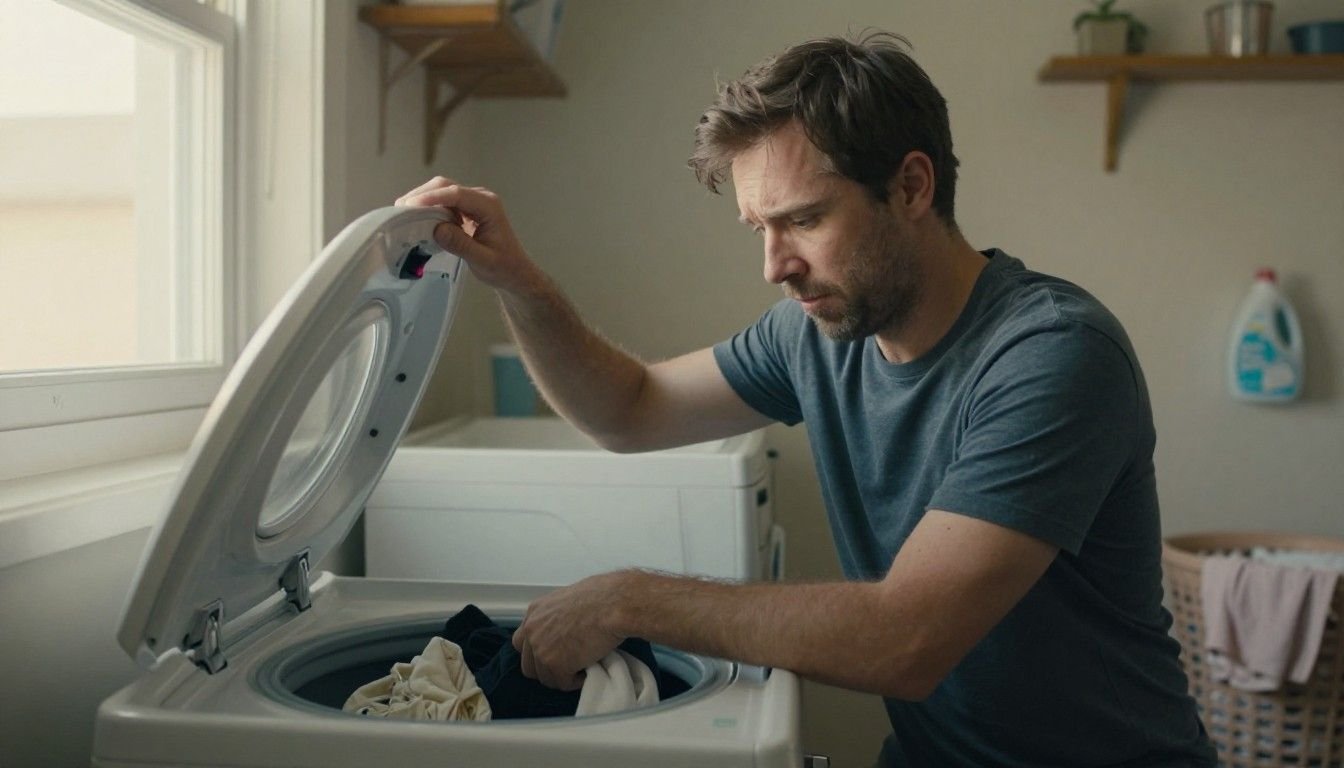
You pull your clothes out of the washer expecting them clean and ready for the dryer, but instead you find a soggy, heavy pile still sitting in a puddle.
The wash cycle finished, but the drum never spun. It’s one of the most common washer complaints homeowners deal with, and the good news is that most causes are easy to identify once you know what to check.
This guide walks you through exactly why your washer won’t spin and what to do about it.
Why a Non-Spinning Washer Is More Common Than You Think
A washer that won’t spin isn’t always a major mechanical failure. Sometimes it’s your washer’s built-in safety system working exactly as designed. Spin complaints are actually one of the most common appliance repair calls we get in Menifee, so if you’re dealing with this right now, you’re far from the only one.
Quick Answer Summary
Most spin failures come down to one of a few repeat offenders: an unbalanced load, a faulty lid or door switch, a clogged drain hose, a worn drive belt, or a failed motor coupling.
Many washers are designed to skip the spin cycle on purpose if they detect an imbalance or can’t confirm the door is locked, so the fix is often simpler than it looks.
Is It a Simple Fix or a Sign of Something Bigger?
If your washer refuses to spin every single time, that points to a mechanical or electrical issue that needs attention. If it only happens occasionally, especially with heavy or bulky loads, it’s more likely a load-balance or drainage issue you can fix yourself in a few minutes.
How the Spin Cycle Actually Works (And Why It Fails)
Before you start troubleshooting, it helps to understand what has to happen correctly for your washer to spin at all. Each step depends on the one before it.
The Drain-Before-Spin Safety Sequence
Your washer has to fully drain the water from the tub before it can safely move into the spin cycle. If the machine senses standing water, it will halt the spin cycle entirely, since spinning a tub full of water risks damaging the motor and flooding your laundry room.
How the Lid/Door Lock Controls Whether Your Washer Spins
Every washer, front-load or top-load, requires the lid or door to be securely locked before it will spin. This is a safety feature that prevents the drum from spinning at high speed while it’s open. If the switch that detects the lock isn’t working, the washer has no way to confirm it’s safe to spin.
If you’re weighing which washer style tends to run into fewer of these lock and switch issues over time, our comparison on front load vs. top load washers and which is easier to repair breaks that down in more detail.
The Role of the Motor, Belt, and Clutch in Spinning
The motor generates the power, but on many machines that power reaches the drum through a belt and a clutch or coupling system. If any one of these parts wears out or breaks, the motor can run just fine while the drum stays completely still.
8 Common Reasons Your Washing Machine Won’t Spin
Once you understand the mechanics, the list of usual suspects makes a lot more sense. Here are the most common reasons homeowners run into this problem.
Unbalanced or Overloaded Wash Load
A load that’s bunched up on one side of the drum, like a single heavy comforter, throws off the washer’s balance. Many machines automatically reduce or skip the spin cycle to avoid damaging internal parts when this happens.
Faulty Lid Switch or Door Latch
If the lid switch or door latch fails to engage or send a signal to the control board, the washer treats it as an open door and won’t spin, even if the lid looks closed.
Clogged or Kinked Drain Hose
A blocked or bent drain hose keeps water trapped in the tub. Since your washer needs to drain fully before it spins, this alone can stop the spin cycle from ever starting.
Standing water that lingers too long can also create the kind of damp conditions that lead to a musty washer, which we cover in our guide on why your washing machine smells like mildew and how to fix it.
Worn or Broken Drive Belt
On washers that use a belt-driven motor, a loose, cracked, or snapped belt means the motor spins without ever turning the drum. This is one of the more common mechanical failures, especially on older machines.
Failed Motor Coupling or Clutch
The motor coupling or clutch connects the motor to the transmission or drum. When this part fails, often from age or an overloaded machine, the connection breaks and the drum stops receiving power even though the motor still runs.
Wrong Cycle Setting (Delicate, Hand Wash, or No-Spin Mode)
Delicate and hand wash cycles are designed to spin slowly, or sometimes not at all, to protect fragile fabrics. If you selected one of these settings by accident, your washer is working exactly as intended, just not the way you expected.
Excess Detergent Causing Suds Lock
Too much detergent creates excess suds that can trigger your washer’s sensors to stop the cycle, since the machine interprets the oversudsing as a drainage problem. This is more common with regular detergent used in a high-efficiency machine.
Motor or Control Board Failure
If the motor itself has burned out or the control board can’t send the correct signal to start the spin cycle, the washer may run through the wash and rinse steps normally but never reach spin. This is typically the most involved repair on this list.
Quick At-Home Checks Before You Call a Repair Technician
Before you assume the worst, run through these checks. Most take less than five minutes and can rule out the simplest causes first.
Redistribute the Load and Restart the Cycle
Open the washer, spread the clothes evenly around the drum, and restart the cycle. This alone resolves a surprising number of spin complaints.
Check for Standing Water in the Drum
If you see water sitting in the tub after the cycle ends, your washer likely has a drainage problem preventing it from moving into the spin step.
Confirm the Lid or Door Is Fully Latched
Push the lid or door firmly until you hear or feel it lock into place, then restart the cycle to see if that resolves the issue.
Inspect the Drain Hose for Kinks or Clogs
Pull the washer away from the wall carefully and check the drain hose for any sharp bends or blockages that could be restricting water flow.
Check Your Selected Cycle and Settings
Look at the display or dial to confirm you didn’t accidentally select a delicate, hand wash, or no-spin setting.
Look for Error Codes on Digital Models
Many newer washers display an error code when something prevents the spin cycle. Check your owner’s manual to see what the specific code means for your model.
Signs You Need a Professional Instead of a DIY Fix
Some causes go beyond a quick at-home check and need a trained technician to diagnose safely. Here’s when it’s time to stop troubleshooting on your own. Knowing that line matters for more than just your washer.
The same judgment call applies when deciding who to call for emergency AC repair in Menifee: some issues are safe to handle yourself, and others need a professional right away.
Burning Smell or No Sound During Spin
If you notice a burning smell or hear absolutely nothing when the washer attempts to spin, that often points to a failed motor, which isn’t something to keep testing on your own.
Washer Drains but Still Won’t Spin
If the water fully drains and the washer still refuses to spin, the problem is likely mechanical or electrical rather than a simple drainage issue, and it needs a closer inspection.
Loud Grinding or Banging During Spin Attempts
Unusual grinding or banging noises usually mean a worn bearing, damaged belt, or loose internal part that needs a professional’s attention before it causes further damage.
Spin Problems That Keep Coming Back
If you’ve fixed the issue once already and it keeps returning, there’s likely an underlying mechanical problem that a temporary fix won’t solve long term.
Washing Machine Won’t Spin: Repair Costs in 2026
Knowing what to expect price-wise helps you decide whether a repair is worth it or if it’s time to consider other options.
Cost to Replace a Drive Belt or Lid Switch
These are among the most affordable washer repairs, generally falling on the lower end of the typical appliance repair range, since the parts are inexpensive and the labor is straightforward.
Cost to Replace a Motor Coupling or Clutch
This repair costs more than a belt or switch replacement, since it usually requires more disassembly to reach the part, but it’s still a moderate repair for most washer models.
Cost to Replace a Washer Motor
Motor replacement is one of the pricier washer repairs, generally running between $200 and $400 depending on the model and labor involved, since it’s a more involved job.
Repair vs. Replace: When the Cost Isn’t Worth It
If your washer is already older and the motor repair estimate starts approaching half the cost of a new machine, replacement usually makes more financial sense.
Our guide on appliance repair costs in Menifee versus buying new breaks down how to weigh that decision for your specific situation.
How to Prevent Spin Cycle Problems in the Future
A few simple habits go a long way toward avoiding spin issues altogether, and most cost nothing to put into practice.
Load Your Washer Correctly Every Time
Distribute clothes evenly around the drum and avoid washing single bulky items, like one comforter, on their own whenever possible.
Keep the Washer Level on the Floor
An unlevel washer can wobble excessively during spin, which stresses the motor and internal components over time. Check and adjust the leveling legs periodically to keep the machine sitting flat.
Maintain the Drain Hose and Filter Regularly
Routine cleaning of the drain hose and filter prevents the kind of clogs that stop your washer from draining and, in turn, from spinning.
Schedule Preventive Maintenance Before Small Issues Grow
Catching a worn belt or a weakening switch early means a smaller, cheaper repair instead of waiting until it fails completely. This same logic applies across your whole home, not just your washer. Our seasonal HVAC checklist for preparing your Menifee home for summer heat covers the same preventive mindset for keeping your home’s systems running smoothly.
Why Menifee Homeowners See Spin Issues More Often
Local water conditions and daily usage patterns play a bigger role in washer wear than most homeowners realize.
Hard Water’s Effect on Pumps and Water Valves
Menifee’s hard water leaves mineral deposits that build up inside pumps and water valves over time, which can interfere with drainage and, in turn, prevent your washer from moving into the spin cycle.
Our guide on how Menifee’s hard water affects your dishwasher and washing machine explains what that buildup does to your appliances over the long run.
How Heavy Use and Large Households Speed Up Wear
Households running multiple loads a day put more strain on belts, motors, and switches than average, which shortens the time between repairs and makes routine upkeep even more worthwhile.
A washer that won’t spin is frustrating, but in most cases, it’s a fixable problem once you know where to look. Start with the simple checks, like load balance and door latch, before assuming the worst.
If the problem sticks around after trying these steps, our team at Appliance Repair Menifee is ready to help, and you can always reach out to us directly to schedule a diagnostic visit.