You open your washer expecting clean clothes, and instead you find a tub full of water that never drained. It’s one of the most frustrating laundry problems you can run into, mostly because the cause isn’t always obvious.
Sometimes it’s a simple clog you can clear in ten minutes. Other times it’s a drain pump on its way out. Telling the two apart before you start troubleshooting saves you time, money, and a lot of unnecessary guesswork.
Introduction: Standing Water in Your Washer Isn’t Always the Same Problem
A washer that won’t drain can mean two very different things, and figuring out which one you’re dealing with changes everything about how you fix it. Drainage complaints show up regularly among the most common appliance repair calls we get in Menifee, so if you’re dealing with this right now, you’re far from alone.
Quick Answer Summary
Most drainage problems come down to a clogged hose, a blocked filter, or a failed drain pump. Clogs are usually gradual and fixable at home, while pump failure tends to show up suddenly and often needs a professional repair. The clearest way to tell them apart is by listening to what happens during the drain cycle and checking a few simple spots first.
Why Diagnosing This Correctly Saves You Money
Calling a technician for a clog you could have cleared yourself wastes money on a service call. On the other hand, trying to force a failed pump to work by running the cycle repeatedly can damage other components and turn a moderate repair into a bigger one. A few minutes of correct diagnosis prevents both mistakes.
How Your Washer’s Drain System Actually Works
Understanding what’s supposed to happen during a normal drain cycle makes it much easier to spot what’s going wrong in yours.
The Path Water Takes From Tub to Drain
Once a cycle finishes washing or rinsing, water needs to travel from the bottom of the tub, through the pump, into the drain hose, and out through your home’s standpipe or drainpipe. Any blockage along that path stops the whole process.
The Role of the Drain Pump
The drain pump is the small motor responsible for actually pushing water out of the tub. It spins an impeller that forces water through the hose. If the impeller jams or the pump motor burns out, water simply has nowhere to go.
Drain pump design varies somewhat between washer types, and our comparison on front load vs. top load washers and which is easier to repair covers how that affects repair access and cost.
The Role of the Drain Hose and Filter
Most washers include a filter designed to catch small items, like coins, buttons, or lint, before they reach the pump. The drain hose then carries that filtered water out of the machine. A blockage in either one can stop draining just as effectively as a broken pump.
Clog vs. Pump Failure: The Key Differences
Once you understand how the system works, spotting the difference between a simple clog and true pump failure gets a lot easier.
Signs You’re Dealing With a Clog
Slow draining that gradually gets worse over several cycles, water pooling at the bottom of the tub, or a drain hose that feels stiff and rigid all point toward a clog rather than a mechanical failure.
Why a Clog and a Failed Pump Can Look Identical From the Outside
Both problems end the same way: standing water and a washer that won’t finish its cycle. The difference usually comes down to what you hear. A clog often lets the pump run and hum normally while water barely trickles out, while a fully failed pump may produce little to no sound at all, since the motor itself isn’t engaging.
When It’s Neither: Lid Switch and Electronic Sensor Issues
Sometimes the washer isn’t draining because it never got the signal to start. A faulty lid switch or a sensor misreading the load can prevent the machine from ever attempting to drain, which looks similar to a clog or pump issue but has nothing to do with either.
Where Clogs Typically Form in a Washer
Knowing where clogs actually build up helps you check the right spots first instead of guessing.
The Drain Hose (Kinks and Debris Buildup)
Lint and small debris accumulate inside the hose over time, and a hose that’s kinked from sitting too close to the wall restricts flow even further.
The Pump Filter or Coin Trap
This small filter catches whatever falls out of pockets before it reaches the pump. It’s one of the most common clog locations and also one of the easiest to clean yourself.
The Drain Pump Impeller
Small objects, like a bobby pin or a stray sock, can jam the impeller directly. This sits closer to true pump trouble, since a jammed impeller can eventually strain or burn out the motor if it’s not cleared.
The Household Drainpipe or Standpipe
Sometimes the blockage isn’t in the washer at all. If your home’s standpipe or drainpipe is clogged, water has nowhere to go regardless of how well your washer’s internal system is working.
How to Diagnose the Problem Yourself
Before assuming the worst, a few simple checks can usually point you toward the actual cause. If your washer is also struggling to spin along with the drainage issue, our guide on why your washing machine won’t spin covers a closely related problem worth ruling out first, since many washers won’t spin until they’ve fully drained.
Step 1: Safely Drain the Standing Water First
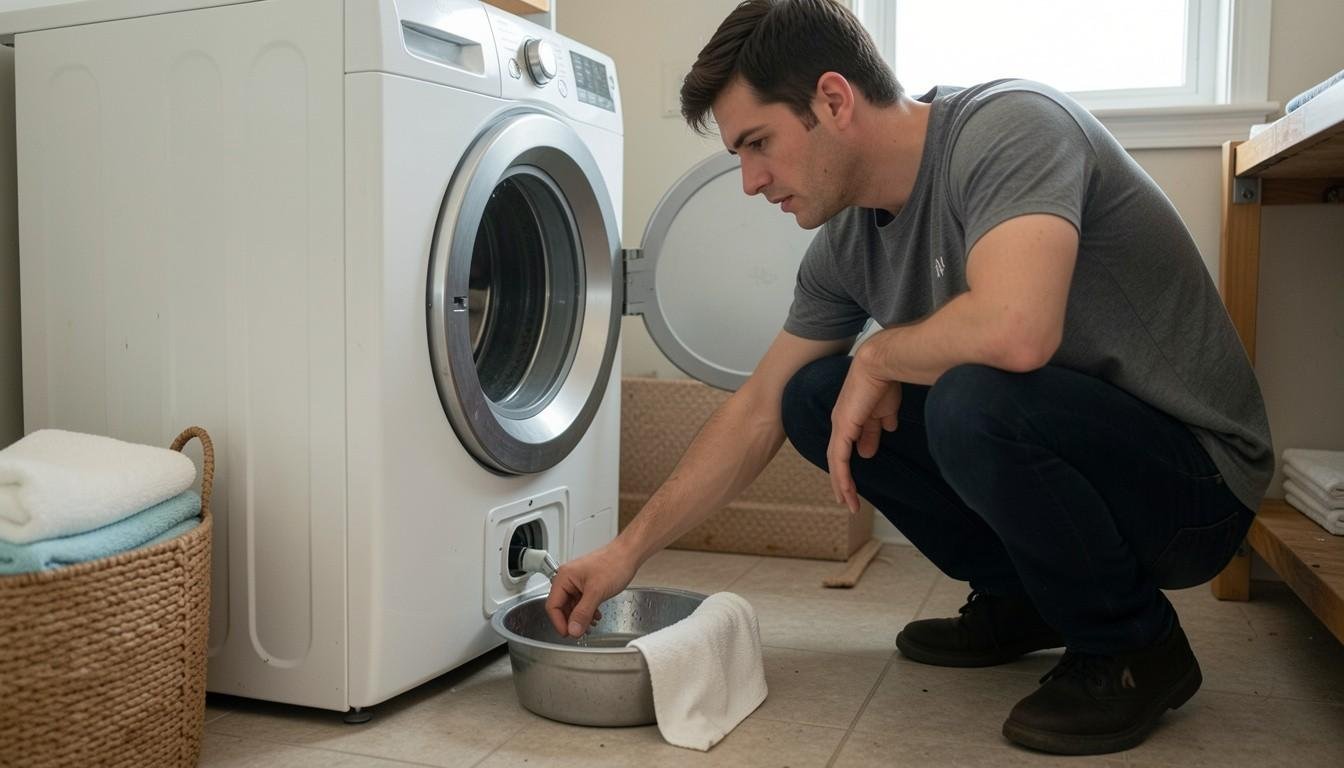
Unplug the washer, then use a shallow pan and towels to drain the remaining water from the tub or through the pump filter access panel. This makes every step after this one easier and safer.
Step 2: Check the Drain Hose for Kinks or Blockages
Pull the washer away from the wall and follow the hose from the machine to the drain point, looking for sharp bends or visible buildup.
Step 3: Clean Out the Pump Filter
Most washers have a small access panel near the bottom front. Open it carefully, since water will spill out, and clear any lint, coins, or debris you find.
Step 4: Listen for the Pump During the Drain Cycle
Run a drain or spin cycle and listen closely. A humming sound with little to no water movement usually means a clog somewhere past the pump. Silence often points toward the motor itself.
Step 5: Check for Error Codes on Digital Models
Many washers display a specific drain-related code when they detect a blockage. Check your owner’s manual to see what your model’s code actually means before assuming pump failure.
Signs the Drain Pump Has Actually Failed
If your checks rule out a simple clog, these signs point more clearly toward a pump that needs replacing.
Humming Noise With No Water Movement
A pump that hums but moves no water at all, even after you’ve cleared the filter and hose, suggests the impeller itself is jammed or damaged internally.
No Sound at All During the Drain Cycle
If you hear nothing when the drain cycle should be running, the motor has likely burned out completely.
Water Remains No Matter How Many Times You Restart
Repeated attempts that all end the same way, with water still sitting in the tub, point toward a mechanical failure rather than a temporary blockage.
Standing water left unresolved for too long can also lead to a musty washer, which we cover in our guide on why your washing machine smells like mildew and how to fix it.
Visible Leaking Around the Pump Housing
Water pooling underneath the washer near the pump area, separate from the tub itself, often means the pump housing has cracked or the seal has failed.
DIY Fixes vs. When to Call a Professional
Some of these repairs are well within reach for most homeowners. Others carry enough risk that it’s worth bringing in a professional.
Clearing a Clog: What You Can Safely Do Yourself
Cleaning the filter, straightening a kinked hose, and clearing visible debris are all safe, low-risk fixes you can handle without special tools.
Testing the Pump: Where DIY Gets Risky
Confirming whether a pump has truly failed often means checking the motor’s electrical continuity, which requires comfort working around wiring and water at the same time. If you’re not confident doing that safely, it’s worth stopping there.
Why Pump Replacement Is Usually a Technician’s Job
Replacing a drain pump typically means partially disassembling the washer to reach it, and reinstalling it incorrectly can create new leaks or electrical issues. This is one repair where professional installation protects you from a bigger problem down the line.
Washer Drain Repair Costs in 2026
Knowing what these repairs typically cost helps you decide how to move forward once you’ve identified the issue.
Cost to Clear a Clogged Hose or Filter
This is one of the most affordable washer fixes, since it usually involves no parts at all, just labor if you choose to have a technician handle it.
Cost to Replace a Drain Pump
Drain pump replacement is a moderate repair, generally running a few hundred dollars once parts and labor are factored in, since the technician needs to access the pump housing.
Repair vs. Replace: When a Draining Washer Isn’t Worth Fixing
If your washer already has other issues on top of the pump failure, or if the repair estimate starts approaching half the cost of a new machine, replacement usually makes more financial sense.
Our guide on appliance repair costs in Menifee versus buying new breaks down how to weigh that decision for your specific washer.
How to Prevent Drain Clogs and Pump Failures
Most drainage problems are preventable with a few simple habits built into your regular laundry routine.
Empty Pockets Before Every Load
Coins, bobby pins, and small items are some of the most common causes of both clogs and jammed impellers. A quick pocket check before every load prevents most of these issues entirely.
Clean the Pump Filter on a Regular Schedule
Making filter cleaning part of your routine, rather than waiting until something goes wrong, keeps debris from building up to the point of causing a blockage.
Avoid Overloading the Washer
Overloading strains the entire drain system, including the pump motor, and can contribute to premature wear over time. This same overloading habit is also a common trigger behind washing machines that shake or walk during the spin cycle, so keeping loads reasonable protects more than just your drain system.
Schedule Routine Drain System Maintenance
Catching a slow-forming clog or early pump wear during a routine check costs far less than waiting for a full stoppage.
Why Menifee Homeowners Deal With Drain Issues More Often
Local water conditions and housing characteristics play a real role in how often washers in this area run into drainage trouble.
Hard Water Mineral Buildup in Pumps and Valves
Menifee’s hard water leaves mineral deposits that build up inside pumps and valves over time, gradually restricting flow even without an obvious clog. Our guide on how Menifee’s hard water affects your dishwasher and washing machine explains what that buildup does to your appliances over the long run.
Standpipe and Household Plumbing Considerations in Older Menifee Homes
Older homes in the area sometimes have standpipes or drainpipes that haven’t been updated in years, which means the blockage causing your washer trouble might actually be in your home’s plumbing rather than the machine itself.
A washer that won’t drain is frustrating, but it’s rarely a mystery once you know where to look. Start with the simple checks, the filter, the hose, and what you hear during the cycle, before assuming you need a new pump.
If you’ve ruled out the easy fixes and the water still won’t go anywhere, our team at Appliance Repair Menifee can diagnose the issue quickly, and you can reach out to us directly to schedule a visit.