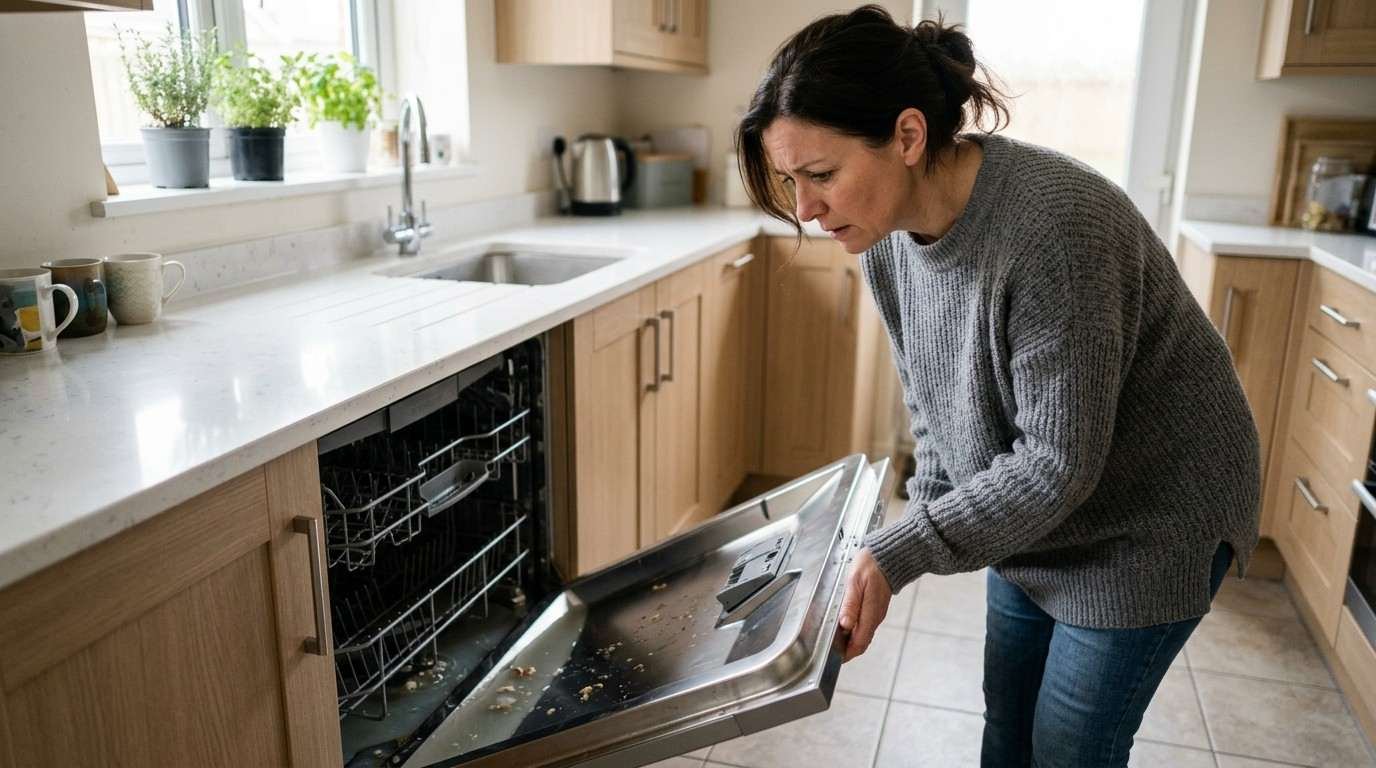
You open the dishwasher after a full cycle, expecting clean, dry dishes, and instead you find an inch of cloudy water sitting around the filter. It’s one of the most common dishwasher complaints, and the good news is that it almost always points to a blockage somewhere in the drain path rather than a dead machine. Once you know where to look, most causes are fixable in under an hour.
Introduction: Standing Water Usually Means a Blockage, Not a Dead Machine
Standing water in your dishwasher is a symptom, not a diagnosis. The actual cause is almost always a clog somewhere between the tub and the final drain point, and identifying exactly where that clog sits is most of the battle. This is actually one of the most common appliance repair calls we get in Menifee, so if you’re dealing with it, you’re far from alone.
Quick Answer Summary
Water pooling in the bottom of your dishwasher is most often caused by a clogged filter, a blocked drain hose, or a jammed garbage disposal connection.
Less commonly, the cause is a failed drain pump, a clogged air gap, or a knockout plug that was never removed during a new disposal installation. Most of these issues can be fixed at home in 20 to 40 minutes with basic tools.
How Much Standing Water Is Actually Normal
A small amount of water, generally less than half an inch pooled around the filter, is considered normal and helps keep the pump seal from drying out between cycles. Anything deeper than that, especially standing water covering the bottom of the tub, points to an actual drainage problem.
How Your Dishwasher’s Drain System Works
Understanding the path water takes on its way out of your dishwasher makes it much easier to figure out where a blockage is likely hiding.
The Path Water Takes From Tub to Drain
After the wash cycle finishes, a pump forces water out of the tub, through the filter, into the drain hose, and finally out through either your garbage disposal or a direct connection to your sink drain.
The Role of the Filter, Pump, and Drain Hose
The filter catches food particles before they reach the pump, the pump provides the force to push water out, and the drain hose carries that water to its final destination. A blockage at any one of these three points stops the whole process.
This same three-part chain, filter, pump, hose, shows up in washing machines too. Our guide on why your washing machine smells like mildew and how to fix it covers what happens when trapped water sits too long in a similar system.
Why the High Loop or Air Gap Prevents Backflow
Most dishwasher installations include either a high loop in the drain hose or a small air gap device mounted on the sink deck. Both serve the same purpose: preventing dirty water from the sink or disposal from siphoning back into the dishwasher.
The Most Common Cause: A Clogged Filter
If you’re only going to check one thing first, make it the filter. It’s responsible for more standing water complaints than any other single cause.
Why the Filter Clogs Faster Than Homeowners Expect
The filter sits at the bottom of the tub and catches food particles, grease, and small debris with every single cycle. Since it’s easy to forget about, it often clogs long before homeowners think to check it.
How to Find and Remove Your Dishwasher Filter
Most dishwashers have a cylindrical filter located at the bottom center of the tub, underneath the lower spray arm. It typically twists out by hand, and once removed, you can rinse it clean under hot running water using a soft brush to clear the mesh.
How Often You Should Actually Be Cleaning It
A monthly cleaning schedule is a reasonable baseline for most households, though homes that run the dishwasher daily or skip scraping plates beforehand may need to clean it more often.
Other Reasons Water Is Pooling in Your Dishwasher
If the filter is clean and water is still pooling, a handful of other common culprits are worth checking next.
A Kinked or Clogged Drain Hose
The corrugated drain hose runs from the dishwasher, under the sink, and connects to the disposal or drain. Since it’s located behind or beneath the unit, it’s not always easy to inspect without moving the dishwasher, but a kink or internal clog here will stop drainage completely.
A Blocked Garbage Disposal Connection
If your dishwasher drains through your garbage disposal, a clog there can block water flow just as effectively as a clog inside the dishwasher itself. Running the disposal for 30 seconds before starting a dishwasher cycle helps prevent this.
The Knockout Plug Left In After a New Installation
New garbage disposals ship with a plastic knockout plug covering the dishwasher inlet. If it wasn’t removed during installation, water has nowhere to go and backs up into the dishwasher. This is a common and easily overlooked cause on recently installed units.
A Clogged Air Gap on the Sink Deck
If you have an air gap, a small chrome or plastic cylinder mounted near your faucet, food debris or grease can build up inside it over time and restrict drainage.
A Failed Drain Pump
The drain pump provides the force needed to push water out of the tub. If it wears out or fails, water simply stays put no matter how clean everything else is. This is one of the more involved repairs on this list. Our guide on water not draining from a washer covers a similar pump-versus-clog diagnosis for washing machines, and much of that same logic applies here.
A Faulty Check Valve
Some dishwashers use a check valve to prevent water from flowing back into the tub after draining. If this valve sticks or fails, it can allow water to return or prevent proper drainage in the first place.
How to Clear Standing Water and Diagnose the Cause
A step-by-step approach helps you rule out the simple causes before assuming you need a professional repair.
Step 1: Cut Power to the Dishwasher First
Turn off power at the breaker or unplug the unit before reaching inside, especially before removing any standing water.
Step 2: Remove the Standing Water Safely
Use a cup, towels, or a wet/dry vacuum to empty the tub so you have room to work and can see what you’re doing clearly.
Step 3: Clean the Filter and Sump Area
Twist out the filter, rinse it thoroughly, and wipe down the sump area underneath where debris tends to collect.
Step 4: Check the Drain Hose for Kinks or Clogs
Locate the hose under the sink and behind the dishwasher, straighten any kinks, and confirm it isn’t crushed by a cabinet or something stored nearby.
Step 5: Clear the Air Gap If You Have One
Pop the cap off the air gap cylinder and clear out any sludge or debris you find inside.
Step 6: Flush the Garbage Disposal Connection
Run the disposal for about 30 seconds to clear any lingering debris, then flush the connection with warm water.
Step 7: Run a Short Rinse Cycle to Test
Restore power and run a short rinse cycle, watching to confirm the water clears properly this time.
What You Should Never Do to Fix a Draining Problem
A few common instincts can actually make the problem worse or create a new safety issue entirely.
Never Pour Chemical Drain Cleaner Into the Dishwasher
Manufacturers explicitly warn against using drain cleaner in a dishwasher’s drainage system, since the chemicals can damage plastic hoses and rubber seals.
Don’t Keep Running Cycles Hoping It Clears Itself
Running the dishwasher repeatedly with standing water already present doesn’t clear a blockage. It just risks pushing dirty water into places it shouldn’t be.
Avoid Forcing Tools Into the Pump Housing
If you suspect the pump itself is the issue, resist the urge to force a tool into the housing. This is a job better left to a professional, the same reasoning behind why we recommend professional service for gas dryer repairs rather than DIY attempts on components that carry real risk if handled incorrectly.
Signs the Problem Is Beyond a Simple Clog
Some symptoms point clearly toward something more involved than a basic filter or hose clog.
Water Returns Immediately After Every Cycle
If you’ve cleaned the filter and hose thoroughly and water still returns every single time, the cause likely lies deeper in the system, possibly the pump itself.
A Humming Sound With No Draining
A pump that hums during the drain cycle but doesn’t actually move water usually points to a jammed or failing pump rather than a simple clog.
Water Backing Up Into the Sink
If running your dishwasher causes water to back up into your kitchen sink, the blockage may be in your home’s plumbing rather than the dishwasher itself.
Visible Leaking Underneath the Dishwasher
Water pooling on the floor underneath the unit, separate from the standing water inside the tub, often signals a cracked hose or a failed pump seal.
Dishwasher Drain Repair Costs in 2026
Understanding typical repair costs helps you decide how to move forward once you’ve ruled out the simple fixes.
Cost of a Professional Diagnostic Visit
A professional diagnostic visit typically runs in the range of $50 to $75, which helps confirm the exact cause before any repair work begins.
Cost to Replace a Drain Pump
Drain pump replacement is the most expensive repair on this list, typically running between $150 and $400 in parts and labor combined, since it’s the most involved part to access and replace.
Cost to Replace a Drain Hose or Air Gap
Replacing a drain hose or air gap is one of the more affordable fixes, with air gap replacement units alone often costing well under $40.
When Repair Costs Signal It’s Time to Replace the Dishwasher
If your dishwasher already has other issues on top of a failed drain pump, or if the repair estimate starts approaching half the cost of a new unit, replacement often makes more financial sense. Our guide on appliance repair costs in Menifee versus buying new can help you weigh that decision.
How to Prevent Standing Water From Coming Back
A few consistent habits go a long way toward keeping your dishwasher’s drain system clear.
Scrape Plates Before Loading
Scraping large food particles off plates before loading them reduces how quickly the filter clogs with each cycle.
Run the Garbage Disposal Before Starting a Cycle
Running the disposal briefly before starting the dishwasher clears out anything sitting in the connection that could otherwise block drainage.
Clean the Filter on a Set Schedule
Sticking to a monthly cleaning routine, or more often for heavy use, prevents the buildup that leads to most standing water complaints. This same idea of small, regular upkeep applies to more than your dishwasher. Our seasonal HVAC checklist for preparing your Menifee home for summer heat follows the same approach for the rest of your home’s systems.
Run Hot Water at the Sink Before Starting the Dishwasher
Running hot water at the sink first ensures the dishwasher starts its cycle with hot water immediately, which helps dissolve grease and debris more effectively throughout the wash.
Why Menifee Homeowners See This Problem More Often
Local water conditions and housing age both play a role in how often this specific issue shows up in this area.
How Hard Water Mineral Buildup Affects Drainage
Menifee’s hard water leaves mineral deposits that build up inside the pump, hoses, and valves over time, gradually restricting flow even without an obvious clog. Our guide on how Menifee’s hard water affects your dishwasher and washing machine breaks down exactly how that buildup happens and what it does to your appliances long term.
Why Older Menifee Homes May Have Drain Line Issues
Older homes in the area sometimes have drain lines or plumbing configurations that haven’t been updated in years, which means the blockage causing your dishwasher trouble might actually be in your home’s plumbing rather than the appliance itself.
Standing water in your dishwasher is almost always fixable once you know where to look, starting with the filter and working your way through the drain hose, air gap, and disposal connection.
If you’ve worked through these steps and water is still pooling, or if you’re hearing a humming pump with no drainage, that’s a sign to bring in a professional rather than keep troubleshooting. Our team at Appliance Repair Menifee can diagnose the exact cause quickly, and you can reach out to us directly to schedule a visit.