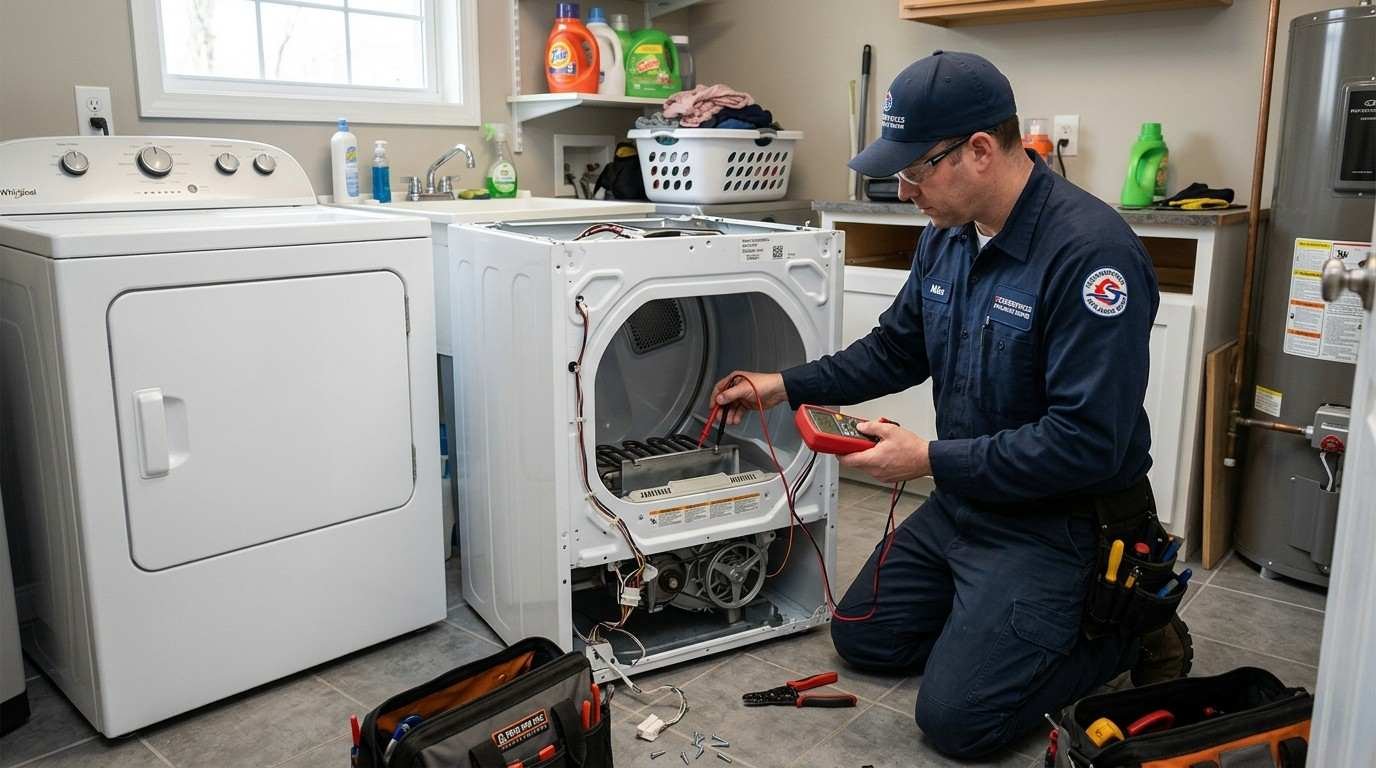
Gas and electric dryers do the exact same job, but when something goes wrong, the repair experience looks very different depending on which one you own.
Knowing those differences ahead of time helps you set realistic expectations for cost, safety, and how quickly a problem can be fixed, whether you’re troubleshooting an existing dryer or deciding which type to buy next.
Same Job, Very Different Repair Experience
A gas dryer and an electric dryer share most of their internal parts, but the piece that actually generates heat is where the similarities end and the repair differences begin. This is actually one of the most common appliance repair calls we get in Menifee, since homeowners often aren’t sure which repair path applies to their specific dryer type.
Quick Answer Summary
Gas and electric dryers are roughly 80% identical machines, sharing the same drum, motor, belt, rollers, and control board. The real difference comes down to the heat source: electric dryers use a heating element, while gas dryers use a burner assembly, igniter, and gas valve.
That 20% difference makes gas dryer repairs more expensive on average, since they require specialized safety knowledge and certified technicians, while shared component repairs cost about the same either way.
Why This Matters Before and After You Buy
Understanding these differences matters twice: once when you’re deciding which type to buy, and again every time something breaks and you’re trying to figure out what the repair will actually involve.
How Gas and Electric Dryers Actually Differ
Before comparing repairs, it helps to understand exactly what’s shared between the two types and what’s genuinely unique to each.
The Shared Components Both Types Have in Common
Gas and electric dryers use the same drum, motor, drive belt, support rollers, blower, exhaust system, and control board. If you’ve read our guide on diagnosing dryer noises, most of those squeaking and thumping causes apply equally to both dryer types, since they come from these shared mechanical parts.
The Heat Source Difference: Burner Assembly vs. Heating Element
An electric dryer generates heat through an electric heating element, similar to a large coil that warms as current passes through it. A gas dryer instead uses a burner assembly, igniter, and gas valve to create a controlled flame that heats the air moving through the drum.
Why Gas Dryers Also Need Electricity to Run
Even though a gas dryer burns natural gas or propane for heat, it still relies on electricity to power the motor, control board, igniter, and safety sensors. A gas dryer connection isn’t purely gas-powered, it’s a hybrid system, which is part of why gas dryer repairs can involve troubleshooting both electrical and gas-related components.
Common Electric Dryer Repairs
Electric dryers tend to have more straightforward repair patterns, since most of their failure points are purely mechanical or electrical.
Burnt-Out Heating Element
A burnt-out heating element is one of the most common electric dryer repairs. When it fails, the dryer typically still tumbles but no longer produces heat, leaving clothes damp at the end of a cycle.
Faulty Thermostat or Thermal Fuse
The thermal fuse is a safety device that shuts the dryer off if it overheats, and a blown thermal fuse is one of the most common reasons a dryer stops producing heat entirely.
Worn Drum Belt, Rollers, or Idler Pulley
These mechanical parts wear out on both dryer types, but they’re especially common electric dryer repair calls since electric dryers make up the majority of dryers in use. If your dryer is also making unusual noise alongside these issues, our guide on why professional dryer vent cleaning matters covers a related airflow issue worth ruling out first.
Control Board or Timer Failures
A failing control board or timer can cause a range of symptoms, from a dryer that won’t start to one that stops mid-cycle unexpectedly.
Common Gas Dryer Repairs
Gas dryers share the mechanical failure points above, but they also come with a distinct set of repair issues tied directly to the combustion process.
Faulty Igniter or Flame Sensor
A faulty igniter or flame sensor is one of the most common gas dryer problems. If the igniter doesn’t glow or the flame sensor fails, the dryer will tumble normally but produce no heat at all.
Failed Gas Valve Solenoid
The gas valve solenoid controls the release of gas to the burner. When it fails, gas may not release properly even though the igniter is functioning correctly, which prevents ignition entirely.
Burner Assembly Problems
Issues with the burner assembly itself can cause uneven heating or repeated shutoffs, especially when combined with restricted airflow. A clogged vent can force a gas burner to shut off repeatedly as a built-in safety measure, so checking airflow is always a good first step before assuming the burner itself has failed.
Gas Leaks and Loose Connections
A gas leak or loose connection is a serious issue that should never be ignored. A persistent gas smell may point to a damaged gas valve or a loose fitting, and this always requires immediate professional attention.
Repair Costs: Gas vs. Electric Side by Side
Cost is often the deciding factor homeowners care about most, and the numbers consistently favor electric dryers for affordability.
Why Electric Dryer Repairs Are Usually Cheaper
Electric dryer repairs typically fall in a more affordable range, generally between $100 and $300, since the parts are simpler, more widely available, and don’t require specialized gas-related labor.
Why Gas Dryer Repairs Cost More on Average
Gas dryer repairs tend to run higher, generally between $150 and $400, largely because working with gas lines requires extra training and safety precautions, adding roughly $50 to $100 more to the typical repair compared to an equivalent electric repair.
Shared Repairs That Cost the Same Either Way
Repairs involving the drum, belt, rollers, or blower cost roughly the same regardless of dryer type, since these components don’t differ between gas and electric models.
Why Gas Dryer Repairs Require a Certified Technician
Gas systems carry safety risks that go well beyond a typical appliance repair, which is why professional service matters more here than with most other dryer issues.
The Safety Risk Behind DIY Gas Repairs
Working on a gas dryer’s valve, burner, or connections without proper training risks a gas leak, which can lead to fire or health hazards. This is one repair category where DIY attempts genuinely aren’t worth the risk.
Specialized Tools Gas Repairs Require
Diagnosing gas dryer issues properly often requires specific equipment, like a gas leak detector or a dedicated thermal fuse tester, tools that most homeowners don’t have on hand and shouldn’t need to buy for a single repair.
What Happens If a Gas Dryer Issue Goes Unaddressed
An unaddressed gas issue can escalate from a minor inconvenience, like the dryer shutting off mid-cycle, to a genuine safety hazard involving gas leaks or fire risk. This is one area where delaying repair carries real consequences beyond cost.
Lifespan and Long-Term Reliability
Beyond repair frequency and cost, the two dryer types also differ slightly in how long they typically last.
Average Lifespan: Gas vs. Electric
Electric dryers have a modest lifespan advantage, with industry data putting the average around 13 to 14 years, compared to roughly 11 to 13 years for gas dryers.
Why Gas Dryers Tend to Need Repairs Sooner
The lifespan difference comes down to component count. Gas dryers have igniters, gas valves, and burner assemblies that wear out over time, in addition to all the parts shared with electric models, giving gas dryers more potential failure points overall and shortening their typical lifespan slightly compared to electric models.
How Maintenance Habits Affect Both Types
Regular maintenance, like keeping the vent clear and checking for worn mechanical parts, significantly reduces repair frequency for both dryer types, regardless of which one you own.
Staying ahead of small issues with a consistent maintenance routine matters across your whole home, not just your dryer, which is the same idea behind our seasonal HVAC checklist for preparing your Menifee home for summer heat.
Operating Costs: The Other Side of the Comparison
Repair cost isn’t the only financial factor. Monthly operating costs tell a different part of the story, and they often favor gas dryers.
Monthly Energy Cost Differences
Gas dryers typically cost less to operate per load than electric dryers, since natural gas is generally cheaper than electricity per unit of heat produced in most markets.
How Utility Rates Change the Math
Local utility rates can significantly shift this comparison. It’s worth checking your own household’s actual gas and electric rates rather than relying on a national average, since regional pricing varies quite a bit.
Weighing Lower Operating Cost Against Higher Repair Cost
A gas dryer’s lower monthly operating cost can offset its higher repair costs over time, but the right choice ultimately depends on how long you plan to keep the dryer and how your specific utility rates compare.
Warning Signs Specific to Each Dryer Type
Some warning signs point clearly to one dryer type, while others apply to both regardless of heat source.
Gas Dryer Warning Signs You Should Never Ignore
A persistent gas smell, a burner that won’t ignite, or a dryer that repeatedly shuts off mid-cycle are all gas-specific warning signs that call for immediate professional attention rather than waiting it out.
Electric Dryer Warning Signs Worth Watching
Clothes coming out cold despite a full cycle, a tripped circuit breaker during operation, or a dryer that won’t start at all often point to heating element or electrical issues specific to electric models.
Warning Signs Common to Both Types
Squeaking, thumping, grinding, or unusually long drying times can affect either dryer type, since these symptoms typically trace back to the shared mechanical components rather than the heat source. Our guide on dryer taking two cycles to dry covers this specific symptom in more detail, regardless of which dryer type you own.
Repair vs. Replace: Does Dryer Type Change the Math?
At some point, every dryer reaches an age or repair history where replacement makes more sense than another repair, and dryer type plays a real role in that decision.
The 50% Rule Applied to Gas and Electric Dryers
The general rule of thumb, that repair makes sense when the cost is under half the price of a new machine, applies to both types, but gas dryers reach that threshold faster given their generally higher repair costs.
When a Gas Dryer’s Complexity Tips the Decision Toward Replacement
If a gas dryer needs a burner assembly, gas valve, and control board repair all at once, the combined cost and complexity often make replacement the more practical choice.
When an Electric Dryer Is Still Worth Repairing
Because electric dryer repairs tend to be simpler and more affordable individually, it’s often worth repairing an electric dryer even after a couple of separate issues, as long as the machine isn’t nearing the end of its expected lifespan. Our guide on appliance repair costs in Menifee versus buying new can help you run these numbers for your specific situation.
Which Dryer Type Makes Sense for Menifee Homeowners
Local utility setup and technician availability both factor into which dryer type makes the most practical sense in this area.
Utility Setup and Availability Considerations
Whether a gas or electric dryer makes sense often comes down to what’s already available in your home, since installing a new gas line or upgrading an electrical outlet adds cost beyond the appliance itself.
Local Technician Availability for Gas or Electric Repairs
Having access to a technician certified for both gas and electric appliance repair matters, especially since gas repairs specifically require certified expertise. Confirming that availability before you need it urgently saves you time during an actual breakdown.
Gas and electric dryers may look nearly identical from the outside, but their repair needs, costs, and safety considerations genuinely differ once you look under the hood. Knowing which type you own, and what its common failure points are, helps you catch problems early and make smarter repair-or-replace decisions down the road.
If your dryer, gas or electric, needs a closer look, our team at Appliance Repair Menifee handles both, and you can reach out to us directly to schedule a visit.