A broken ice maker usually means one of four things: the refrigerator is not getting water, the ice maker cannot complete its cycle, the freezer is too warm or too cold, or a part inside the system has failed. You can solve many ice maker issues with a few simple checks, but repeated failures often point to a bad valve, a clogged filter, a frozen fill tube, or a control problem. In 2026, repair data still shows water inlet valves, filters, and control components as the most common trouble spots, with many repairs landing in the roughly $90 to $300 range for the part itself and more once labor is included.
If you live in Southern California, heat, dust, hard water, and heavy daily use can make these problems show up faster. That means your troubleshooting should be quick, structured, and focused on the symptoms that tell you what failed.
Why Your Ice Maker Stops Working
Your ice maker depends on a clean water supply, the right freezer temperature, and a working cycle inside the module. When one of those pieces slips, ice production stops or slows down. Whirlpool’s troubleshooting guidance still points to the same core causes in 2026, including clogged filters, frozen water lines, low water pressure, misaligned fill cups, and failing inlet valves.
The first step is to stop guessing and read the symptoms. No ice, small ice, noisy cycles, or water that works at the door but not in the bin all point to different causes. That is why a simple reset is rarely enough on its own.
First Checks You Can Do Fast
Start with the easiest items before you touch parts or call for service.
- Make sure the ice maker is turned on.
- Check that the freezer stays near 0 F.
- Confirm that the water shutoff valve is open.
- Remove the ice bin and look for a jam or ice bridge.
- Reinstall the bin and listen for the fill cycle.
If your refrigerator is already struggling to cool, the ice issue may be part of a larger airflow or compressor problem. You can also compare symptoms with Why Is My Refrigerator Running But Not Cooling and Condenser Coils 101: Why Dirty Coils Kill Fridges.
Water Supply Problems
A weak or blocked water supply is one of the most common reasons an ice maker fails. Whirlpool notes that a clogged water filter can cut flow enough to stop ice production, and it recommends replacing the filter about every six months.
Look for these signs:
- The dispenser water flow is slow.
- Ice cubes come out small, hollow, or uneven.
- The ice maker works only after a filter change.
- The line behind the fridge looks kinked or twisted.
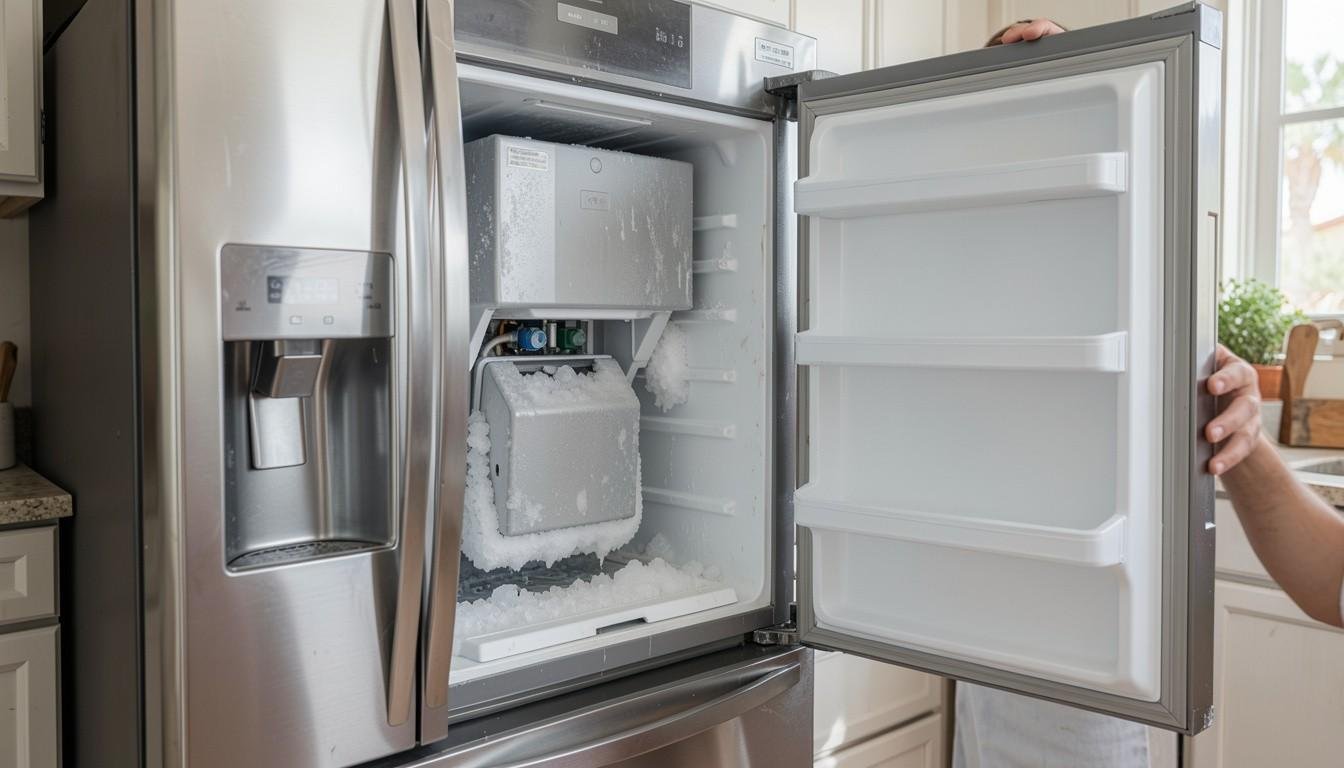
A frozen fill tube is another common issue. If water cannot reach the tray, the system can run all day and still produce nothing. Whirlpool and other repair sources still identify a frozen inlet tube as a frequent cause, especially when the freezer runs too cold or the water drips at the end of a cycle and freezes shut.
Parts That Commonly Fail
Once the water supply checks out, move to the parts that actually create the ice.
The water inlet valve is one of the biggest failure points. It opens to let water into the tray, and Whirlpool notes that it needs at least 20 psi to work properly. If the valve gets weak or clogged with mineral buildup, the ice maker may never fill.
Other common failures include:
- Ice maker thermostat failure.
- Mold or tray damage.
- Ejector motor or gear failure.
- Sensor or shutoff arm failure.
- Control board failure in newer refrigerators.
If the dispenser still works but the ice maker does not, the valve may have one working side and one failed side. That is common in dual-valve systems.
What the Symptoms Mean
You can learn a lot from the way the failure shows up.
If the ice maker makes no ice at all, start with power, temperature, water supply, and the fill tube. If it makes small or hollow cubes, you likely have a water flow problem, a weak filter, or low pressure. Whirlpool says poor water flow often creates small or oddly shaped ice.
If the ice maker hums or clicks but does not dump ice, the motor, gear, or module may be failing. If the bin is full of clumped ice or a frozen block, the freezer may be running too cold, the door seal may be leaking warm air, or the ice maker may be overfilling. For that type of overlap, Frost Buildup in the Freezer: Is It a Seal Issue? is a useful related read.
Safe DIY Troubleshooting Steps
You can handle a few checks safely before you call a technician.
- Reset the ice maker once and wait for a full cycle.
- Replace the water filter if it is old.
- Run water through the dispenser to clear trapped air.
- Check the line behind the fridge for a kink.
- Thaw a frozen fill tube with warm air, not sharp tools.
- Make sure the refrigerator sits level.
If the filter is the issue, ice production often improves within a day after replacement. Whirlpool also notes that removing the filter can help confirm whether low flow is the cause.
Do not pry ice out with a knife or screwdriver. That can crack the fill tube, damage the tray, or puncture the liner. If the tube or valve freezes again after you thaw it, you need a real repair, not another reset.
When the Problem Is Bigger Than the Ice Maker
Sometimes the ice maker is innocent and the fridge is the real problem.
If the freezer temperature is off, the ice maker cannot keep a normal cycle. If a dirty condenser coil raises the internal temperature, the whole cabinet works harder. If the door seal leaks warm air, frost and humidity can interfere with ice production. If the defrost system fails, ice can block airflow and freeze the wrong parts.
You should also watch for leaks and noise. Water under the fridge can point to a drain or line issue, and buzzing can point to a valve, fan, or compressor problem. You can compare those symptoms with The Truth About Refrigerator Leaks: Is It the Water Line or Defrost Drain? and What That Loud Buzzing Noise Coming from Your Fridge Means.
Repair Costs and 2026 Trends
Ice maker repair pricing in 2026 still depends on the failing part. Angi’s 2026 data shows common repairs such as water inlet valve replacement, tray repair, and control board work in the lower to mid range for appliance service, with water inlet valve replacement often around $90 to $225 and control board work higher.
Here is the practical way to think about cost:
- Filter or line issue, lower cost.
- Inlet valve replacement, moderate cost.
- Motor, module, or board repair, higher cost.
- Full refrigerator replacement, highest cost.
Hard water can push those numbers up over time because it speeds mineral buildup inside the valve and supply path. That matters in many Southern California homes, where water quality and long run times put extra stress on appliance parts.
If you are weighing repair against replacement, The Cost of Appliance Repair in Menifee vs Buying New gives you a good decision framework.
What Works and What Does Not
What works is simple and direct. Replace the filter. Check pressure. Clear the fill tube. Fix a kinked line. Replace the bad valve or module after testing.
What does not work is repeated guessing. Resetting the ice maker over and over rarely fixes a dead valve or failed motor. Forcing frozen parts can create bigger damage. Ignoring low water pressure can also make the same problem come back fast.
The best approach is to troubleshoot in order: water supply first, then temperature, then mechanical parts, then electrical control.
Why Southern California Homes See More Ice Maker Problems
Hot weather puts more demand on refrigerators. In Menifee and nearby areas, the kitchen and garage can stay warm for long stretches, and that heat makes the refrigerator cycle harder. Dust also builds up on coils and around vents, which reduces cooling performance.
Hard water matters too. It shortens filter life and can build mineral scale inside the valve. Busy households and small commercial spaces often open the fridge more often, which adds heat and moisture to the system. If your business depends on reliable cooling and ice, Commercial HVAC Maintenance: Essential for Menifee Small Businesses is a good related read for broader equipment care.
When to Call a Technician
You should call a technician if the ice maker still fails after a filter change, a reset, and a basic visual check. You should also call if the fill tube keeps freezing, the valve is noisy, the freezer temperature is wrong, or the refrigerator has other cooling problems.
A trained technician can test water pressure, voltage, valve operation, sensor function, and module response. That matters because a working dispenser does not prove the ice maker side of the system is healthy. It only proves part of the water path is alive.
If you want a local team that handles appliance repair and HVAC repair, Appliance Repair Menifee can diagnose the issue and tell you whether you need a small part, a valve replacement, or a larger repair.