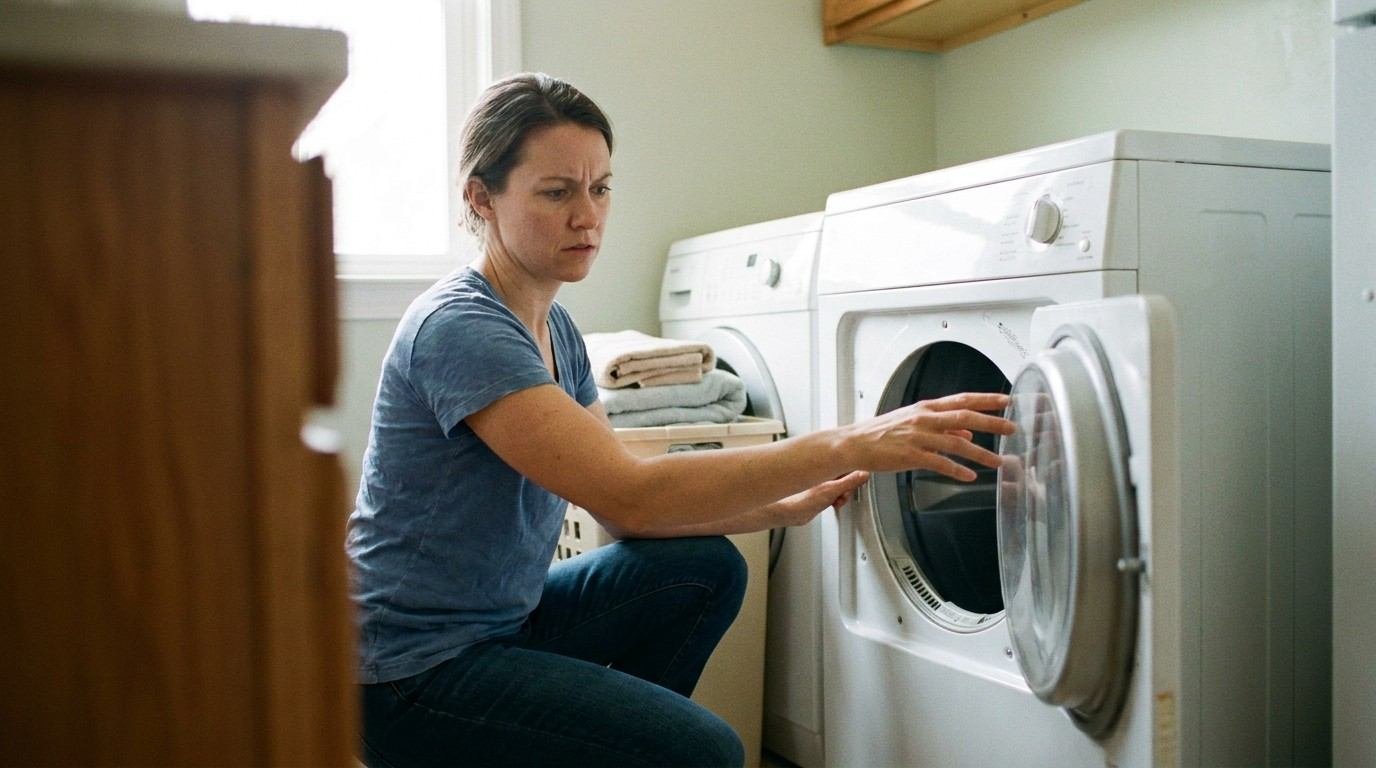
You open the dryer expecting warm, tumbled clothes, and instead you find a hot, damp pile that hasn’t moved an inch. The dryer clearly turned on, and it clearly got hot, but the drum never turned.
This specific combination confuses a lot of homeowners because it doesn’t feel like a total failure. In reality, it points to a fairly narrow set of causes, and figuring out which one is happening can save you time and prevent a much bigger problem.
Introduction: Heat Without Movement Is a Warning Sign
A dryer that heats but won’t spin isn’t just an inconvenience. It’s a specific mechanical signal that something in the drum’s rotation system has failed while the heating system kept working normally. This is one of the most common appliance repair calls we get in Menifee, and it tends to catch homeowners off guard since everything seems to be working at first glance.
Quick Answer Summary
In most cases, a dryer that heats but won’t spin has a broken or slipped drive belt, which is responsible for the majority of these calls. Other possible causes include worn drum rollers, a failed idler pulley, a jammed blower wheel, a motor that can’t start under load, or a faulty door switch. The good news is that this is almost always mechanical, not electrical, so a few simple checks can usually tell you which part failed.
Why This Combination Is Riskier Than a Dryer That Just Won’t Start
A dryer that won’t start at all is frustrating, but it’s not actively dangerous. A dryer that heats while the drum sits still is a different situation entirely, since heat continues building up in one concentrated spot instead of spreading safely through tumbling clothes.
Why Heat and Spin Are Controlled by Separate Systems
Understanding that these are two independent systems inside your dryer makes it much easier to understand why one can fail while the other keeps working just fine.
How the Heating Element or Burner Works Independently
Whether your dryer is gas or electric, the heating system runs on its own circuit or gas line, producing warm air regardless of whether the drum is turning. If you’re not sure which type you have or how that affects repairs, our guide on gas vs. electric dryer repair differences breaks down how each heating system works.
How the Drum Rotation System Works Separately
The drum relies on a completely different system: a motor that drives a belt, which wraps around the drum and an idler pulley to keep it turning. This system has nothing to do with how heat gets generated.
Why One Can Fail While the Other Keeps Working
Because these two systems don’t share the same parts, a broken belt or a seized roller only affects rotation. The heating element or burner keeps doing its job, which is exactly why you end up with a hot dryer and a completely still drum.
The Most Common Cause: A Broken or Slipped Drive Belt
If your dryer heats but won’t spin, the drive belt is the first thing worth checking, since it accounts for the majority of these cases.
Why the Belt Fails More Than Any Other Part
The drive belt is a thin rubber loop that wraps around the drum and connects to the motor pulley. After years of heat cycling and constant friction, it stretches, cracks, and eventually snaps, making it the single most common cause of a dryer drum that won’t turn.
The Simple Hand-Spin Test to Confirm a Broken Belt
With the dryer unplugged, open the door and try turning the drum by hand. A working belt creates noticeable resistance, since the motor and pulley system push back against the movement. If the drum spins freely with almost no resistance at all, the belt has broken.
Why the Motor Keeps Humming Even With a Broken Belt
Even with a snapped belt, the motor itself often still runs and hums when you start the dryer, since the motor and the belt are two separate components.
The motor spins, but with nothing connecting it to the drum, nothing else moves. This is a similar disconnect to what happens with a washing machine that won’t spin, where the motor can run fine while a separate failed part prevents the drum from turning.
Other Reasons Your Dryer Heats But Won’t Spin
A broken belt explains most cases, but a handful of other parts can cause the exact same symptom.
Worn or Seized Drum Support Rollers
The rollers that support the drum can wear out or seize over time, preventing the drum from turning even if the belt itself is fine. This issue often comes with a squeaking or thumping sound beforehand. Our guide on diagnosing dryer noises covers these warning sounds in more detail.
A Failed Idler Pulley
The idler pulley is a spring-loaded component that keeps tension on the drive belt. If it seizes or fails, the belt loses the tension it needs to turn the drum properly, even if the belt itself hasn’t broken.
A Jammed or Damaged Blower Wheel
A jammed blower wheel can sometimes prevent the motor from turning freely, which in turn affects the drum’s ability to spin, especially in models where the blower and drum share the same motor shaft.
A Motor That Can’t Start Under Load
If you hear a clicking sound rather than a hum when the dryer starts, that often means the motor is trying to engage but can’t start under load, commonly caused by a broken belt or a seized idler pulley putting resistance on the system.
A Misaligned or Faulty Door Switch
A misaligned or malfunctioning door switch can sometimes allow the dryer to start heating while preventing the drum motor from engaging properly, since many dryers treat this as a safety fault.
How to Diagnose the Cause Yourself
A handful of simple, safe checks can help you narrow down which part is actually responsible before you decide on a repair path.
Step 1: Unplug the Dryer Before Touching Anything
Always disconnect power before opening the dryer or reaching inside the drum, even for a quick check.
Step 2: Try Spinning the Drum by Hand
Reach in and turn the drum manually. Whether it spins freely or feels stiff and resistant gives you an important early clue about which part has failed.
Step 3: Listen for Humming, Clicking, or Silence
Plug the dryer back in and start a cycle briefly. A steady hum with no drum movement often points to a broken belt, while a repeated clicking sound suggests the motor is struggling to start against resistance.
Step 4: Check the Door Switch and Latch
Open and firmly close the dryer door again, since a misaligned door switch plunger can sometimes prevent proper operation even when everything else is working.
Step 5: Visually Inspect the Belt If Accessible
On some models, you can see the belt through the rear or side panel without fully disassembling the dryer, giving you visual confirmation of a broken or slipped belt.
Why This Is More Than a Drying Problem
A hot, motionless drum isn’t just an inconvenience. It creates a real safety concern that’s worth taking seriously.
How Heat Concentrates on Stationary Clothes
When the drum stops tumbling, wet clothes sit in a stationary pile pressed against the heating element instead of moving through the airflow evenly. That one spot keeps absorbing heat instead of distributing it.
The Fire Risk Behind a Non-Spinning, Heating Drum
As heat concentrates in one area, nearby lint and fabric face a higher risk of overheating. This is one of the reasons a heating, non-spinning dryer should never be left running unattended, similar to the fire risk we cover in our guide on why professional dryer vent cleaning matters, where trapped heat and lint create dangerous conditions in a different part of the same machine.
Why You Should Stop the Dryer Immediately If This Happens
The moment you notice heat without movement, turn the dryer off and unplug it rather than letting the cycle continue or running it again to see if it corrects itself.
DIY Fixes vs. When to Call a Professional
Some of these repairs are realistic for a confident homeowner to tackle. Others involve enough complexity that a professional is the safer choice.
Replacing a Drive Belt: A Realistic DIY Project
Drive belt replacement is one of the more approachable DIY dryer repairs. It typically takes an hour or so for a first attempt and involves opening the top and front panels, threading the new belt around the drum, and routing it under the tensioner pulley to the motor.
Why Roller and Idler Pulley Repairs Are Trickier
Roller and idler pulley replacement often require more extensive disassembly, including removing both the front and rear panels, which makes these repairs a bit more involved than a straightforward belt swap.
When a Motor or Electrical Issue Means Call a Technician
If your checks point to the motor itself, or if you’re dealing with a clicking sound that suggests the motor can’t start under load, that’s a good point to bring in a professional rather than continuing to troubleshoot electrical components yourself.
Repair Costs in 2026
Knowing what these repairs typically cost helps you decide how to move forward once you’ve identified the likely cause.
Cost of a Drive Belt Replacement
A drive belt is one of the most affordable parts in this entire repair category, often costing around $25 for the part alone, making it one of the most cost-effective DIY repairs available for this issue.
Cost to Replace Rollers or an Idler Pulley
Roller and idler pulley replacement typically costs more than a belt alone once you factor in the additional labor and disassembly required to access these parts.
Cost of Motor Replacement
Motor replacement is one of the more expensive repairs on this list, since it involves a pricier part and more involved labor to access and install correctly.
Typical Service Call and Diagnostic Fees
If you call a professional, expect a service call fee in the range of $50 to $100 just for diagnosis, which is typically applied toward the total repair cost if you move forward with the fix.
Repair vs. Replace: When It’s Time for a New Dryer
At some point, the cost of repeated repairs makes replacing the dryer the more practical choice.
The 50% Rule Applied to This Specific Problem
If the total repair estimate, especially for a motor replacement, starts approaching half the cost of a new dryer, replacement usually makes more financial sense than continuing to repair an aging machine.
Signs Your Dryer Has More Issues Than Just the Belt
If you’re dealing with a broken belt on top of other problems, like inconsistent heating or unusual noises covered in the past, that combination is a sign your dryer may be nearing the end of its useful life. Our guide on appliance repair costs in Menifee versus buying new can help you weigh that decision.
What a New Dryer Costs in 2026
A new basic dryer typically starts around $400 to $600, which gives you a useful benchmark when comparing against the total cost of stacking multiple repairs on an older machine.
How to Prevent This From Happening Again
A few consistent habits can meaningfully extend the life of your dryer’s belt, rollers, and motor.
Avoid Overloading the Dryer
Overloading strains the belt and motor with every cycle, and belts on overloaded machines tend to fail well before their expected lifespan.
Address Worn Rollers Before They Damage the Belt
Worn rollers put extra strain on the belt as it works harder to keep the drum turning. Replacing rollers early, before they seize completely, helps protect the belt from premature failure.
Keep the Door Switch and Latch in Good Condition
A door switch that’s starting to misalign is worth addressing right away, since it can eventually prevent the dryer from starting properly at all.
Schedule Routine Maintenance Checks
Catching a worn roller or a stretching belt during a routine check costs far less than waiting for a complete failure. This same preventive approach applies across your whole home. Our seasonal HVAC checklist for preparing your Menifee home for summer heat follows the same idea for the rest of your home’s systems.
Why This Matters More for Menifee Homeowners
Local household patterns play a real role in how often this specific issue shows up in this area.
Heavier Use in Larger Menifee Households
Larger households running frequent, heavier loads put more strain on a dryer’s belt and motor system, which can shorten the time between repairs compared to lighter, less frequent use.
Why Fast Local Repair Matters for This Specific Issue
Given the fire risk involved when a dryer heats without spinning, getting a fast local diagnosis matters more here than with many other appliance issues. Knowing when to stop troubleshooting and call for help applies broadly across home systems too, the same reasoning behind our guide on who to call for emergency AC repair in Menifee, where fast professional response matters just as much as it does here.
A dryer that heats but won’t spin is telling you something specific, and in most cases, it comes down to one part: the belt. Checking it yourself with a quick hand-spin test can save you a service call, or at least tell you exactly what to expect once a technician arrives.
If you’ve run through these checks and you’re still not sure what’s wrong, our team at Appliance Repair Menifee can diagnose it quickly, and you can reach out to us directly to schedule a visit.